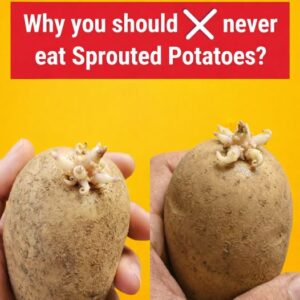
I was searching through my pantry for a forgotten box of pasta, quietly delaying my chores, when I came across a bag of potatoes I had nearly forgotten. At first glance, they looked normal—until I noticed the long, pale sprouts twisting out from their skins like tiny reaching fingers. My immediate reaction was surprise, followed by concern. Were these potatoes still safe to eat, or had I discovered something better left untouched? What began as a simple kitchen moment turned into a lesson about how food changes over time.
Potatoes sprout when they’ve been stored too long or kept in warm, bright conditions. As they begin to grow new shoots, they naturally produce compounds called glycoalkaloids, including solanine and chaconine. These substances help protect the potato plant from pests, but in large amounts, they can cause discomfort if consumed. Sprouts and green-colored skin are common signs that these compounds may be present in higher levels. While this doesn’t mean every sprouted potato is harmful, it does mean they deserve a closer look before cooking.
The good news is that mildly sprouted potatoes can sometimes still be used. If the potato remains firm, with only small sprouts and no green coloring, you can safely cut away the sprouts and peel off any green areas. Removing soft spots is also important, as they signal decay. However, if a potato feels mushy, looks deeply green, smells unusual, or has extensive sprouting, it’s best to discard it. When in doubt, choosing caution is always the safer option.
Preventing sprouted potatoes in the first place is easier than many people realize. Store them in a cool, dry, and dark space with good airflow—never in direct sunlight or tightly sealed plastic bags. Avoid placing them near onions, as onions release natural gases that encourage faster sprouting. With proper storage, potatoes can stay fresh for weeks. And if you ever find a healthy sprouted potato that’s too far gone for cooking, you can even plant it and grow new ones. Sometimes, a small kitchen discovery can turn into a reminder that food, like life, keeps trying to grow in unexpected ways.