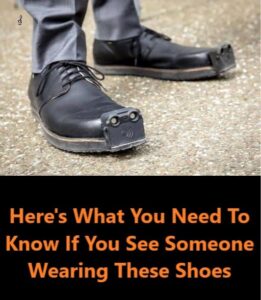
Have you ever spotted someone wearing shoes that look slightly… off?
Not in a loud, neon fashion-statement way. Not in a chunky designer trend kind of way. But in a subtle, “there’s something different going on here” way.
Maybe you noticed a small panel near the toe. Maybe a faint light flickered as they walked. Maybe the front of the shoe looked slightly thicker than normal, like it was hiding something. And for a moment, you found yourself wondering:
What are those shoes for?
They’re not orthopedic.
They’re not hiking boots.
They’re not futuristic cosplay props.
They’re something else entirely.
Those “weird shoes” are often InnoMake Smart Shoes, developed by Austrian company Tec-Innovation in collaboration with Graz University of Technology (TU Graz) — and they represent one of the most fascinating intersections of wearable technology and real-world accessibility in recent years.
Let’s take a deeper look at what they are, what they do, and why they might quietly reshape the future of footwear.
The Mystery Behind the Strange Design
At first glance, InnoMake shoes don’t scream “high-tech.” They’re made from leather. They look structured but wearable. They aren’t flashy.
But then you notice the front.
The toe area houses a small integrated module — the real brain of the operation. That’s where the magic lives.
Unlike typical smart devices that live in your pocket or on your wrist, this one lives at ground level — exactly where environmental hazards often appear first.
And that’s no accident.
Who Made These Shoes?
The concept was developed by Tec-Innovation, an Austrian technology company, in partnership with Graz University of Technology (TU Graz), one of Austria’s leading technical research institutions.
Their goal wasn’t to create trendy wearable tech.
It was to solve a real problem.
The primary mission?
Assist people who are visually impaired by providing obstacle detection directly through their footwear.
Instead of relying only on a cane or guide dog, these shoes act as an additional layer of spatial awareness.
But here’s where things get interesting.
While they were designed with visually impaired users in mind, the potential applications go far beyond that group.
What Makes Them “Smart”?
Inside each shoe is a detachable electronic module equipped with:
-
Ultrasonic sensors
-
A processing unit
-
Wireless connectivity
-
A rechargeable battery
-
Optional LED lighting
Let’s break that down.
Ultrasonic Sensors
The shoes use ultrasonic technology — similar to what’s used in car parking sensors.
These sensors emit sound waves that bounce off objects and return to the device. By calculating how long that return takes, the system determines how far away an obstacle is.
The detection range?
Up to four meters (about 13 feet).
That means the shoes can identify:
-
Steps
-
Curbs
-
Walls
-
Street furniture
-
Unexpected objects
-
Low barriers
And they do this continuously as you walk.
How Do They Alert You?
This is where things get even more clever.
The feedback system is customizable.
1. Vibration Feedback
The shoe vibrates when it detects an obstacle.
The closer the obstacle, the stronger or more frequent the vibration.
It’s intuitive.
It’s immediate.
And it doesn’t require looking at a screen.
2. Acoustic Feedback
Users can connect the shoes to their smartphone via an app.
The system can provide audio alerts, describing distance and obstacles.
3. Bone Conduction Headphones
Instead of blocking environmental sounds (which is critical for safety), users can pair the system with bone conduction headphones.
These sit near the ear but transmit sound through cheekbones, leaving ears open to surrounding noise.
This allows:
-
Traffic awareness
-
Conversation
-
Environmental cues
All while receiving obstacle notifications.
Why Put the Tech in the Shoe?
Most assistive navigation devices rely on:
-
Handheld tools
-
Smartphone cameras
-
Wearable glasses
-
Chest-mounted sensors
But placing detection technology at foot level solves a specific issue: ground-level hazards.
Curbs, steps, uneven pavement — these are some of the most common sources of injury, especially for visually impaired individuals.
By positioning sensors low and forward-facing, InnoMake shoes detect precisely what your feet are about to encounter.
It’s practical engineering.
The Design: Subtle but Intentional
Despite housing advanced electronics, the shoes remain relatively understated.
They’re:
-
Made of high-quality leather
-
Heel-less for stability
-
Structured for comfort
-
Designed for daily wear
Importantly, the electronic module is detachable.
That means:
-
You can remove it for charging.
-
You can transfer it to compatible footwear.
-
You’re not locked into one aesthetic forever.
Battery life lasts up to a week on a single charge, with roughly three hours needed to recharge.
For assistive technology, that’s impressively practical.
Beyond Accessibility: Who Else Could Use Them?
While the primary target audience is people with visual impairments, the implications are broader.
Imagine:
-
Older adults concerned about falls
-
People recovering from injury
-
Travelers navigating unfamiliar terrain
-
Workers in dimly lit environments
-
Nighttime pedestrians
Obstacle detection at foot level could reduce trip hazards significantly.
Even in everyday situations — poorly lit sidewalks, construction zones, cluttered spaces — these shoes offer added awareness.
Are They Replacing Canes or Guide Dogs?
No.
And they’re not designed to.
They’re intended as an additional tool.
Assistive technology works best when layered. The shoes complement existing navigation methods rather than replace them.
That’s an important distinction.
The Psychological Impact of Wearable Guidance
There’s something uniquely empowering about independence.
For someone with limited vision, navigating spaces safely often requires assistance or heightened concentration.
By adding another layer of feedback, these shoes may:
-
Increase confidence
-
Reduce anxiety in unfamiliar spaces
-
Encourage mobility
-
Support autonomy
Technology doesn’t just change mechanics — it changes mindset.
Are They Comfortable?
Comfort is crucial.
If assistive footwear isn’t comfortable, it won’t be used.
Reports indicate that InnoMake shoes are designed for everyday wear, focusing on:
-
Stability
-
Shock absorption
-
Balanced weight distribution
The electronic module adds slight weight to the toe area, but it’s engineered to minimize discomfort.
What About Durability?
Since the sensors sit near the toe, durability matters.
The modules are built to withstand:
-
Everyday walking
-
Urban surfaces
-
Light moisture
However, like any electronic device, they aren’t indestructible.
Extreme weather or submersion would require caution.
The Broader Trend: Smart Wearables Are Expanding
We’ve already seen:
-
Smartwatches
-
Smart glasses
-
Smart rings
-
Fitness trackers
Smart shoes represent the next frontier.
Footwear is uniquely positioned for innovation because it:
-
Interacts directly with terrain
-
Bears weight
-
Moves through space continuously
Future iterations could potentially include:
-
GPS mapping integration
-
Fall detection
-
Gait analysis
-
Health monitoring
-
Posture correction
The InnoMake model may just be the beginning.
Why Haven’t More People Heard About Them?
Assistive technology often flies under the radar unless it hits mainstream fashion markets.
These shoes weren’t designed as luxury status symbols.
They were designed with function first.
And sometimes, meaningful innovation doesn’t trend on social media — it quietly improves lives.
Addressing the “Weird Shoe” Reaction
When people see unfamiliar tech embedded in everyday objects, curiosity follows.
But labeling them “weird” overlooks something important.
They represent thoughtful engineering aimed at solving real challenges.
In reality, the “weirdness” comes from novelty — not impracticality.
Remember when wireless earbuds looked strange?
Now they’re everywhere.
Cost Considerations
Assistive technology often carries higher price tags due to research and development costs.
While pricing may vary, smart assistive footwear typically costs more than standard shoes.
However, for individuals who benefit from increased mobility and safety, the value proposition can be significant.
As production scales and technology advances, prices may decrease over time.
The Ethical Side of Smart Wearables
Whenever wearable tech collects data or connects to smartphones, questions arise:
-
What data is stored?
-
Is location tracked?
-
How secure is the connection?
Responsible tech development requires transparency in:
-
Data privacy policies
-
Encryption methods
-
User control over settings
Users should always review privacy guidelines before integrating connected devices into daily life.
Could This Be the Future of Everyday Footwear?
Imagine a world where:
-
Your shoes warn you about ice.
-
They vibrate when you approach a curb.
-
They sync with traffic signals.
-
They alert you if you trip.
It may sound futuristic, but pieces of that world already exist.
InnoMake is one small but meaningful step toward embedding intelligence into the most grounded item we wear.
Final Thoughts: Weird Today, Normal Tomorrow
Innovation often feels unusual at first.
Smart shoes may look different.
They may spark questions.
They may even attract second glances.
But behind the subtle design lies something powerful: a commitment to accessibility, safety, and independence.
Not every technological advancement needs to be flashy.
Some quietly improve everyday life — step by step.
So next time you see someone wearing those slightly unusual shoes with a discreet panel at the front, you’ll know:
They’re not strange.
They’re smart.
And they might just represent the future walking right past you.