The rain in Connecticut doesn’t wash things clean; it just makes the old money smell like wet wool, decaying leaves, and secrets that have been kept too long.
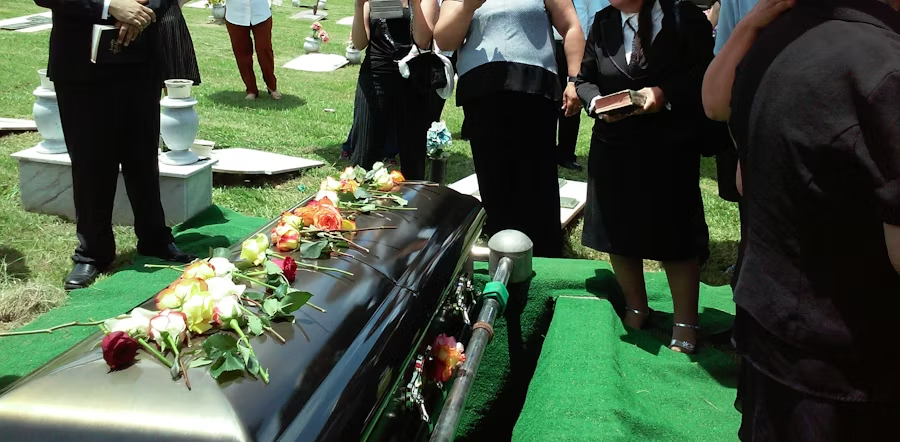
I stood under the stone archway of St. Jude’s Episcopal, watching the black umbrellas bloom like poisonous flowers against the gray sky. Inside, the air was thick with the scent of lilies—that cloying, suffocating perfume of death—and the hushed whispers of Greenwich’s elite. My father, Arthur Hale, was lying in a mahogany box at the front of the nave. He was the only man who had ever looked at me and seen something other than a disappointment. He was the anchor that had kept my ship from drifting entirely into the dark.
And now, I was alone.
I smoothed the fabric of my dress. To the untrained eye, it was a simple black sheath. It had long sleeves, a high neck, and a hem that hit precisely mid-calf. There were no logos. There were no sequins. There was nothing to catch the light or the eye. It absorbed the gloom of the day rather than reflecting it.
It was, in the vocabulary of my sister Victoria, “a potato sack.”
I felt her presence before I saw her. The click of her heels on the stone floor was a Morse code for attention. Victoria Hale didn’t walk; she arrived. She was wearing a hat with a veil that was just sheer enough to show she was crying—a single, perfect tear tracking down her cheek—but not so opaque that it hid her perfect bone structure. She was draped in a vintage couture piece that screamed wealth, cut low enough to be scandalous, high enough to be fashion.
She stopped beside me, the scent of her Chanel perfume warring with the lilies.
“Elena, seriously?” she whispered, her voice a hiss that carried comfortably over the quiet sobbing of our Aunt Martha three pews back. “Did you pull that dress out of a bargain bin on your way here? You’re embarrassing all of us.”
The heat climbed up my neck, not from shame, but from a rage so cold it burned. My mother, Catherine, standing on Victoria’s other side, didn’t defend me. She just sighed, a sound of long-suffering exhaustion, and adjusted the lapel of her own Chanel suit. She looked at the floor, refusing to engage in the friction between her daughters, a habit she had cultivated since we were toddlers.
Victoria smirked, checking her reflection in the glass of the church door. She adjusted a stray lock of blonde hair. To her, this wasn’t a funeral; it was a runway where the lighting was tragically dim.
“It’s fine, Victoria,” I said, my voice steady. “It’s just a dress. We’re here for Dad.”
“It’s a rag,” she corrected, loud enough for the entire back row to hear. The cousins turned. The business partners shifted. “Dad deserved better than you looking like you work at the DMV. God, you’ve always been so painfully beige.”
She breezed past me, her entourage of grief-stricken socialites and personal assistants trailing in her wake. She had no idea.
She had no idea that the “rag” I was wearing was constructed from a rare Japanese silk crepe that cost four hundred dollars a yard. She didn’t know that the lining was hand-stitched by the finest seamstress in Milan, a woman named Giulia who only worked for three people in the world. She didn’t know that this dress was the prototype for the upcoming Autumn/Winter collection of HÉLOISE—the very brand that paid for the car she drove, the apartment she lived in, and the face cream she slathered on at night.
She didn’t know because I never told her.
I was the silent partner. The ghost in the machine. To the world, HÉLOISE was an enigmatic European collective. To my family, I was Elena, the data analyst who lived in a boring apartment in the city and probably knit sweaters for her cats.
But today, the ghost was tired of haunting the attic. Today, the ghost was ready to scream.
Chapter I: The Architecture of a Lie
To understand why I let my sister treat me like a servant for twenty-eight years, you have to understand the Hale family dynamic. It was a structure built on aesthetics, and I was the load-bearing wall they covered with drywall because I wasn’t pretty enough to show.
We were built on appearances. My mother was a beauty queen who married a banker. Victoria was the genetic jackpot—tall, blonde, charismatic, and cruel. She was the sun around which my parents orbited. I was the dark horse. Quiet. Bookish. I liked math and structure. I liked how things were made, not how they were shown off.
When we were children, Victoria would host tea parties. She would dress up in mother’s gowns and demand I play the maid. I would pour the imaginary tea, and she would scold me for spilling it. My parents thought it was adorable. “Victoria is a natural leader,” my mother would say. “And Elena… well, Elena is very helpful.”
Helpful. That was the word that defined my existence.
When I started sketching designs in college, I hid them under my mattress like contraband. I attended business school because that’s what was expected of the “smart one,” but my heart was in the drape of fabric, the tension of a seam.
When I used my trust fund to launch a small line of architectural, minimalist clothing, I used a pseudonym. I named the brand HÉLOISE after the grandmother who taught me to sew, the only other woman in the family who valued work over worship. I wanted the clothes to speak for themselves. I didn’t want the baggage of the Hale name, and I certainly didn’t want the scrutiny of my mother.
The brand exploded. It became the uniform of the “quiet luxury” movement. No logos, just impeccable tailoring. It was ironic, really. My sister Victoria, who wouldn’t be caught dead in anything without a prominent label, became our muse by accident.
Our creative director—a man named Julien who was in on my secret—hired her five years ago.
“She has the look,” Julien had told me, laughing over a video call from Paris. “She’s icy. Unobtainable. She looks expensive. She looks like she would divorce you and take the yacht.”
“She is expensive,” I had replied dryly, looking at a spreadsheet of my sister’s allowance. “And she’s a nightmare. Julien, you don’t know her. She eats souls for breakfast.”
“Perfect for high fashion,” Julien insisted. “The camera loves a villain.”
So, we hired her. Victoria became one of the faces of HÉLOISE. She thought she was hired because she was special. She thought she was the star. She didn’t know that every contract she signed, every check she cashed, every “exclusive” party she attended was authorized by the sister she mocked for wearing cardigans.
She spent five years terrorizing our staff. She demanded triple-sized trailers. She threw hot coffee at interns because it wasn’t the right shade of beige. She billed the company for “emotional distress” whenever a flight was delayed. She treated the brand like her personal kingdom.
And I let her. I approved every check. I signed off on every contract. I watched from behind the scenes as she built a career on the foundation I laid, all while she called me “plain” at Thanksgiving dinners.
Why? Because my father asked me to.
My father was the only one who knew. He had found my sketchbook three years ago, tucked inside a ledger I was reviewing for him. He had sat me down in his study, the room smelling of old paper and pipe tobacco, and poured two fingers of scotch.
“You’re HÉLOISE,” he had stated, not asked. He looked at the sketches, then at me, his eyes crinkling at the corners.
“Yes,” I whispered, terrified he would tell me to stop.
He had smiled then, an expression of such profound pride it made my chest ache. “You’re smarter than all of them, Elena. You built a kingdom in the dark because you knew they’d burn it down if they saw the light. Your mother… she wouldn’t understand the work. She only understands the applause.”
“Victoria would destroy it,” I said. “She’d make it about her. She’d turn it into a circus.”
“She would,” he agreed. “But keep her close. Let her have the spotlight. It keeps her busy. It keeps her away from the real work.”
He paused, his hand heavy on my shoulder. “But promise me something, Elena. Promise me you won’t hide forever. There comes a time when the creator must sign the masterpiece. Don’t let them bury you in the shadow of your own creation.”
“I promise,” I said.
I didn’t know that time would come over his grave. I didn’t know that his death would be the catalyst that finally burned the shadow away.
Chapter II: The Breaking Point in the Pews
The service was beautiful, in the way tragic things are beautiful. The priest spoke of my father’s integrity, his kindness, his quiet strength. The choir sang “Abide With Me,” the notes floating up to the vaulted ceiling.
I sat in the second pew, directly behind my mother and Victoria. I watched Victoria check her phone three times during the eulogy. I saw the blue light reflect off her perfectly highlighted cheekbones. I saw her whispering to her agent, who had the audacity to attend the funeral of a man he’d met twice, treating the pew like a VIP booth.
“The fall campaign drops next week,” I heard Victoria whisper, her voice carrying in the silent interludes of the service. “I need to make sure the funeral photos don’t clash with the aesthetic. Are my eyes puffy? Should I keep the veil down?”
My hands clenched in my lap. The silk of my dress was cool under my sweating palms.
My father raised us with patience. He taught us that kindness was a currency more valuable than gold. He was the man who stopped to help strangers change tires. He was the man who tipped the waitstaff 50%. And here was his favorite daughter—the one he indulged, the one he protected—worrying about her Instagram grid while his body lay ten feet away.
It wasn’t just vanity. It was a desecration.
That was the moment the thread snapped. The patience my father had instilled in me evaporated, replaced by a cold, hard clarity.
I reached into my purse and pulled out my phone. It was disrespectful to use it in church, I knew. Dad would forgive me. In fact, knowing Dad’s sense of justice, he was probably cheering me on from wherever he was.
I opened my encrypted email app. I navigated to the drafts folder. I found the document I had written three months ago, after Victoria had made a junior designer cry so hard she quit the industry entirely. I had written it in a rage, but I had never sent it. I had kept the peace.
The subject line read: TERMINATION OF CONTRACT: VICTORIA HALE.
It was a nuclear option. It wasn’t just firing her. It was a complete severance. A “do not hire” order sent to every affiliate agency. A removal of her image from all future marketing. A clawback of her unauthorized expenses—the spa treatments, the personal vacations billed as “scouting trips,” the clothes she “borrowed” and never returned.
I looked at the back of her perfect, blonde head. I saw her adjusting her hat again, making sure her best angle was visible to the photographer she had secretly hired to document her grief.
I hit SEND.
Then I messaged Daniel, my Head of Operations, who was standing at the back of the church, looking somber in a charcoal suit. Daniel was my right hand, my shield, and the only person besides my father who knew the full extent of Victoria’s cruelty.
It’s done. Execute the press release at noon. Don’t wait for the reception.
Daniel looked up from his phone, caught my eye across the sea of mourners, and gave a barely perceptible nod. He didn’t smile, but his posture straightened. He was ready for war.
Chapter III: The Reception at the Country Club
The reception was held at the Greenwich Country Club, a place that smelled of gin, furniture polish, and generational trauma. The rain had stopped, leaving the golf course a vibrant, unnatural green outside the floor-to-ceiling windows.
Victoria was in her element. The grief had evaporated the moment the cameras were gone. She was holding a champagne flute, laughing with a group of her model friends who had flown in to “support” her—which mostly meant drinking free alcohol and critiquing the hors d’oeuvres.
“It’s so tragic,” I heard her say, her voice lilting with a practiced sorrow. “But Daddy would have wanted me to keep shining. HÉLOISE is launching the new line, and I’m the centerpiece. I carry the family legacy now. Elena… well, Elena is just trying to keep up.”
I walked over to the bar and ordered a sparkling water with lime.
“Legacy?” I muttered to myself. “You couldn’t spell legacy if I spotted you the vowels.”
My mother floated by, looking fragile and heavily medicated. She was gripping a martini like it was a life raft. “Elena,” she said, touching my arm with a cold hand. “Try to look less… dour. People are watching. Go stand with your sister. She looks so strong. She’s holding us together.”
“She looks like she’s at a gala, Mother. She’s laughing.”
“She’s grieving in her own way,” my mother snapped, her eyes narrowing. “Why can’t you be more like her? She’s successful. She’s made a name for herself. You’re just… here. With your little job and your little apartment.”
“She made a name for herself using my money,” I wanted to scream. I wanted to shake her. Instead, I just smiled a smile that didn’t reach my eyes. “I’m going to get some air.”
I walked out to the terrace. The stone was damp. The air was crisp, smelling of wet earth. I needed to breathe before the bomb went off.
I checked my watch. It was 11:55 AM.
Victoria followed me out. Of course she did. She needed a punching bag to make herself feel taller. She couldn’t stand seeing me have a moment of peace.
“Elena,” she said, lighting a slim cigarette. “Next time, try not to represent the Hale family like a thrift store tragedy. I had to tell the photographer to crop you out of the family procession shots. You clashed with the vibe. You looked like the help.”
I turned to face her. The wind caught the hem of my thirty-thousand-dollar dress, making it ripple like liquid ink.
“Victoria,” I said calmly. “About your contract.”
She blew smoke in my direction, a cloud of gray drifting between us. “My contract? What about it? Oh God, don’t tell me you’re asking for a job again. I told you, HÉLOISE doesn’t hire accountants who dress like librarians. We have an image to maintain. Maybe try Sears?”
“My cubicle job,” I repeated, a small smile playing on my lips.
“Yes. Go back to your spreadsheets. Leave the art to the artists. You wouldn’t know beauty if it bit you.”
At that moment, the glass doors opened. Daniel stepped out. He was followed by Julien, our Creative Director, and—crucially—our lead legal counsel, a woman named Sharon who scared people for a living. Sharon was six feet tall and wore suits that cost more than most cars.
Victoria brightened, stubbing out her cigarette. “Julien! Darling! You came!” She moved to embrace him, arms wide, ready for the air-kiss.
Julien stepped back. His face was cold, his usually warm eyes hard as flint.
“Ms. Hale,” Daniel said, his voice carrying the weight of an executioner’s blade. “Legal has confirmed the signature. The press release went live two minutes ago. Your agency has been notified.”
Victoria blinked, her hand freezing mid-air. “Press release? About the Autumn campaign? I thought we were waiting until Monday to announce the billboards.”
“Not about the campaign,” Sharon said, stepping forward and handing Victoria a thick, cream-colored envelope. “About your termination.”
Victoria laughed. It was a brittle, confused sound, like glass breaking. “Termination? Whose termination? Did you fire that incompetent stylist? Finally.”
Daniel held her gaze. He didn’t blink. “Yours, Ms. Hale. Effective immediately. You are no longer the face of HÉLOISE. You are no longer associated with the brand in any capacity. Your security clearance has been revoked. Your company car has been disabled remotely.”
The cigarette case fell from Victoria’s fingers, clattering on the stone. “You’re firing me? Do you know who I am? I am HÉLOISE. The brand needs me. I made this brand! Who signed this? Who authorized this?”
She looked at Julien, desperation creeping into her voice. “Julien, tell them. Tell them they can’t do this. I’m the muse!”
Julien looked at her with a mixture of pity and disdain. “I didn’t sign it, Victoria. The owner did. And frankly, after the way you spoke to the interns in Milan, I would have fired you myself if I could.”
“The owner?” Victoria scoffed, her face flushing red. “The invisible European billionaire? He loves me. He sends me flowers.”
“She,” Daniel corrected evenly. “And she doesn’t love you. In fact, she thinks you’re an embarrassment to the Hale family. She thinks you lack the grace to represent the brand.”
Victoria’s face went white. “She? Who is she?”
Daniel turned slowly. He looked at me. He nodded.
“HÉLOISE,” Daniel said, gesturing to me with an open hand, “belongs to her.”
Chapter IV: The Reveal
Victoria followed Daniel’s gaze. She looked at me. She looked at my “plain” dress. She looked at my messy bun. She looked at the sister she had bullied for three decades.
“Elena?” She started to laugh again, but it died in her throat, choking her. “Elena? You’re joking. This is a sick joke. Elena can’t even match her socks. Elena is a nobody.”
“I built it,” I said softly. My voice wasn’t shaking. I felt the spirit of my father standing right beside me, holding me up. “Every stitch. Every campaign. Every job you ever bragged about. I approved them all. I hired Julien. I chose the fabrics. I signed your checks. And I just cancelled them all.”
I stepped closer to her. I reached out and touched the lapel of the jacket she was wearing—a HÉLOISE prototype I had designed three years ago on a napkin in a diner in Brooklyn.
“This jacket,” I said, running my thumb over the fabric. “Double-faced cashmere blend. I designed the structure to hide the fact that you slouch when you’re insecure. I raised the collar to frame your face because I knew you hated your neck. I made this for you, Victoria. To make you look strong when you felt weak.”
Victoria slapped my hand away as if I had burned her. “Liar!”
“Check your phone, Victoria.”
She fumbled for her phone in her clutch. Her hands were shaking so badly she dropped it once. She picked it up, screen cracked, and pulled up Instagram.
She gasped. The sound was wet and horrible.
The official HÉLOISE account—with its four million followers—had posted a simple black square. The caption read:
“HÉLOISE announces a restructuring of its creative vision. Effective immediately, we are parting ways with Victoria Hale. We thank her for her service, but we are moving toward a future that values authenticity, kindness, and humility. We are proud to announce that our founder and head designer, Elena Hale, will be stepping forward to lead the brand into this new era.”
There was a photo. A black and white portrait of me, taken by Julien weeks ago in secret. I was wearing the dress I had on right now. I looked powerful. I looked like my father. I looked like the owner.
The room behind the glass doors had gone silent. The relatives were staring. Whispers were spreading like wildfire. My mother was pressing a hand to her chest, looking between her two daughters as if trying to calculate which horse to bet on, her socialite brain short-circuiting.
Victoria looked up from the phone. Her eyes were wet, mascara running. “You planned this. You waited until Daddy’s funeral to humiliate me. You’re sick.”
“No,” I replied. “You humiliated yourself. You stood over our father’s casket and mocked me. You treated the staff like dirt for five years. You took the money, the fame, the credit, and you never once said thank you. I just stopped shielding you from the consequences of your own personality. Dad asked me to be patient. I was. Until today.”
“I’ll sue you,” she hissed, stepping forward, hands curled into claws. “I’ll take half the company. I’m family. Mom will testify for me!”
“You’re an independent contractor,” Sharon interjected smoothly, stepping between us. “With a morality clause in your contract. A clause you violated about twenty times just this morning. We have recordings of you berating the catering staff. We have emails. We have witnesses. If you sue, we will counter-sue for damages to the brand, and we will win. We will release the tapes, Victoria.”
Victoria looked around. Her friends—the models, the hangers-on, the sycophants—were slowly backing away. They smelled the blood in the water. In the fashion industry, you are only as good as your next contract. And Victoria just became radioactive.
“Mom!” Victoria wailed, turning to our mother, reverting to a child. “Do something! She’s ruining me! Tell her she can’t do this!”
My mother walked out onto the terrace. She looked at Victoria, messy and hysterical, her face streaked with black tears. Then she looked at me. She looked at Daniel and the lawyers standing behind me like a praetorian guard. She looked at the engagement numbers climbing on the Instagram post on Victoria’s screen.

My mother was a survivor. She knew which way the wind blew.
“Elena,” my mother said, her voice smooth, calculating. “Is it true? You own the company? All of it?”
“100%,” I said. “Dad helped me set up the initial trust, but I bought him out years ago.”
My mother turned to Victoria. Her face hardened. “Victoria, please lower your voice. You’re making a scene at your father’s funeral. Have some dignity.”
The betrayal on Victoria’s face was almost enough to make me feel sorry for her. Almost. But I remembered the years of taunts. I remembered her telling me I was unlovable.
Chapter V: The Fallout
The weeks that followed were a masterclass in schadenfreude.
The fashion world didn’t just drop Victoria; they erased her. Without the protection of HÉLOISE, her reputation as a “difficult talent” became her only defining trait. Brands that had tolerated her because of her connection to us—and the hope of a collaboration—suddenly found her “off-brand.”
Her sponsorships—secured only because of our brand name—were immediately questioned. Some partners backed out on the spot. Others didn’t even bother calling; they just sent legal notices demanding the return of products.
I, on the other hand, was exhausted.
Stepping into the light was terrifying. I had to do interviews. I had to be photographed. I had to be seen. I had to attend galas where people whispered about the “Secret Sister.”
But every time I felt like hiding, I looked at the photo of my father on my desk.
“The creator must sign the masterpiece,” I would whisper.
By day three, Victoria appeared at my apartment door.
She looked terrible. Her hair was pulled back in a messy bun. She was wearing sweatpants—actual sweatpants, not designer leisurewear. Her eyes were red. She had lost the apartment HÉLOISE paid for.
I opened the door but left the chain on.
“Elena… please,” she whispered. Her voice was cracked, devoid of its usual arrogance. “We’re sisters. You can’t ruin my career. I can’t pay my rent. I leased the Porsche. I have nothing. The bank is calling.”
“I didn’t ruin it,” I said through the crack. “You burned every bridge yourself. I’m just refusing to rebuild them for you. You spent five years thinking you were the sun and I was just a shadow. You forgot that shadows only exist because something is blocking the light. I removed the block.”
“I’ll change,” she begged, pressing her face to the gap in the door. “I’ll be better. Just give me a campaign. Even a small one. Please. I’m drowning. I’ll apologize to the staff. I’ll do anything.”
I looked at her. I thought about the time she told me no one would ever love me because I was too intense. I thought about the time she “accidentally” spilled red wine on my portfolio before my college interview. I thought about the funeral.
But mostly, I thought about the interns she made cry. I thought about the assistant she fired for bringing her the wrong water—a single mother who needed that job.
She had been given hundreds of chances. She had spent them all.
“You need to learn humility, Victoria,” I told her. “And you can’t learn that in a limousine. You need to get a job. A real one. Where no one cares what your last name is. Where you have to work for respect.”
“You’re a monster,” she spat, the old Victoria surfacing for a second, teeth bared. “You’ve always been jealous of me!”
“No,” I said gently. “I’m a boss. And you’re fired.”
I closed the door. I locked it. I leaned my forehead against the cool wood and cried for ten minutes. Then I washed my face and went to work.
Chapter VI: The New Era
My extended family scrambled for positioning like rats on a sinking ship. Cousins who had mocked my “boring” life now sent me edible arrangements and resumes. Aunts who adored Victoria suddenly claimed they “always knew she was troubled” and praised my “quiet genius.”
I didn’t seek revenge on them. I didn’t need to. Their own transparency was embarrassing enough. I simply didn’t hire them. I kept my circle small. Daniel. Julien. Sharon. The people who knew me when I was nobody.
HÉLOISE flourished. We launched the Autumn line with a show in an abandoned library in Brooklyn. It was dedicated to Arthur Hale. The clothes were structured, serious, and kind. We started a scholarship fund for designers from underprivileged backgrounds—people who had talent but no name.
Victoria eventually found work. She didn’t become a waitress or a beggar—life isn’t a movie, and she still had connections—but she fell far from the tree. She models for a catalog now. Department store flyers. The kind that end up in the recycling bin without being opened. She lives in a studio apartment in Jersey City. She takes the PATH train.
We speak on holidays. Briefly. She is quieter now. Softer. The edges have been worn down by reality. When she looks at me, there is fear in her eyes, but also respect. She knows now that the quiet ones are the dangerous ones.
As for me, I’m still quiet. I still prefer the back of the room. But I wear my own clothes now. And when I walk into a room, I don’t look down.
I was at the cemetery last Sunday. I put fresh lilies on my father’s grave. The stone was cold, but the sun was warm on my back.
“I signed the masterpiece, Dad,” I whispered to the grass. “And I kept the kingdom safe.”
The wind blew, rustling the trees. It sounded like applause.