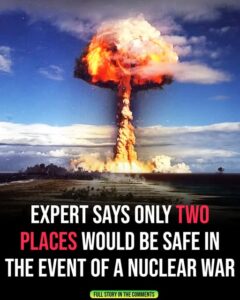
As global tensions spike following airstrikes on Iran by the U.S. and Israel over the weekend, many Americans are asking a chilling question: if conflict escalates into World War III, where in the country would you actually stand a chance of survival?
Accused Iran of restarting its nuclear program
There was a time when American students practiced what to do in the event of a nuclear attack, back when the Soviet Union was considered the country’s biggest threat. The so-called “duck and cover” exercises had kids hiding under desks to brace for a Soviet nuclear strike, giving the illusion of preparedness despite minimal practical protection.
Today, times have certainly changed. But with the U.S. now involved in a military conflict with Iran, some fear that the old anxieties might be returning.
President Donald Trump and his aides have claimed that Iran has restarted its nuclear program, possesses enough fissile material to build a bomb within days, and is developing long-range missiles capable of reaching the United States.
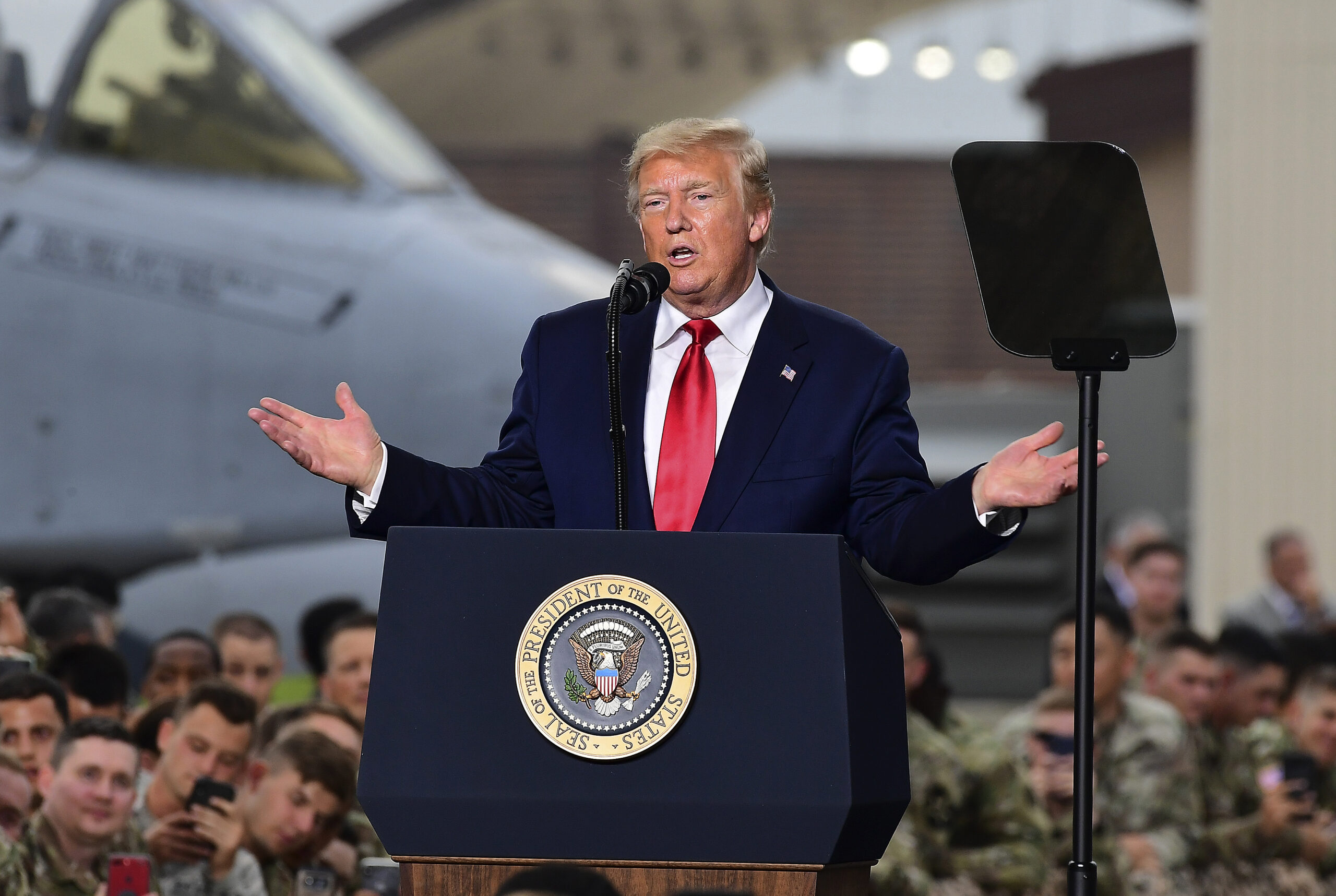
All three of these assertions are either false or remain unproven, according to The New York Times — but that hasn’t stopped the U.S. from launching attacks on Iran.
The joint operation, dubbed Operation Epic Fury, hit multiple Iranian cities including Tehran, Isfahan, Tabriz, Kermanshah, and Qom, according to Sky News, and reportedly killed Supreme Leader Ayatollah Ali Khamenei, who had ruled the country for more than 30 years.
While Trump has warned Iran not to retaliate, analysts fear that any counterattack could target U.S. nuclear missile silos, escalating the conflict dangerously.
2,000 nuclear warheads
The majority of America’s roughly 2,000 nuclear warheads are concentrated in Montana, North Dakota, and Nebraska, with smaller stockpiles in Wyoming and Colorado, according to Nuclear Forces.
Any direct strike on these sites could unleash catastrophic radiation. For instance, states housing missile silos — like Montana, Wyoming, Colorado, Nebraska, South Dakota, North Dakota, Iowa, and Minnesota — could experience anywhere from 1 Gy to 84 Gy of radiation, while just 8 Gy is considered lethal.
That’s why analysts like Newsweek suggest that the U.S. states farthest from nuclear infrastructure might offer the best chances of survival.
Their list includes: Maine, New Hampshire, Vermont, Massachusetts, Rhode Island, Connecticut, New York, New Jersey, Pennsylvania, Delaware, Maryland, Washington D.C., Virginia, West Virginia, North Carolina, South Carolina, Georgia, Florida, Alabama, Mississippi, Tennessee, Kentucky, Ohio, Indiana, and Michigan. Other relatively safer options include Washington, Utah, New Mexico, and Illinois.
“This is based on the average radiation exposure risk calculated for each latitude and longitude point, using a scale measuring the estimated cumulative radiation dose after four days in grays (Gy), a unit of ionizing radiation dose,” Newsweek explained.
Long-term survival – two places
Even with some states offering a buffer from the initial devastation, experts caution that no location in the U.S. is completely risk-free in a full-scale nuclear scenario.
Scientific American warned in 2023 that “a concerted nuclear attack on the existing US silo fields — in Colorado, Wyoming, Nebraska, Montana, and North Dakota — would annihilate all life in the surrounding regions and contaminate fertile agricultural land for years.”
For those thinking long-term survival, geography matters even more. Investigative journalist Annie Jacobsen told Steven Bartlett on The Diary of a CEO podcast that countries in the Southern Hemisphere, like New Zealand and Australia, would offer the highest chance of survival during a nuclear winter.
“Places like Iowa and Ukraine would just be snow for 10 years,” Jacobsen explained. “So agriculture would fail, and when agriculture fails, people just die.”
She emphasized that radiation and a damaged ozone layer would make sunlight deadly in many parts of the world, forcing survivors underground and sparking brutal fights for food.
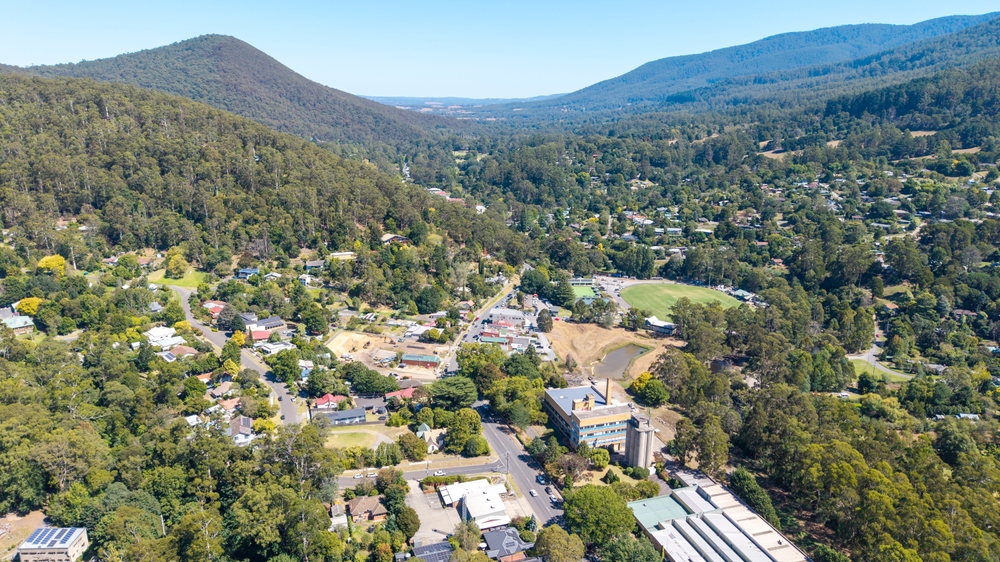
“Everywhere except for in New Zealand and Australia,” she said, “those are the only places that could actually sustain agriculture.”
Aside from long-term food security, their distance from major nuclear powers also makes them far less likely targets in an initial strike.
Jacobsen’s advice is blunt: “No one is truly safe in a nuclear war. But if you’re looking for the best possible odds of survival, and the ability to grow food when the rest of the planet freezes, pack your bags for down under.”