At thirty-five, I often feel like I’m running our household on my own. My husband works long hours, leaving before sunrise and returning just in time to say goodnight, so most days it’s me juggling school mornings, homework battles, dinner routines, and two energetic boys who never seem to run out of motion or curiosity. Liam is nine, Noah is seven, and their favorite place to be is anywhere outside. Bikes, soccer balls, chalk drawings, and laughter are simply part of our street’s rhythm, the kind of everyday sounds you expect in a neighborhood full of families. They aren’t reckless or rude, and they stay close to home. They’re just children enjoying the freedom of fresh air and movement.
Across the street lives Deborah, a woman who keeps her lawn perfect and her curtains half-drawn. From the beginning, her disapproval was impossible to miss. Whenever my boys played, I’d notice her watching from behind the blinds or standing stiffly at her door, as if their laughter were a personal offense. One afternoon she crossed the street and told me, calmly but firmly, that children “shouldn’t scream outside” and that our home was too noisy for her comfort. I tried to brush it off, reassuring the boys they had done nothing wrong, but her silent staring continued. I hoped it would fade with time. Instead, it escalated in a way I never expected.
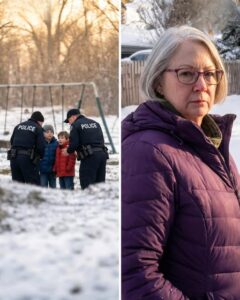
One day, while the boys were at the nearby playground, my phone rang. It was Liam, his voice shaking as he told me police officers were standing near the swings asking questions. I rushed over, heart pounding, only to learn someone had reported unattended children and even hinted at dangerous behavior. The officers were professional and kind, quickly realizing the report didn’t match reality, but the damage was done. My children were frightened, confused, and suddenly wary of doing something as innocent as playing. That evening, my husband and I decided to install outdoor cameras—not out of anger, but to protect our family and document what was really happening.
A few days later, Deborah called again. This time, the cameras captured everything: her standing on her porch, watching the playground, speaking on her phone while my kids laughed and chased a ball in full view of other parents. When the police arrived, I calmly showed them the recordings. They spoke with her privately and explained that repeated calls without real concern could become a serious issue. After that, her curtains stayed closed. The street returned to its familiar soundtrack of bikes and voices, and slowly, my sons relaxed again. Noah once asked why “the mean lady” wasn’t angry anymore. I told him the truth in simple words: sometimes people behave differently when they realize others can see their actions too. I didn’t seek conflict. I only wanted my children to feel safe being children—and that, finally, they did.