I was only ten when my parents died, and in one night my whole life collapsed into silence, snow, and questions no kid should ever have. After the funeral, my aunt Linda arrived with dramatic hugs and big promises, telling everyone she would “take care of me.” But the moment the crowd disappeared, so did the warmth. At her house, I wasn’t given a bed like her children—I was given a thin mattress on the floor in a small back room, like an afterthought she didn’t want to admit she had. I grew up learning how to stay quiet, stay grateful, and never ask for too much… because Linda made it clear that being “rescued” meant I owed her everything.
Not long after I moved in, I started noticing things that didn’t make sense. My parents had left money behind for my future—college money, insurance, savings—enough to make sure I’d be okay. Linda said she’d “handle it,” and at ten years old, I believed that was what responsible adults did. Then her kitchen was remodeled. Then she got a new car. Then my cousins suddenly had lessons, tutors, and new hobbies I’d never seen before. When I finally asked if any of it came from my mom and dad, Linda didn’t even flinch—she just told me to “be grateful” I wasn’t in foster care. That one sentence trained me like a warning bell: stop asking questions, stop expecting fairness, and accept whatever scraps I’m given.
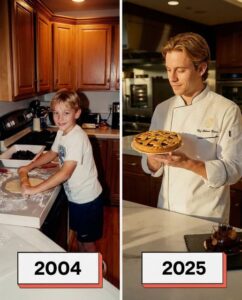
Soon after, she shipped me off to boarding school “for my own good,” and her phone calls slowly faded until they stopped completely. When I graduated, I went back to what used to be my parents’ home, hoping for something familiar—but a stranger opened the door and told me they’d bought the place years ago. Linda had sold it, taken what she wanted, and disappeared like I didn’t exist. I survived the next chapter on couches and long shifts, working anything that paid and saving every dollar out of pure fear. Over time, I forced my life into something stable, even if it was lonely. Culinary school became my escape, baking became my purpose, and eventually I built a small bakery that felt warm and safe—the first thing in my life that was truly mine.
Then one evening, years later, she knocked on my door like she still had a right to enter my world. Linda looked smaller, older, and suddenly fragile, claiming she was sick and had nowhere else to go because her own kids wouldn’t speak to her. I should’ve slammed the door, but I remembered the scared kid I used to be—the one who would’ve done anything for someone to choose him. So I let her in, thinking it would be temporary… until she started acting like my home belonged to her. She opened my mail, judged my life, and finally reached for the only thing I’d protected for years—my mother’s recipe notebook. Hidden inside was a small key, and the moment Linda saw it, her face changed. That’s when I understood the truth: she didn’t come back because she missed me—she came back because she still wanted what she thought she could take.