It was just after midnight in a quiet suburban neighborhood in Tallahassee, Florida. The streets were unusually still, humid air hanging heavy, punctuated only by the distant hum of cicadas.
Streetlights flickered along the curving asphalt, casting long shadows across neatly trimmed lawns. Inside one of the houses, however, the night had taken a terrifying turn. A trembling, almost inaudible voice broke the silence.
“911… what’s your emergency?” the dispatcher asked, her tone calm but alert. Through stifled sobs, a little girl replied, her voice shaking so violently that it was difficult to understand every word. “My… my stepdad’s… big snake… hurt me so much!”
The words sent a chill down the dispatcher’s spine. She could hear the child gasping, trying to explain the situation, her small voice muffled by fear. Between sobs, the girl — who would later be identified as Emily Harris, eight years old — said her mother wasn’t waking up and that there was “so much blood.”
She added that her stepfather’s pet python, a massive constrictor, was loose on the floor. Within moments, police cruisers and emergency vehicles sped down the darkened streets, sirens cutting through the Florida night.
Officers and paramedics approached the house cautiously, aware that they were dealing with a volatile situation: a frightened child, a potentially life-threatening animal, and an unknown human factor.
The Scene Inside
The front door was unlocked when officers arrived. Inside, the living room was dimly lit, with only a single lamp casting weak light over stacks of terrariums. The air carried the pungent, musky smell of reptiles, mingling with a faint scent of cleaning chemicals.
In the center of the room, coiled and motionless for a moment, lay a massive reticulated python. Estimates suggested it was easily 10 to 12 feet long, its patterned skin blending with the carpet and shadows.
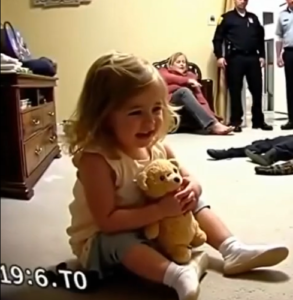
It was a formidable creature, one that could easily overpower an unprepared adult, let alone a small child. Emily crouched in the corner, clutching a torn teddy bear, her pajamas damp from tears.
Her wide eyes darted nervously between the officers and the enormous snake, fear radiating from every movement. Officers approached slowly, communicating in hushed tones.
One detective used a long snake hook to gently lift the python from the room, carefully keeping its head away from anyone nearby. Another officer knelt beside Emily, offering calm reassurance as she shivered violently from adrenaline and fear.
The Mother
On the living room floor, paramedics discovered Emily’s mother, Jessica Miller, 32 years old. She was unconscious, and though initial observations showed deep constriction marks across her neck and chest, medics quickly realized that the snake had not inflicted lethal damage on its own.
Jessica had suffered a medical emergency while handling the python, possibly triggered by the stress of the situation. In scenarios like this — common among people unaccustomed to managing large exotic animals — a sudden cardiac event or fainting could occur, which in turn might provoke the animal’s defensive behavior.
Fortunately, paramedics were able to stabilize her, and she was rushed to a nearby hospital for intensive care.
The Step‑Father and Human Factor
The household’s adult male, Brian Miller, was nowhere to be found when authorities arrived. Investigators suspected that prior to the chaos, he had left the home — either intentionally or during the incident’s escalation.
Interviews later suggested he had been careless in managing the python, leaving it loose on the floor, which contributed to the frightening scenario Emily described in her 911 call. It’s important to note that in many real-life incidents involving large snakes kept as pets, human error is often the primary factor.
Constrictors are powerful animals, capable of causing serious injury if mishandled or if they escape from their enclosures. This underscores the necessity of proper training, secure habitats, and constant vigilance in homes with exotic pets.
Emily’s Perspective
Through repeated interviews with child psychologists and social workers — standard procedure in such cases — Emily’s account provided insight into the psychological impact of the incident.
“I was so scared,” she said in a follow-up interview with a trained professional. “The snake was everywhere, and Mama didn’t wake up. I didn’t know what to do.”
Children exposed to traumatic events like this can experience lasting stress, anxiety, and difficulty sleeping. Specialists emphasized that Emily would need support and counseling to process the incident safely.
Despite the fear and chaos, Emily’s bravery in calling 911 likely prevented a far worse outcome. Her calm, direct reporting of the emergency allowed first responders to act quickly, minimizing the risk to both herself and her mother.
Exotic Pets and Risk Awareness
While incidents involving large snakes are rare, they are not unprecedented. Across the United States, animal control and public health records document occasional accidents involving reticulated pythons, Burmese pythons, and other constrictors kept as pets.
Experts agree on several key safety measures for households considering exotic reptiles:
Secure Enclosures: Snakes must be housed in escape-proof terrariums with secure locks and sturdy lids.
Education and Training: Owners should be trained in handling techniques and emergency procedures.
Supervision and Limits: Large snakes should never be left in areas where children or untrained adults could be exposed.
Emergency Planning: Every household should have a plan in place in case of escape, injury, or sudden animal stress.
Dr. Sandra Lopez, a herpetologist who consults with exotic pet owners, explains: “Constrictor snakes are fascinating and rewarding to care for, but they are not pets to be taken lightly.
Even a snake that has been handled safely for years can react unpredictably if it feels threatened or if its environment changes suddenly.”
The Investigation and Outcome
Authorities documented the scene meticulously, photographing the layout, taking statements from neighbors, and analyzing the python’s enclosure for safety compliance.
No criminal charges were filed against the snake, of course, but the case highlighted the importance of responsible exotic animal ownership.
Brian Miller, the stepfather, faced legal scrutiny for negligence. While he was eventually allowed to retain custody of the snake under strict conditions, he was required to attend an animal safety course and implement enhanced containment measures.
Social services worked with the family to ensure Emily and her mother were safe and supported, both physically and emotionally.
Lessons Learned
This scenario, while intense and terrifying, underscores several real-life lessons that are broadly applicable:
Children as first responders: Even young children can play a critical role in emergency situations if they are taught how to call 911 and remain calm.
Animal safety in the home: Large exotic pets are a major responsibility, requiring secure containment, proper knowledge, and ongoing attention.
Preparedness saves lives: Having a plan for emergencies, including medical issues and animal behavior incidents, can mean the difference between minor scares and life-threatening situations.
Psychological impact: Traumatic events leave lasting impressions, especially on children. Early intervention with counseling and support is vital for recovery.
Emily’s call illustrates the unpredictable nature of emergencies and the remarkable courage that even a child can display. By taking immediate action, she likely prevented the situation from escalating into serious injury for herself or her mother.
A Community Response
After the incident, neighbors and local authorities emphasized community awareness regarding exotic pets. Town hall meetings and social media campaigns highlighted safe handling practices, secure enclosures, and legal responsibilities for owners.
One neighbor commented: “We live in a peaceful neighborhood, and you don’t expect something like this to happen. It really opened our eyes to how much responsibility it takes to own such animals.”
The local school district also provided resources for students who might experience trauma from witnessing or learning about frightening events in their community.
Conclusion
What started as a midnight 911 call from a frightened little girl became a vivid reminder of the delicate balance between human curiosity, exotic pet ownership, and child safety.
While the incident was frightening, it ended without fatal consequences, thanks to quick thinking, responsible emergency response, and eventual intervention by social services.
This story, while dramatized here, reflects realistic possibilities that families should be aware of when considering large snakes or other exotic pets. It demonstrates the importance of vigilance, preparation, and the ability of children to act bravely in moments of crisis.
Most importantly, it serves as a cautionary tale: even animals that seem calm or friendly can pose serious risks if proper care and supervision are not maintained. With education, responsibility, and community support, such incidents can be prevented — ensuring safety for both humans and the animals in their care.