Kathy Bates has long been recognized as one of the most powerful and respected actresses of her generation. Known for her commanding screen presence, emotional depth, and fearless approach to complex roles.
She has built a career on portraying strength in all its forms. Yet beyond the awards, accolades, and unforgettable performances lies a deeply personal story.
One not written for the screen, but lived quietly, courageously, and without spectacle. Long before she became an outspoken advocate for cancer survivors and patients living with chronic conditions.
Bates was navigating a private battle that would test her endurance in ways no role ever could. Her journey through cancer is not a tale of dramatic heroism or inspirational clichés.
It is a realistic, human story—marked by fear, medical uncertainty, difficult choices, and the determination to keep going when stopping felt easier.
A Silent Diagnosis: Ovarian Cancer in 2003
In 2003, at a time when her career was thriving, Kathy Bates was diagnosed with ovarian cancer. Ovarian cancer is often referred to as a “silent disease” because its early symptoms can be vague or easily overlooked.
Like many women, Bates did not receive her diagnosis until the cancer had progressed enough to require immediate and aggressive treatment.
Rather than making her illness public, she chose privacy. Only a small circle of trusted individuals knew what she was facing.
This decision was deliberate. Bates has later explained that she did not want her work to be overshadowed by her illness, nor did she want to be perceived as fragile or defined by her diagnosis. Her focus was simple and uncompromising: survival.
Her treatment involved major surgery followed by approximately nine months of chemotherapy. The physical toll was significant. Chemotherapy is known for its exhausting side effects, including nausea, fatigue, pain, and emotional strain.
Bates has acknowledged that this period was one of the most challenging of her life, both physically and mentally. Yet throughout it all, she continued to work when possible, maintaining a sense of normalcy and purpose amid uncertainty.
Recovery and Remission
After completing treatment, Bates entered remission. For nearly a decade, she lived cancer-free, gradually reclaiming her strength and continuing her career with renewed focus.
During this time, she remained largely silent about what she had endured. Her recovery was personal, not performative.
In 2012, she finally chose to speak publicly about her ovarian cancer for the first time, revealing that she had been cancer-free for nine years.
The announcement was not dramatic or celebratory—it was factual, grounded, and reflective. For Bates, remission did not feel like a victory parade; it felt like quiet relief. She believed that chapter of her life had closed.
She was wrong.
A Second Diagnosis: Breast Cancer
Only weeks after publicly acknowledging her long remission, Bates received another diagnosis—this time, breast cancer. The news was devastating.
Despite her previous experience with cancer, the emotional impact was profound. She later described the moment as deeply frightening, even more so because it came after years of believing the worst was behind her.
Breast cancer was not entirely unexpected. The disease ran in her family, and Bates was aware of her increased risk.
Still, no amount of awareness can fully prepare someone for the reality of hearing the words themselves. Cancer, once again, demanded her attention, her energy, and her resolve.
A Decisive Choice: Double Mastectomy
Faced with this new diagnosis, Bates made a difficult but calculated decision. She chose to undergo a double mastectomy—the surgical removal of both breasts.
For her, the choice was not rooted in fear or panic, but in practicality and long-term survival. Given her family history and personal experience with cancer, she wanted to minimize the risk of recurrence as much as possible.

The surgery was successful, and the cancer was effectively treated. Bates once again emerged cancer-free. Throughout the process, she maintained her characteristic sense of humor and perspective.
In interviews, she has joked about missing her television show Harry’s Law more than she missed her breasts. The humor was not dismissive—it was a form of resilience, a way of asserting control over a situation that could easily feel overwhelming.
Life After Cancer: Lymphedema
While the cancer itself was successfully treated, the aftermath brought new challenges. During her breast cancer surgery, lymph nodes were removed—a common part of cancer treatment aimed at preventing the spread of disease.
As a result, Bates developed lymphedema, a chronic condition caused by damage to the lymphatic system.
Lymphedema leads to swelling, pain, and restricted mobility, often in the arms or legs. It has no cure and requires ongoing management.
Approximately 20 to 30 percent of breast cancer survivors experience some form of lymphedema, yet it remains widely misunderstood and under-discussed.
For Bates, lymphedema became a daily reality. Simple tasks required planning. Physical discomfort was constant.
The condition served as a lasting reminder that surviving cancer does not always mean returning to life exactly as it was before.
From Privacy to Advocacy
This time, Bates made a different choice. Instead of keeping her experience private, she decided to speak openly about lymphedema and its impact.

She recognized that many patients were unprepared for life after cancer treatment—not because they lacked strength, but because they lacked information.
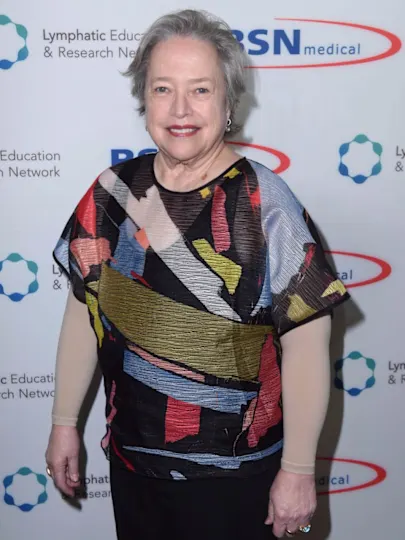
She became a spokesperson for the Lymphatic Education & Research Network (LE&RN), using her public platform to raise awareness about lymphatic diseases. Her advocacy focused on education, early diagnosis, and increased research funding.
She emphasized that survivorship is not a finish line—it is a new phase that comes with its own medical and emotional challenges.
Her message was clear and practical: beating cancer is only part of the journey. Understanding and managing long-term effects is equally important.
Encouraging Preventive Care and Awareness
Throughout her public discussions, Bates has consistently encouraged women to take their health seriously.
She speaks openly about the importance of routine screenings, understanding family medical history, and listening to medical professionals—even when the information is frightening.
Early detection, she has said, saved her life more than once. Her story is not meant to instill fear, but responsibility. Ignoring symptoms or delaying medical care can have serious consequences.
Perspective Gained Through Illness
Looking back, Bates has reflected on her experience with a sense of clarity rather than bitterness. She has expressed gratitude—not for the illness itself, but for the perspective it brought. Cancer forced her to slow down, reassess her priorities, and focus on what truly mattered.
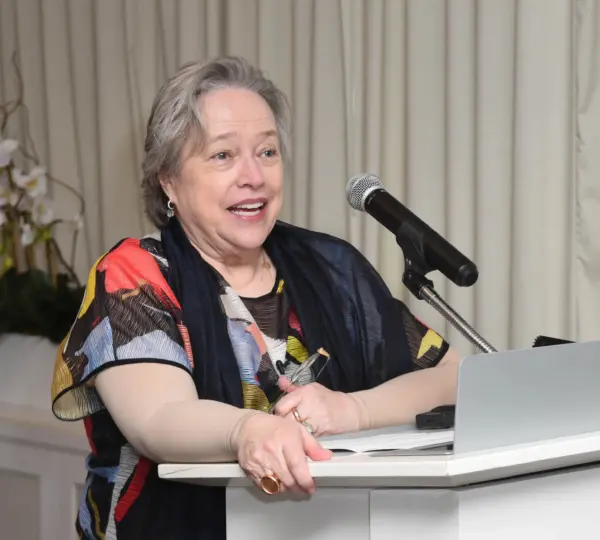
It stripped away illusions of control and replaced them with purpose. It redirected her energy toward advocacy, education, and honesty. The experience reshaped her understanding of strength—not as invincibility, but as persistence.
A Story Without Romanticism
What makes Kathy Bates’s story resonate is its realism. There is no miracle cure, no dramatic transformation, and no attempt to frame suffering as a blessing.
Her journey is grounded in medical reality, informed decision-making, and the refusal to give up.
She has never portrayed herself as a hero. Instead, she presents herself as someone who kept going because stopping was not an option.
A Legacy Beyond Acting
Today, Kathy Bates is more than an award-winning actress. She is a symbol of resilience rooted in truth, not performance.
Her life demonstrates that strength does not always appear dramatic or glamorous. Sometimes it appears as scars, chronic pain, and the courage to speak when silence feels safer.
Cancer tried twice to define her life. Twice, she refused to let it do so.
Her story stands as a reminder that survival is not just about living longer—it is about living honestly, responsibly, and with purpose.