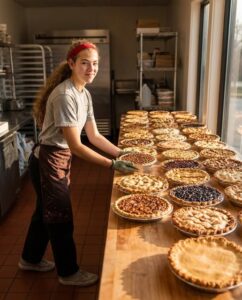
Grief has a strange way of changing what feels important. When I was sixteen, my world flipped overnight after a house fire took everything I knew—my home, my routines, and the people I loved most. In the months that followed, I felt like I was drifting through life on autopilot, trying to stay standing while everything inside me was falling apart. The only place I could breathe was the kitchen. Late at night, when the dorm-style shelter finally got quiet, I started baking pies—not for attention, not for praise, but because it gave my hands something steady to do when my heart didn’t know where to go.
I used what little money I had to buy flour, butter, and fruit, then made blueberry, apple, cherry—whatever I could afford. I kneaded dough on scratched countertops, used whatever tools I could find, and baked in an oven that never heated evenly. When the pies cooled, I boxed them up and dropped them off anonymously at a local hospice and shelter. I didn’t leave my name. I didn’t want anyone to know. I just needed to send warmth somewhere—because I had so much love in me and nowhere to put it. Even when a relative criticized me for “wasting money,” I kept going. Baking was the one thing that made the nights feel less empty.
Two weeks after I turned eighteen, a plain cardboard box arrived at the shelter front desk with my name written on it—no return address, no explanation. I opened it right there, expecting maybe donated supplies or a simple gift. Instead, I found a perfect pecan pie, beautifully made, like it had come from a bakery. The smell alone stopped me in my tracks—warm, buttery, familiar in a way that made my eyes sting. When I cut into it, I noticed something tucked carefully inside: a folded note sealed in plastic. The message was short but powerful, written by someone who said my pies had brought comfort during difficult days—and that she wanted to leave something meaningful to the person who “knew what love tasted like.” My knees went weak. I had to sit down just to breathe.
A few days later, an attorney called and explained what the note meant. A hospice patient named Margaret had passed away and named me as the beneficiary of her estate—including her home and a trust that had grown over many years. I could barely process it. I hadn’t even known who she was. But the attorney said she had noticed the pies, asked staff about the anonymous baker, and quietly made sure my name was found—without scaring me away. That’s how her goodbye reached me: not through a dramatic moment, but through the same simple thing that connected us in the first place—food made with care. I still bake today, still deliver pies, but now I include a small note with my name. Because what changed my life wasn’t just what I received—it was the reminder that kindness, even when anonymous, can come back in ways you never expect.