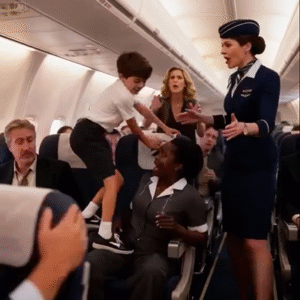
What began as a routine flight home turned into an experience Amara will never forget — one that tested her patience, exposed the importance of airline safety policies, and showed how a calm response can change the course of an entire cabin atmosphere.
Amara, a 22-year-old university student traveling home to Chicago after a weekend visit with friends, settled into her seat expecting a quiet flight.
She placed her headphones on, opened her book, and tried to relax. But only minutes after the aircraft pushed back from the gate, she felt a sudden, forceful kick against the back of her seat.
At first, she assumed it was accidental — a child shifting or stretching his legs. She waited another moment, but the kicking continued, steady and disruptive.
Hoping to resolve the matter kindly, Amara turned around with a polite smile and said:
“Hi there, could you please stop kicking my seat? Thank you.”
The boy, around 7 or 8 years old, stopped momentarily. But before Amara could face forward again, his mother leaned toward the aisle with an irritated expression.
“He’s a kid,” the woman snapped. “Stop overreacting.”
Taken aback by the hostility, Amara responded calmly, “I’m not upset. I just need the kicking to stop.”
But the mother rolled her eyes, muttering under her breath. Moments later, the kicking resumed — even harder than before.
Flight Crew Intervenes as Tensions Rise
A nearby passenger signaled to a flight attendant, who approached Amara’s row with concern. When Amara quietly explained the situation, the attendant nodded and walked over to speak with the mother.
What happened next surprised everyone.
The mother raised her voice and accused Amara of “harassing a child,” insisting loudly that Amara was the one causing the problem. Her frustrated tone and increasingly aggressive behavior disrupted the peaceful cabin environment.
The flight attendant remained composed but firm, reminding the mother of airline conduct policies and asking her to ensure her son stopped kicking the seat.
Instead of cooperating, the woman became more confrontational — raising her voice again, calling Amara “dramatic,” and insisting that “kids should be allowed to move.”
Passengers nearby exchanged uncomfortable glances. Some shook their heads. Others murmured with disbelief.
Cabin Disruption Prompts Action From the Captain
Airline staff quickly realized the situation could escalate further. Protocol required escalation to the captain, especially when a passenger refused to follow crew instructions.
Two flight attendants stepped away, consulted with the captain, and returned several minutes later with clear directives.
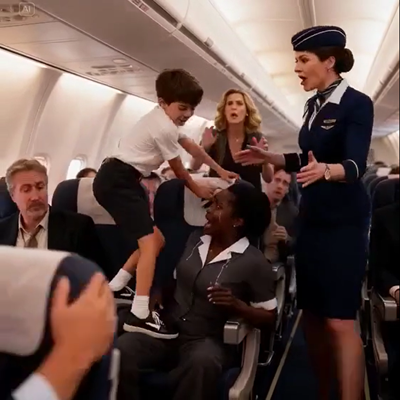
The lead attendant approached the mother and stated calmly:
“Ma’am, the captain has been informed. Due to repeated non-compliance with crew instructions and continued disruptive behavior, you and your child will need to deplane.”
The woman’s expression froze in shock.
“You’re kidding,” she said loudly. “Over what? Because she complained?”
But the crew explained that maintaining a respectful environment was essential for safety. After several warnings and escalating behavior, the captain had made a final decision.
Security personnel were called to meet the aircraft at the jet bridge. As the mother continued to protest, the passengers remained silent — until one man in row 9 spoke gently:
“Ma’am, she asked you nicely. We all saw what happened.”
Another passenger added, “The crew is just doing their job. Please let them work.”
Realizing the situation was no longer negotiable, the mother gathered her belongings, urging her son to follow. The boy appeared confused and frightened as they exited the plane with security.
A Calmer Cabin — and Support for Amara
The moment the mother and child stepped off the aircraft, the tension in the cabin eased noticeably. Several passengers offered Amara sympathetic smiles and reassuring words.
“You handled that better than most adults would,” a woman seated across the aisle said kindly.
A flight supervisor personally approached Amara to apologize on behalf of the airline, emphasizing that passenger comfort and safety are taken seriously and that discriminatory or hostile behavior is never tolerated.
“We are truly sorry you experienced this,” the supervisor said. “You remained incredibly composed. Thank you for helping us maintain a safe environment.”
The rest of the flight proceeded without incident. Flight attendants checked on Amara several times to ensure she felt comfortable and supported.
Consequences and Airline Follow-Up
When the plane landed in Chicago, airline representatives were waiting at the arrival gate. They escorted Amara aside privately to gather information, reaffirm their apologies, and explain the next steps.
They informed her that:
-
The mother had been placed on a temporary no-fly list, pending a full review.
-
The incident would be documented as a violation of airline conduct guidelines.
-
Safety officers and customer-relations teams would handle the case moving forward.
The airline also issued Amara a full refund, travel credits, and written assurance that her experience would be used as part of future crew training.
Meanwhile, at the gate area, the mother and child were still speaking with airport security. The mother appeared visibly distressed, but staff emphasized that her behavior — not her child — was the cause of the removal.
Passengers leaving the plane expressed gratitude to the crew for taking swift action. Many nodded toward Amara or offered warm smiles of support as they passed.
A Reminder of Respect, Accountability, and Safety
As Amara made her way toward baggage claim, she felt a mixture of relief and gratitude. What could have been an exhausting, confrontational ordeal instead became a powerful example of:
-
the importance of enforcing airline rules,
-
the responsibility of all passengers to treat others with respect, and
-
the role of crew members in protecting everyone’s safety and dignity.
Though shaken at first, Amara later said the incident reminded her that kindness and composure can make a significant difference — especially in situations where emotions run high.
The airline’s response made one thing clear:
Respect is not optional. Courtesy is not optional. Safety is not optional.
And in this case, standing up for those values protected not only Amara but the integrity of the entire cabin.
What began as a routine flight home turned into an experience Amara will never forget — one that tested her patience, exposed the importance of airline safety policies, and showed how a calm response can change the course of an entire cabin atmosphere.
Amara, a 22-year-old university student traveling home to Chicago after a weekend visit with friends, settled into her seat expecting a quiet flight.
She placed her headphones on, opened her book, and tried to relax. But only minutes after the aircraft pushed back from the gate, she felt a sudden, forceful kick against the back of her seat.
At first, she assumed it was accidental — a child shifting or stretching his legs. She waited another moment, but the kicking continued, steady and disruptive.
Hoping to resolve the matter kindly, Amara turned around with a polite smile and said:
“Hi there, could you please stop kicking my seat? Thank you.”
The boy, around 7 or 8 years old, stopped momentarily. But before Amara could face forward again, his mother leaned toward the aisle with an irritated expression.
“He’s a kid,” the woman snapped. “Stop overreacting.”
Taken aback by the hostility, Amara responded calmly, “I’m not upset. I just need the kicking to stop.”
But the mother rolled her eyes, muttering under her breath. Moments later, the kicking resumed — even harder than before.
Flight Crew Intervenes as Tensions Rise
A nearby passenger signaled to a flight attendant, who approached Amara’s row with concern. When Amara quietly explained the situation, the attendant nodded and walked over to speak with the mother.
What happened next surprised everyone.
The mother raised her voice and accused Amara of “harassing a child,” insisting loudly that Amara was the one causing the problem. Her frustrated tone and increasingly aggressive behavior disrupted the peaceful cabin environment.
The flight attendant remained composed but firm, reminding the mother of airline conduct policies and asking her to ensure her son stopped kicking the seat.
Instead of cooperating, the woman became more confrontational — raising her voice again, calling Amara “dramatic,” and insisting that “kids should be allowed to move.”
Passengers nearby exchanged uncomfortable glances. Some shook their heads. Others murmured with disbelief.
Cabin Disruption Prompts Action From the Captain
Airline staff quickly realized the situation could escalate further. Protocol required escalation to the captain, especially when a passenger refused to follow crew instructions.
Two flight attendants stepped away, consulted with the captain, and returned several minutes later with clear directives.
The lead attendant approached the mother and stated calmly:
“Ma’am, the captain has been informed. Due to repeated non-compliance with crew instructions and continued disruptive behavior, you and your child will need to deplane.”
The woman’s expression froze in shock.
“You’re kidding,” she said loudly. “Over what? Because she complained?”
But the crew explained that maintaining a respectful environment was essential for safety. After several warnings and escalating behavior, the captain had made a final decision.
Security personnel were called to meet the aircraft at the jet bridge. As the mother continued to protest, the passengers remained silent — until one man in row 9 spoke gently:
“Ma’am, she asked you nicely. We all saw what happened.”
Another passenger added, “The crew is just doing their job. Please let them work.”
Realizing the situation was no longer negotiable, the mother gathered her belongings, urging her son to follow. The boy appeared confused and frightened as they exited the plane with security.
A Calmer Cabin — and Support for Amara
The moment the mother and child stepped off the aircraft, the tension in the cabin eased noticeably. Several passengers offered Amara sympathetic smiles and reassuring words.
“You handled that better than most adults would,” a woman seated across the aisle said kindly.
A flight supervisor personally approached Amara to apologize on behalf of the airline, emphasizing that passenger comfort and safety are taken seriously and that discriminatory or hostile behavior is never tolerated.
“We are truly sorry you experienced this,” the supervisor said. “You remained incredibly composed. Thank you for helping us maintain a safe environment.”
The rest of the flight proceeded without incident. Flight attendants checked on Amara several times to ensure she felt comfortable and supported.
Consequences and Airline Follow-Up
When the plane landed in Chicago, airline representatives were waiting at the arrival gate. They escorted Amara aside privately to gather information, reaffirm their apologies, and explain the next steps.
They informed her that:
-
The mother had been placed on a temporary no-fly list, pending a full review.
-
The incident would be documented as a violation of airline conduct guidelines.
-
Safety officers and customer-relations teams would handle the case moving forward.
The airline also issued Amara a full refund, travel credits, and written assurance that her experience would be used as part of future crew training.
Meanwhile, at the gate area, the mother and child were still speaking with airport security. The mother appeared visibly distressed, but staff emphasized that her behavior — not her child — was the cause of the removal.
Passengers leaving the plane expressed gratitude to the crew for taking swift action. Many nodded toward Amara or offered warm smiles of support as they passed.
A Reminder of Respect, Accountability, and Safety
As Amara made her way toward baggage claim, she felt a mixture of relief and gratitude. What could have been an exhausting, confrontational ordeal instead became a powerful example of:
-
the importance of enforcing airline rules,
-
the responsibility of all passengers to treat others with respect, and
-
the role of crew members in protecting everyone’s safety and dignity.
Though shaken at first, Amara later said the incident reminded her that kindness and composure can make a significant difference — especially in situations where emotions run high.
The airline’s response made one thing clear:
Respect is not optional. Courtesy is not optional. Safety is not optional.
And in this case, standing up for those values protected not only Amara but the integrity of the entire cabin.