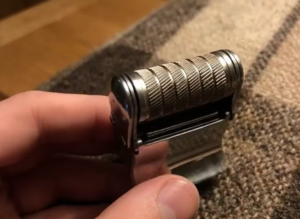
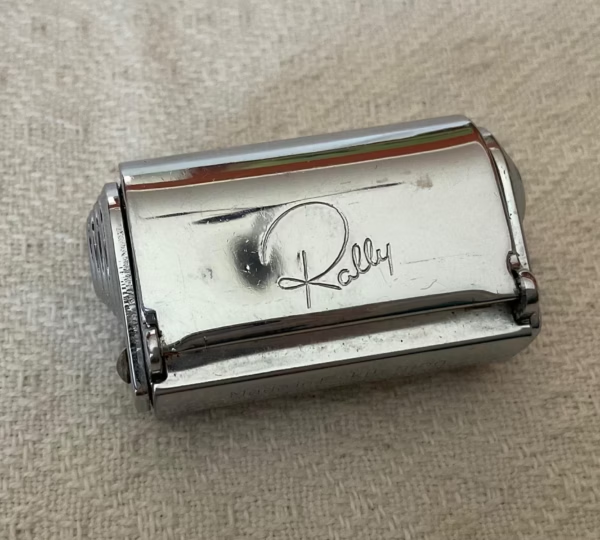
In the annals of personal grooming history, few devices capture the spirit of mid-20th-century ingenuity quite like the Rally Dry Shaver.
It represents a time when household products were more than utilitarian tools—they were symbols of a broader cultural fascination with progress, efficiency, and the relentless drive to reinvent everyday life.
This era, spanning the 1940s through the 1960s, was defined by optimism, experimentation, and the belief that nearly any daily task could be made faster, easier, or more enjoyable through mechanical innovation. Shaving, a ritual as old as civilization itself, became a particular target for this wave of creativity.
Traditional wet shaving had remained relatively unchanged for generations. A man would typically use a double-edged razor, water, soap, and a brush to create a lather that softened the beard before meticulously removing it.
This ritual emphasized craftsmanship, patience, and a certain intimacy with one’s daily grooming routine. For many, it was as much about mindfulness and routine as about personal appearance.
Yet, by the mid-20th century, there was a growing desire to accelerate these processes. In postwar societies, where modernity and convenience were celebrated, inventors and manufacturers sought to streamline mundane routines, and shaving—long considered labor-intensive—was ripe for disruption.
The Concept Behind the Rally Dry Shaver
The Rally Dry Shaver emerged from this mindset as a bold attempt to reimagine grooming entirely. Unlike electric shavers, which required cords or batteries, or traditional razors, which required water, soap, and time, the Rally offered the promise of dry, effortless shaving.
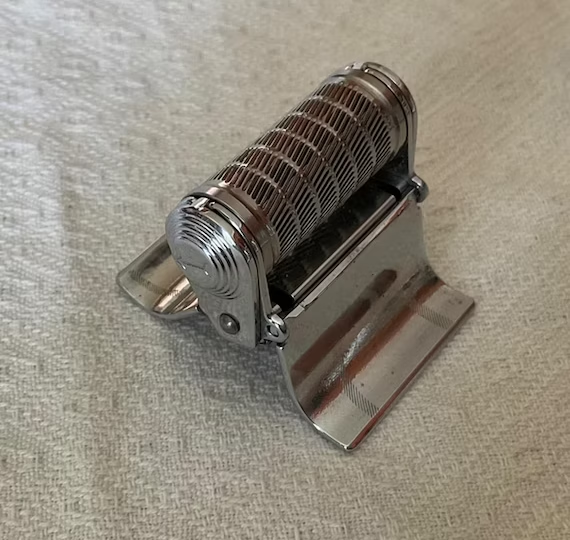
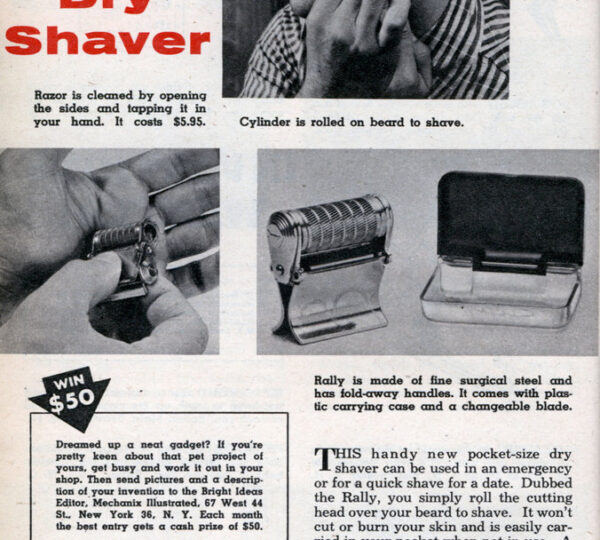
Its central mechanism relied on a rolling, toothed cylinder designed to shear hair in a motion similar to scissors.
This cylinder moved across the skin, cutting facial hair without the need for lather, sinks, or even a mirror. The design was meant to simplify the shaving experience, appealing to users who valued speed, portability, and novelty.
The shaver’s innovative approach highlighted the tension between tradition and modernity. Wet shaving emphasized ritual, comfort, and closeness, while electric shavers prioritized speed and efficiency.
The Rally Dry Shaver attempted to straddle these worlds: it offered a method that was fast, portable, and independent of external utilities, yet it retained some tactile engagement through its rolling mechanism.
This combination reflected a broader mid-century cultural fascination with “progressive convenience”—the idea that design and engineering could transform even the most mundane tasks into opportunities for innovation.
Design and Functionality
Technically, the Rally Dry Shaver was a marvel of compact engineering. Its cylindrical head contained a series of interlocking teeth that worked together to cut hair as the device was rolled across the face.
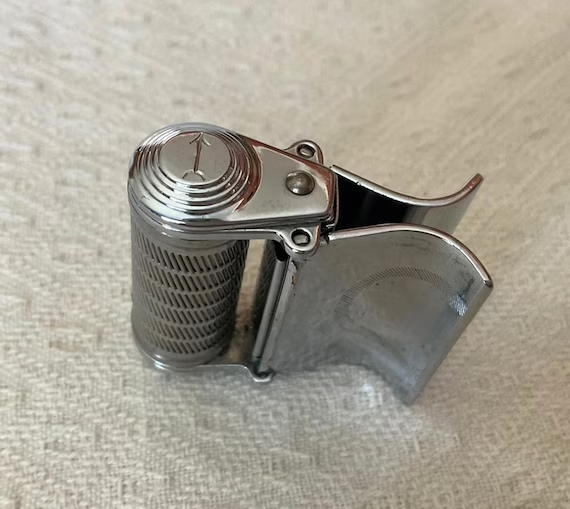
Users operated it by hand, moving it in small, controlled motions over their beards. Unlike electric shavers, it required no electricity or batteries, making it fully portable and ideal for travel.
Unlike traditional razors, there was no need for soap, shaving cream, or water, reducing preparation and cleanup time.
The simplicity of the device’s concept, however, belied the complexity of its execution. The toothed cylinder had to be precisely machined to avoid pinching the skin while still cutting hair effectively.
Any misalignment could result in discomfort or inefficient trimming. Similarly, the device’s casing and handle were designed for ergonomics, ensuring that users could maintain control while maneuvering across facial contours.
While the Rally Dry Shaver did not entirely eliminate manual skill from the process, it introduced a novel tactile experience—a blend of precision engineering and mechanical interaction.
Marketing and Cultural Appeal
The Rally Dry Shaver was marketed with an emphasis on convenience and modern living. Advertisements often portrayed it as the perfect solution for busy men who wanted a quick, effective shave without the fuss of traditional methods.
Travel-oriented messaging was also prominent: the shaver was ideal for business trips, vacations, and situations where access to water or sinks was limited. These campaigns reflected the postwar fascination with mobility, efficiency, and lifestyle improvement.
Culturally, the device appealed to a population enamored with innovation. Mid-20th-century consumers were increasingly exposed to new technologies—televisions, home appliances, and personal electronics were transforming domestic life.
Within this context, the Rally Dry Shaver symbolized a forward-thinking approach to personal care. Its novelty was not just practical; it represented an attitude, a willingness to embrace change, and a belief that everyday life could be improved through invention.
Reception and Limitations
Despite its innovative design, the Rally Dry Shaver faced significant challenges in adoption. Users often reported that it lacked the comfort and smoothness of both traditional wet razors and modern electric shavers.
The shearing action, while clever, could result in uneven trimming or skin irritation, particularly for those with sensitive skin. Additionally, the learning curve for proper use meant that it did not fully eliminate effort or skill; some users found it awkward compared to more familiar shaving methods.
Electric shavers, which became increasingly sophisticated throughout the 1950s and 1960s, ultimately overshadowed the Rally.
These devices offered a more consistent shave, reduced skin irritation, and required less manual dexterity. Wet shaving remained a staple for those who valued ritual and closeness.
In contrast, the Rally Dry Shaver occupied a niche that was novel but not compelling enough for widespread, long-term adoption.
Legacy and Collectibility
Today, the Rally Dry Shaver is remembered not as a commercial triumph but as a collectible curiosity and a symbol of mid-century ingenuity.
Enthusiasts of vintage appliances and grooming devices often seek out surviving examples, fascinated by its unique approach to a task so fundamental to daily life.
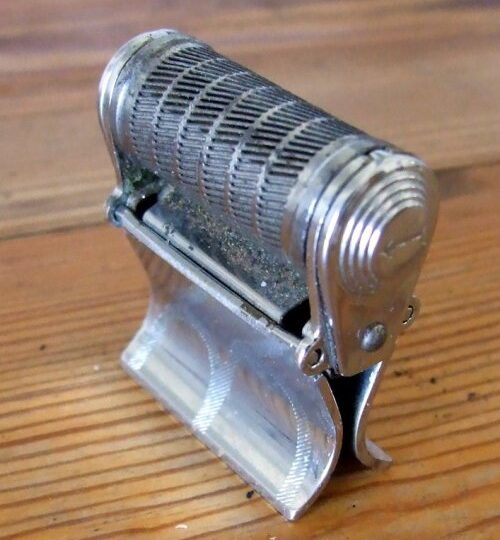
Collectors value the shaver not only for its mechanical design but also as a historical artifact that encapsulates the optimism, creativity, and experimental spirit of its era.
Its legacy is also cultural. The Rally Dry Shaver reminds modern audiences of a time when designers were unafraid to challenge conventions, to rethink even the most ordinary routines, and to envision new possibilities for comfort and convenience.
In a period dominated by industrial growth and technological exploration, such inventions reflected broader societal aspirations: that innovation could touch every aspect of life, from entertainment and communication to personal grooming.
Reflection on Mid-Century Innovation
The Rally Dry Shaver’s story is emblematic of mid-century innovation in a broader sense. The postwar era was marked by optimism and a belief in progress.
Household appliances, automobiles, electronics, and personal care products were all being redesigned with an eye toward efficiency, style, and novelty.
Engineers and designers experimented with materials, mechanics, and ergonomics, often prioritizing bold ideas over immediate practicality.
In this environment, the Rally Dry Shaver stands out as a particularly vivid example. It combined mechanical ingenuity with lifestyle aspirations, promising to transform a daily ritual into a faster, more convenient, and somewhat futuristic experience.
Its shortcomings—discomfort, uneven results, and limited appeal—do not diminish its significance. Instead, they highlight the experimental spirit of the time: the willingness to try, fail, and iterate in pursuit of a better, more efficient world.
Comparisons to Modern Grooming
While the Rally Dry Shaver ultimately faded from mainstream use, its influence can be seen in later grooming innovations. Modern electric shavers, battery-operated travel razors, and dry shavers for sensitive skin all echo the same desire to reduce preparation time, increase convenience, and make personal grooming accessible in diverse settings.
The Rally was an early step in this evolution—a prototype of ideas that would eventually become standard features in contemporary grooming tools.
Moreover, the Rally’s focus on portability and independence foreshadowed trends in lifestyle-oriented technology.
Today, consumers expect products that are easy to use on the go, whether in travel, sports, or work contexts. The Rally Dry Shaver, in its time, embodied this same ethos, demonstrating that personal care could be aligned with modern, mobile living.
Collectors’ Perspectives
Among collectors of vintage grooming devices, the Rally Dry Shaver holds a special place. Unlike mass-produced electric shavers that dominated the market, the Rally represents a moment of creative risk-taking.
Its cylindrical shearing mechanism is a talking point, and original models, often found in working condition or with preserved packaging, are considered valuable for their historical significance.
Collectors appreciate the device not only as a curiosity but also as a lesson in design thinking. The shaver illustrates the balance between innovation, user experience, and practical constraints—a balance that remains central to product design today.
By studying such inventions, designers can understand both the successes and limitations of mid-century mechanical innovation, drawing inspiration from the ambition while learning from the challenges.
Conclusion
The Rally Dry Shaver is more than a forgotten grooming tool; it is a window into a time when innovation was fearless and ubiquitous. It embodies the optimism and creativity of mid-20th-century inventors, who saw even the simplest daily tasks as opportunities for improvement.
While it did not achieve lasting commercial success, the shaver’s legacy endures as a symbol of experimentation, imagination, and the pursuit of convenience without compromise.
Today, it serves as a collectible, a conversation piece, and a reminder that even ordinary routines can inspire extraordinary ideas.
For enthusiasts of history, design, or personal grooming, the Rally Dry Shaver encapsulates the spirit of an era where ingenuity knew no bounds and every aspect of life—even the morning shave—was open to reinvention.
In the context of modern grooming, it remains a fascinating reminder of how far technology has come, while also highlighting the timeless human desire to innovate, simplify, and imagine new possibilities.
The Rally Dry Shaver stands as a testament to creativity and ambition—a small, mechanical emblem of a period when the future seemed limitless, and no task was too mundane to improve.