For federal law enforcement, the threat emerged like something out of a crime thriller — a chilling, unusual plot that underscored the real dangers faced by those charged with protecting the homeland.
In late 2025, U.S. authorities say they thwarted a murder‑for‑hire scheme targeting a senior U.S. Border Patrol official before it could be carried out, arresting a man accused of placing a bounty on the official’s life. The alleged plot.
Involving cryptic messages, gang ties, and the use of social media to coordinate violence — sent shockwaves through law enforcement circles and raised serious questions about escalating risks to federal officers in the field.
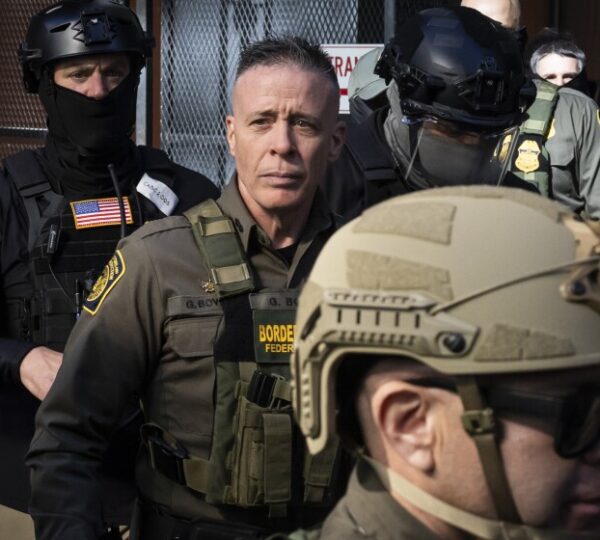
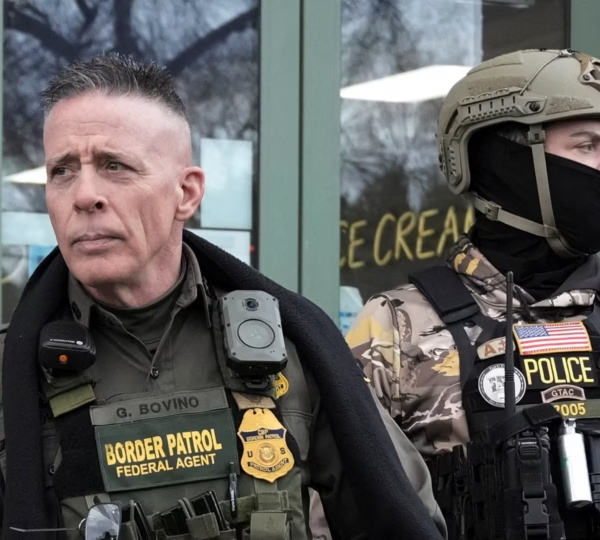
At the center of the case is Gregory Bovino, the Commander at Large of U.S. Border Patrol — a high‑profile official who has led federal immigration enforcement operations in cities including Chicago.
Investigators say a suspect offered cash rewards to anyone willing to provide information that would lead to Bovino’s capture, and an even larger sum for anyone who would “take him down.” Authorities moved swiftly before the threat could escalate beyond planning, arresting the alleged organizer in suburban Chicago.
How the Plot Came to Light
The investigation began in early October 2025 after Homeland Security Investigations (HSI) received a tip from a confidential informant who warned federal agents that someone had placed a hit — a bounty — on a senior federal law enforcement official.
According to court documents, the informant said the threat was tied to gang activity and directed at a top Border Patrol commander.
The confidential source provided a screenshot of a Snapchat conversation in which a user — identified only by the name “Juan” and a handle that included references to a gang — appeared to offer $2,000 for information leading to the official’s location and $10,000 for his murder.
The message reportedly included a photo of Bovino and shorthand indicating ties to the Latin Kings, a street gang long associated with violence and criminal enterprise in Chicago.
Investigators traced the Snapchat account and other online communications to 37‑year‑old Juan Espinoza Martinez, a resident of Burr Ridge, Illinois, a suburb of Chicago.
Law enforcement identified him as the alleged organizer of the plot and moved quickly to disrupt any possibility of it advancing.
The Alleged Target: Border Patrol’s Gregory Bovino
The official at the center of the alleged plot, Gregory Bovino, has been one of the most visible figures in federal immigration enforcement in recent years.
His role as a senior Border Patrol commander has placed him at the forefront of operations involving immigration policy and law enforcement action in urban centers such as Chicago and Los Angeles. Bovino’s work has drawn both praise and controversy, particularly amid expanded federal enforcement efforts.
In statements to the media, federal officials described the alleged plot as an affront to the rule of law and to the broader mission of law enforcement.
Emphasizing that threats against officials cannot be tolerated, authorities said the case illustrates the seriousness with which they treat coordinated threats, no matter how unconventional the methods used to encourage violence might be.
The Arrest and Charges
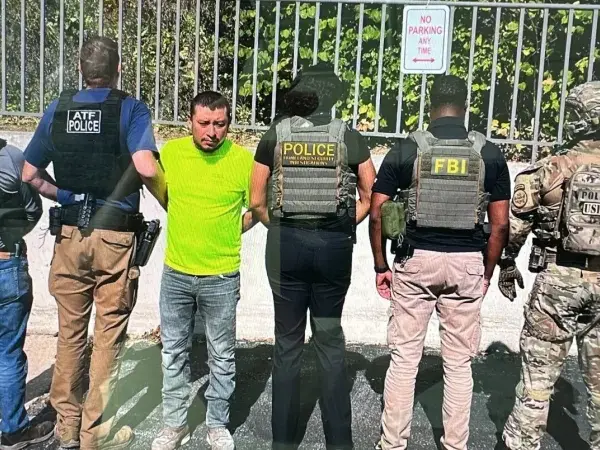
On October 6, 2025, investigators with Homeland Security and partner agencies moved in and arrested Juan Espinoza Martinez without incident, taking him into federal custody in Burr Ridge.
Martinez was charged in federal court with soliciting the murder of a senior federal law enforcement officer, a felony that carries decades in prison if convicted.
According to court filings, Espinoza Martinez allegedly communicated with others via Snapchat and perhaps other social platforms about the bounty, offering explicit rewards for information or action against Bovino.
The messages prosecutors have highlighted are stark: one allegedly promised $2,000 for information and a greater $10,000 for someone who “took him down.” Law enforcement interprets these as clear evidence of intent to solicit murder.
At a federal arraignment in October 2025, Martinez entered a plea of not guilty to the charge, with his attorney contesting the government’s characterization of the evidence and disputing claims that his client was affiliated with the Latin Kings.
Lawyers for Martinez argued in court that prosecutors must prove beyond a reasonable doubt both the meaning of the messages and their connection to a genuine effort to carry out a murder‑for‑hire scheme.
Court Proceedings and Legal Battles
The case has since moved through early pre‑trial proceedings in the Northern District of Illinois, where discussions have taken place over what evidence will be admissible at trial.
One notable legal question has been whether allegations about Martinez’s gang affiliation should be presented to jurors, with his defense team arguing that prosecutors lack sufficient evidence to connect him definitively to the Latin Kings.
A federal judge ruled that prosecutors could not introduce gang‑affiliation evidence unless it directly pertained to the charge itself, focusing instead on the murder‑for‑hire claim.
The judge also denied prosecutors’ request to allow a confidential witness to testify anonymously, ruling that the possible prejudice to Martinez’s defense outweighed the need for anonymity.
That decision means at least some details of how law enforcement built their case are likely to come out in open court.
Prosecutors have signaled they intend to demonstrate not only the content of the messages but also the broader communications context and Martinez’s intent. For example, court records and statements refer to alleged remarks about “LK” — shorthand for Latin Kings — and other online phrases implying readiness to defend territory or escalate violence.
Defense counsel, however, has pushed back, characterizing these as unproven and insufficient as direct evidence of either intent or affiliation.
Context: Enforcement and Violence in Chicago
The alleged plot occurred against the backdrop of a broader federal initiative known as Operation Midway Blitz, an immigration enforcement operation conducted in Chicago beginning in September 2025.
The effort, organized by federal agencies including U.S. Immigration and Customs Enforcement (ICE), Border Patrol, and other partners, aimed to arrest undocumented immigrants with criminal records and enforce immigration laws in areas with sanctuary policies.
Those intensified enforcement efforts have been controversial and have fueled tensions between local communities, advocacy groups, city officials, and federal authorities.
In some instances, clashes between protesters and law enforcement have erupted during immigration actions, drawing national attention and criticism.
Such an environment creates high stakes for officials involved in enforcement and can also contribute to dangerous rhetoric and real threats against personnel.
Federal officials have described the alleged murder plot as an especially alarming escalation in this tense environment, showing how quickly rhetoric can turn into actionable danger.
Prosecutors emphasized that the scheme targeted not just an individual, but an embodiment of federal law enforcement authority.
Federal Law Enforcement Response
Department of Homeland Security leaders, including high‑level officials, publicly condemned the plot and highlighted the swift actions taken to disrupt it.
In statements, DHS and Justice Department representatives said the case should serve as a warning to gangs and criminal networks that threats against federal officers will not be tolerated and will be met with decisive action.
At a news briefing shortly after the arrest, one senior official said the complaint demonstrates a “profound contempt for human life and public safety” and reaffirmed federal commitment to protect law enforcement personnel.
Officials reiterated that offering a financial reward for harm against an officer — especially a high‑ranking one — constitutes a grave federal crime.
U.S. Attorney Andrew S. Boutros, whose office is prosecuting the case, stated that placing a price on the life of a law enforcement officer is “an attack on the rule of law.” He pledged that his office would seek to hold Martinez accountable to the fullest extent of the law.
Broader Implications and Reactions
While the case itself centers on a single charge of murder‑for‑hire, its implications echo far beyond the indictment. Analysts have described it as part of a troubling pattern in which federal immigration enforcement officials have faced increased targeted threats, particularly in areas with heightened enforcement activity.
In some cities, law enforcement officials have reported public hostility, social‑media‑amplified threats, and ongoing safety concerns linked to gang retaliation or anti‑ICE sentiment.
Some law enforcement advocates argue that threats such as this reinforce the need for robust protection and support for officers who serve in volatile environments.
Others have called for community engagement strategies to reduce tensions and build understanding between federal agencies and the neighborhoods where enforcement actions take place.
Civil liberties groups, on the other hand, have sometimes criticized broad enforcement operations like Operation Midway Blitz, arguing that they can strain community trust and escalate conflicts unnecessarily.
In that context, the alleged plot hangs over ongoing debates about immigration policy, public safety, and how best to harmonize enforcement with community cooperation.
The Road Ahead: Trial and Accountability
The case against Juan Espinoza Martinez is set to move forward toward trial, where prosecutors will have to prove beyond a reasonable doubt that Martinez intentionally solicited murder and that the messages reflected a genuine threat.
As of early 2026, pre‑trial motions, evidentiary hearings, and legal maneuvering continue, with defense lawyers pressing for limitations on what evidence the government may present and challenging aspects of the prosecution’s narrative.
Should Martinez be convicted, he faces decades in prison, given the severity of the offense and its implications for public safety and national law enforcement operations.
Solicitation of murder against a federal official — especially one as senior and visible as a Border Patrol chief — is treated as among the gravest criminal charges in the U.S. justice system.
Why This Matters
This disrupted plot, while prevented from becoming a tragedy, underscores the real dangers faced by law enforcement officers in sensitive enforcement roles. It highlights the intersection of social media, gang communication, and broader criminal networks in ways that can birth unexpected threats.
It also shows the importance of informants, intelligence gathering, and rapid interagency coordination in averting violence — the very mechanisms that led to Martinez’s arrest before any physical harm could occur to Bovino or others.
As the legal process unfolds, observers will be watching not only the particulars of this case but its implications for public safety, community relations, and how federal agencies manage risk in high‑tension environments.