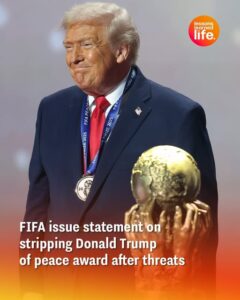
FIFA has faced intense criticism after awarding Donald Trump the inaugural FIFA Peace Prize in December 2025, just weeks before the 2026 World Cup draw. The award was intended to recognize “extraordinary actions for peace and unity.”
Presented by FIFA president Gianni Infantino in Washington, D.C., the decision quickly became controversial. Critics pointed to subsequent U.S. military actions abroad as contradicting the spirit of the prize.
Trump’s administration launched operations in Venezuela, captured President Nicolás Maduro, and issued intervention threats toward other nations. These moves fueled backlash against FIFA’s decision.
Calls soon emerged for FIFA to revoke the award. Opponents argue that honoring Trump undermines the credibility of a prize meant to symbolize peace and global cooperation.
Despite reported internal embarrassment among officials, FIFA has defended the move. The organization emphasized the importance of maintaining strong diplomatic ties with the United States.
Those relationships are seen as critical to hosting the 2026 World Cup across the U.S., Canada, and Mexico. FIFA insists its focus remains on delivering a successful tournament.
Political pressure has also reached the Olympic world. Following U.S. military actions, some British lawmakers urged international sports bodies to consider banning the United States from major competitions.
The International Olympic Committee rejected those calls, stating that sport must remain separate from politics. As tensions rise, FIFA and the IOC face growing scrutiny over how they balance diplomacy, ethics, and the integrity of global sport.