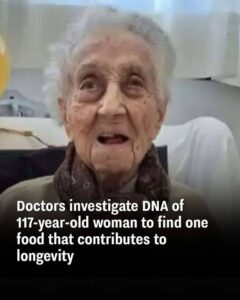
Maria Branyas Morera, a Spanish supercentenarian, lived to the remarkable age of 117 years and 168 days before passing away last year. Born in the United States, she moved to Catalonia in 1915 and remained there for the rest of her long life.
During her lifetime, Maria witnessed two world wars, the terms of 21 U.S. presidents, and countless innovations that transformed the modern world. Her exceptional longevity attracted global attention.
Before her death, Maria expressed a wish for doctors to study her DNA, hoping her case could shed light on ways to help others extend their lives. Researchers from the University of Barcelona and the Josep Carreras Leukaemia Research Institute carried out the study, collecting biological samples to examine her genetics and cellular health.
Dr. Manel Esteller, the principal investigator, explained that Maria defied the usual pattern of aging, where advancing years often bring illness. “For the first time, we’ve been able to separate being old from being sick,” he told The Times. He added that while Maria’s genes were a major factor, science may one day reproduce such effects through new drugs.
Findings suggested that at 117, Maria’s biological age was closer to 100–105. She had exceptionally low levels of harmful cholesterol and triglycerides, while her “good” cholesterol was unusually high, giving her the profile of a much younger person.
Her lifestyle also played an important role. Maria exercised regularly, avoided smoking and alcohol, and enjoyed a rich social life. Her daily routine included a cereal-packed smoothie with eight different grains.
Another personal favorite was La Fageda yogurt, a probiotic brand she credited as part of her diet. Its inflammation-fighting bacteria may have supported her health.
Scientists also noted Maria’s very short telomeres, which typically signal aging and higher mortality. Surprisingly, in her case, they may have acted protectively by limiting the growth of cancer cells.