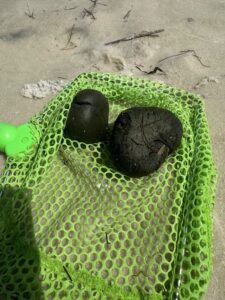
Anyone who has spent time along Pensacola Bay with children knows how quickly a simple beach walk can turn into a moment of discovery. Kids spot small, round, squishy objects along the shoreline and rush over, laughing and proudly announcing their find. While the playful nickname often used for these objects tends to amuse adults, the reality behind them is far more natural and interesting. What children usually discover are mudballs—harmless formations created by the bay’s unique environment. These little finds may look unusual at first, but they are a familiar and long-standing part of the coastal landscape.
Mudballs are especially common along bayside areas where soft sediments, grassy marshes, and gentle tides come together. Unlike ocean beaches with constant wave action, Pensacola Bay has calmer waters that allow fine mud and clay to settle along the bottom. Over time, sections of this soft sediment break away due to water movement, weather changes, or even footsteps near the shoreline. Once loose, the natural motion of the bay begins to shape these fragments. Slowly rolling back and forth, they become rounded and smooth, blending easily into the sand until someone curious enough stops to look closer.
The process that forms mudballs is surprisingly similar to how river stones or sea glass are polished. As the sediment rolls along the bay floor, sand and water act as natural sculptors, smoothing rough edges and compacting the material into firm, round shapes. The dark green or nearly black color often comes from organic matter in the bay’s sediment, such as decayed plant material. While their appearance can sometimes raise questions, mudballs are generally odorless, soft to the touch, and completely natural. If one feels unusually sticky or has a strong smell, it’s best to leave it behind and rinse hands, but most are perfectly safe to examine briefly before returning them to the shoreline.
For generations, these odd little discoveries have been part of growing up along the Gulf Coast. Mudballs may not be as famous as shells or sand dollars, but they spark the same sense of wonder and curiosity. They invite questions about tides, underwater landscapes, and how nature quietly shapes its surroundings. Long after the beach day ends, these moments often remain in family stories, remembered with laughter and affection. In their own simple way, mudballs are a reminder that even the smallest, strangest-looking objects can connect children to the natural world—and to lasting coastal memories.