Most of us have done it at some point — dumped a jar of loose coins onto a table, sorted through them quickly, and rolled our eyes at the modest total. Pennies especially tend to get dismissed. They accumulate in cup holders, desk drawers, laundry rooms, and the bottoms of purses. They feel ordinary, almost insignificant.
Yet every so often, a story circulates about a single penny that turned out to be worth far more than one cent. Headlines spark curiosity. Social media posts encourage people to “check your change.” Suddenly, something small and overlooked becomes intriguing.
The truth is both exciting and grounded: while rare pennies do exist and some have significant collector value, the vast majority of coins in everyday circulation are standard issues worth exactly what they say on the front. Understanding the difference requires patience, context, and a little historical knowledge.
This article explores what makes certain pennies collectible, why some coins become rare, how to approach coin research responsibly, and why the real reward often lies in the learning process rather than the price tag.
The Penny: Small Coin, Big History
The United States one-cent coin — commonly called the penny — has been in circulation since 1793. Over more than two centuries, its design, composition, and production methods have evolved multiple times.
From the early large cents of the late 18th century to the familiar Lincoln cent introduced in 1909, each era reflects shifts in artistic style, economics, and historical events. That long timeline is part of what makes coin collecting so fascinating. Every coin represents a specific year, a specific mint, and a moment in history.
Most pennies you encounter today feature Abraham Lincoln on the obverse (front). Since 1959, the reverse (back) design has changed several times, including the Lincoln Memorial and later commemorative designs. Despite these updates, billions of pennies are produced annually in standard years, meaning most examples remain common.
But occasionally, something different happens.
When History Changes Metal
One of the most important factors that can make a coin collectible is a change in materials. During times of economic pressure or global events, governments sometimes adjust coin composition to conserve resources.
For example, during World War II, copper was heavily needed for military manufacturing. As a result, in 1943, the U.S. Mint produced pennies made primarily of steel coated with zinc instead of the usual copper alloy.
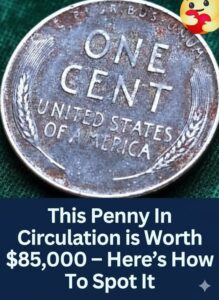
These 1943 steel cents are well known among collectors. While many were produced and are not particularly rare in circulated condition, they stand out visually due to their silver-gray appearance rather than the traditional reddish tone of copper pennies.
However, a small number of 1943 pennies were accidentally struck in bronze (copper alloy) instead of steel. These error coins are extremely rare and have become highly sought after by collectors. Because they were not meant to exist, their scarcity makes them historically significant.
It’s important to emphasize: these rare examples are uncommon. Most 1943 steel pennies are interesting pieces of history but are not extraordinarily valuable.
Rarity Is About Numbers, Not Hype
The concept of rarity often gets misunderstood.
A coin becomes rare when only a limited number were produced — or when only a few survived in collectible condition. This can happen for several reasons:
-
Low mintage numbers (few coins originally made)
-
Production errors
-
Changes in design or composition
-
Coins withdrawn from circulation
-
Coins lost or melted down over time
But “old” does not automatically mean “rare.” Millions of coins from decades ago still exist. Age alone does not create high value.
Condition matters significantly. A coin that looks brand new, with sharp details and no visible wear, is generally more desirable than one that has been heavily circulated. Collectors use grading systems to evaluate condition, which can dramatically influence a coin’s market value.
Two pennies from the same year might look similar at a glance — yet one could be worth more due to condition, mint mark, or a subtle variation.
Mint Marks and Why They Matter
Most U.S. coins include a small letter indicating where they were minted. For pennies, common mint marks include:
-
“P” (Philadelphia — though older coins often have no mint mark)
-
“D” (Denver)
-
“S” (San Francisco)
Certain mint locations produced fewer coins in specific years. When production numbers were lower, surviving examples can be more collectible.
For instance, a penny from a year when only a limited batch was struck at a specific mint might be harder to find today compared to the same year produced in higher quantities elsewhere.
Again, though, scarcity varies widely by year and condition. Careful research is essential.
The Role of Mint Errors
Mint errors often generate the most excitement.
Errors occur during the coin production process. Examples can include:
-
Double dies (where the design appears slightly doubled)
-
Off-center strikes
-
Wrong metal compositions
-
Clipped planchets (incomplete coin shapes)
These mistakes are typically caught and removed before circulation, but occasionally some enter the public supply.
Collectors appreciate errors because they represent unusual moments in manufacturing history. However, not every unusual-looking coin is a true mint error. Damage after circulation can sometimes mimic error characteristics.
That’s why authentication and expert evaluation are crucial before assuming anything unusual is valuable.
Why Most Pennies Are Still Just Pennies
For every genuinely rare coin, there are millions of ordinary ones.
Modern coin production is highly controlled. While errors do occur, they are uncommon relative to the enormous number of coins minted annually.
Sorting through change can certainly be enjoyable and educational. But statistically, discovering a rare coin in everyday circulation is unlikely. That doesn’t make the activity pointless — it simply sets realistic expectations.
The joy often comes from the search itself.
The Psychology of Treasure Hunting
Why do stories about valuable pennies capture so much attention?
Part of it stems from the idea that something ordinary might secretly hold extraordinary potential. It taps into a universal human fascination with hidden treasure.
But unlike fictional treasure hunts, coin collecting rewards patience, research, and understanding rather than luck alone.
When people examine coins more closely, they begin noticing details: design changes, date variations, mint marks, color differences. What once seemed monotonous becomes layered with nuance.
This awareness transforms casual sorting into a mini history lesson.
Research Before Conclusions
Before assuming any coin has significant value, reliable research is essential.
Trusted coin reference books, reputable numismatic organizations, and certified grading services provide accurate information about mintage numbers, known errors, and market trends.
It’s wise to approach sensational claims carefully. Online listings can sometimes exaggerate value. Just because someone lists a penny for a high price does not mean it will sell for that amount.
Professional appraisal is the best way to verify authenticity and condition if you believe you have something unusual.
Condition: The Hidden Factor
Collectors use grading scales to assess coins. These range from heavily circulated examples to “mint state” coins that appear nearly untouched.
Even small differences in surface wear can influence value dramatically.
Factors considered during grading include:
-
Sharpness of details
-
Surface marks
-
Luster
-
Color consistency
-
Evidence of cleaning or alteration
It’s important not to clean old coins. Cleaning can damage surfaces and reduce collector interest.
Sometimes the safest approach is simply to leave a coin exactly as it is until it can be evaluated by a knowledgeable professional.
The Educational Side of Coin Sorting
Whether or not a rare penny turns up, sorting through change can be surprisingly educational.
You might discover:
-
Different reverse designs from commemorative series
-
Older wheat-backed pennies (produced from 1909 to 1958)
-
Steel cents from 1943
-
Variations in color due to aging and oxidation
Each discovery offers an opportunity to learn about American history, industrial processes, and artistic design.
Coins function as tiny time capsules. They traveled through countless hands, across decades, carrying silent stories.
How to Approach Coin Checking Responsibly
If you decide to check your change:
-
Work on a clean, flat surface.
-
Separate coins by year.
-
Look for unusual colors or mint marks.
-
Compare findings against reputable sources.
-
Avoid cleaning or altering the coin.
If something appears genuinely unusual, consult a certified coin dealer or professional grading service.
Remember, realistic expectations are key.
The Value of Curiosity
Even if you never uncover a rare coin, the act of paying closer attention to small details can be rewarding.
In a world that moves quickly, examining something as ordinary as a penny encourages mindfulness. You begin noticing differences, patterns, and design elements that once went unseen.
That shift in awareness — from automatic dismissal to active observation — can be surprisingly satisfying.
Why Stories About Rare Coins Persist
Stories of rare coins continue to circulate because they represent possibility.
They remind us that history hides in plain sight. That everyday objects can sometimes carry unexpected significance.
But responsible storytelling also includes context: rarity is rare. Value depends on multiple factors. And professional verification matters.
The most important takeaway is not that every jar of pennies contains a hidden fortune — but that curiosity can turn routine moments into engaging discoveries.
Final Thoughts: More Than Just Spare Change
So, should you check your change?
There’s no harm in looking. It can be enjoyable. It can spark learning. It can deepen appreciation for history and craftsmanship.
But approach it as an exploration rather than an expectation.
Most pennies are simply pennies.
Yet each one still represents a piece of economic history, a year in time, and a design chosen to reflect a nation’s identity.
Whether you discover something unusual or not, the act of looking closely transforms ordinary spare change into something more meaningful — a reminder that sometimes, value lies not only in price, but in perspective.