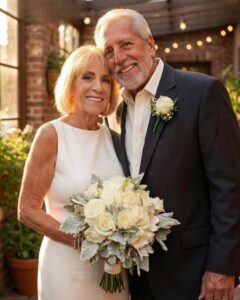
Three months after my mother died, my father announced he was getting married again—and the timing alone made it feel impossible to process. Our home still looked like she might walk in at any moment: her slippers by the couch, her coat still hanging near the door, even the soft lavender scent she always wore lingering in the hallway. My brother Robert and I were called over for a “small family meeting,” and that’s when Dad introduced his fiancée. It wasn’t a stranger or a longtime friend. It was Laura—my mother’s younger sister. Dad spoke calmly about grief, about loneliness, about finding comfort in someone who understood the same loss. I tried to nod along, telling myself that grief can twist people into choices they never imagined… but deep down, something didn’t sit right.
The wedding happened fast, almost like it was meant to be finished before anyone could ask too many questions. There were no big plans, no celebrations, just a quiet ceremony and relatives forcing polite smiles that didn’t reach their eyes. On the day of the wedding, I stood listening to soft music and watching family members congratulate my father like this was normal. Then Robert arrived late, looking pale and shaken. He grabbed my arm, pulled me away from the crowd, and pressed a sealed envelope into my hands. His voice was tight when he said a lawyer had contacted him that morning—someone our mother had spoken to before she passed. The instructions were clear: this letter was only to be opened if Dad remarried. My hands went cold as I stared at the envelope, realizing my mother had anticipated something we hadn’t seen coming.
We slipped into a quiet side room, and Robert carefully opened the letter. The moment I saw her handwriting, something in me broke all over again. Her words were steady and calm, written with the same gentle strength she carried through her illness. She explained that while she was still alive, she had discovered something painful about my father—something she chose not to confront in her final months because she didn’t want her last days filled with chaos and arguments. Instead, she focused on protecting us. She wrote that she had taken legal steps to make sure her children would be secure no matter what happened after she was gone. There was no cruelty in her message, no revenge—only truth, quiet planning, and a kind of love that looked like preparation.
When we returned to the reception, my father greeted us with a smile that faded the second he saw our faces. Robert didn’t raise his voice. He didn’t cause a scene. He simply told Dad that Mom had left legal documents and instructions, and that her wishes were already in motion. The room didn’t erupt into drama—it went silent in that uncomfortable way that happens when the truth finally lands. We walked out together into the cool evening air, feeling like something had ended and something had begun at the same time. In the months that followed, our lives slowly steadied, rebuilt on honesty instead of pretending. And looking back, I understood my mother’s final gift wasn’t only the love she gave while she lived—it was the protection and wisdom she left behind, making sure we wouldn’t be left vulnerable after she was gone.