Brain teasers are a fun way to challenge your thinking, and one of the most shared examples online is the classic six eggs riddle. It looks like basic math at first glance, but the real test is whether you read the wording carefully instead of rushing to calculate. These puzzles are designed to catch the brain’s habit of making quick assumptions.
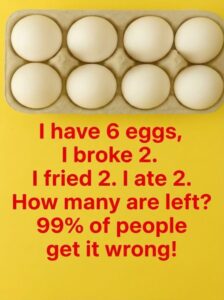
The riddle goes like this: “I have six eggs. I broke two, fried two, and ate two. How many eggs are left?” A lot of people answer “zero” right away because they assume each action happened to different eggs. That assumption makes it feel like six eggs were used up, but that’s the trap.
If you slow down, the steps line up differently. To fry eggs, you have to break them first, and to eat them, they have to already be cooked. That means the same two eggs were broken, then fried, then eaten—one set of eggs going through three actions, not three separate sets.
So the answer is four. You started with six eggs, only two were actually used, and the remaining four were never touched. This riddle is a good reminder that careful reading often matters more than quick math. Once this detail becomes clear, the solution is simple. You started with six eggs, used only two, and the remaining four were never touched. Therefore, four eggs are still left. This small but clever riddle is a fun reminder that good problem-solving often depends more on careful reading and logical reasoning than on quick calculations.