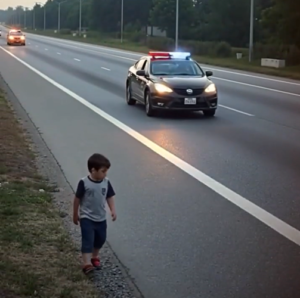
It was a cold, overcast afternoon when Officer Ramirez received the call that would change the course of a young boy’s life. The dispatcher’s voice had been tense but precise: a child had been spotted near the edge of the highway, wandering alone, and in visible distress.
As Ramirez drove through the thin fog that clung to the roadside, he could already imagine the vulnerability of a child so small, so alone. Every instinct honed over years of service told him this was a situation that required patience, gentleness, and vigilance.
When Ramirez arrived, the scene confirmed his worst fears. A boy of no more than four or five years was crouched behind a guardrail, shivering in the early winter chill.
His clothing was worn and soiled, dust and grit clinging to the fabric and to his skin. The boy’s eyes darted nervously at each passing car, wide with fear and confusion.
There was a hesitation in his posture, a mixture of distrust and exhaustion, suggesting he had been navigating the world alone for far too long.
The First Encounter
Ramirez approached slowly, his training reminding him to appear non-threatening. He knelt low to the ground, extending a hand without forcing contact.
The child flinched but didn’t run—an important first sign that trust might still be possible. After a few moments of calm, soft words, and gentle gestures, the boy allowed Ramirez to take him into his arms.
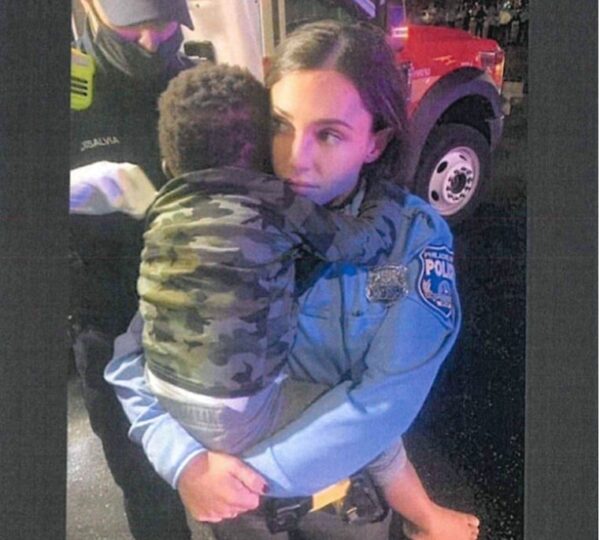
The boy’s small frame pressed against Ramirez’s chest. His limbs were light as paper, fragile and trembling. When he finally stopped crying, he nestled into the warmth of the officer’s uniform, finding some measure of comfort in a stranger’s arms.
Ramirez whispered reassurances, careful to maintain a calm tone, explaining that he was safe and that help was on the way.
Every step toward the patrol car was cautious, the boy’s tiny hands gripping the fabric of Ramirez’s jacket as though holding on for his very life.
By the time the boy was seated safely in the back of the vehicle, Ramirez’s heart ached. The sight of such innocence betrayed by circumstance—the vulnerability of a child who should never have faced this alone—stayed with him as he radioed in their location and began the drive to the station.
Arrival at the Police Station
Once at the station, the boy was immediately attended by medical professionals. Nurses carefully assessed his condition, cleaning the layers of dirt from his skin and washing away the grime that had accumulated over days of neglect.
His wounds, though minor, spoke of days spent unsupervised—scrapes, bruises, and the telltale signs of hunger. Despite his quiet demeanor, his eyes revealed resilience.
They were wide, expressive, and filled with an intelligence that suggested he had already learned to survive in ways no child should have to.
While the medical team worked, officers began piecing together what little information they had. His clothing, age, and location were logged meticulously.
Photos were taken for social media distribution, a modern tool increasingly used to locate missing or endangered children quickly.
Ramirez stayed nearby, offering small comforts—a toy from the station’s modest collection, a blanket, and occasional smiles meant to reassure the boy that he was safe. Though Liam seemed too weary to play, the gesture was important, signaling a shift from fear to care.
The Power of Community and Social Media
Within hours, the photograph posted on the department’s social media accounts had gone viral. The post was shared thousands of times, expanding far beyond the local community.
People were moved by the boy’s small, vulnerable appearance, and many felt compelled to help. Comments flooded in—words of encouragement, tips, and inquiries that might lead to answers about his identity.
It wasn’t long before a breakthrough came. A phone call connected the department with a woman who immediately recognized the boy: his aunt, Maria.
She had been searching for him desperately, following news reports and social media alerts, hoping for any clue about his whereabouts. Maria’s relief was palpable even over the phone; she rushed to the station as quickly as possible, anxiety and hope mingling in equal measure.
The Emotional Reunion
When Maria arrived, the atmosphere in the station was charged with anticipation. The boy, now seated in Ramirez’s office, looked up as she entered. Recognition flickered across his face.
Without hesitation, he ran into her arms. Maria held him tightly, tears streaming down her face, whispering his name repeatedly: “Liam, Liam… it’s okay now. I’ve got you.”
Ramirez watched quietly, a mix of relief and pride in his chest. His role had been protective, a bridge from danger to safety, but this moment belonged to family. Liam had finally found someone who could offer stability, love, and care.
Uncovering the Truth
Once Liam was safely in the care of his aunt, the details of his ordeal began to surface. Maria’s explanation was fragmented, her words occasionally choked with emotion.
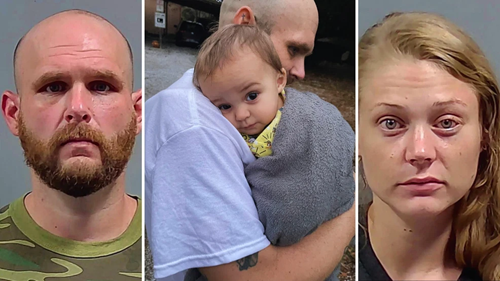
Liam’s parents had been deeply neglectful, a fact made worse by their involvement in illegal activities. The household that appeared ordinary from the outside was actually a front for criminal operations, leaving Liam without supervision for days at a time.
Maria explained that the parents had been arrested in a law enforcement raid the previous week. However, amid the chaos, Liam had been overlooked, left to fend for himself.
Hungry, disoriented, and instinctively seeking safety, he had wandered from home to the highway, where a combination of fear and survival instincts guided him toward help.
The revelation left officers in a state of disbelief. It was incomprehensible to imagine a child so young navigating such dangers alone, exposed to the elements, traffic, and the unknown. For many on the team, the emotional weight of that realization lingered long after the immediate rescue.

Ensuring Safety and Stability
The department quickly coordinated with child protective services to ensure Liam’s immediate safety. Maria, who had been seeking custody for some time, was legally positioned to provide him with a stable home.
Officers and social workers collaborated to ensure all protocols were followed, balancing urgency with careful attention to the boy’s well-being.
Throughout this process, Officer Ramirez remained a constant presence. He understood the importance of continuity and familiarity in helping children recover from trauma.
He offered reassurance, maintained routines where possible, and made sure Liam felt secure as decisions about his future were finalized.
Emotional Impact on Officer Ramirez
For Ramirez, the rescue was more than a routine duty. It was a vivid reminder of why he had chosen law enforcement in the first place: to protect those who cannot protect themselves.
The experience left a lasting mark on him, reinforcing the profound responsibility carried by officers and the delicate balance between enforcement and compassion.
In quiet moments after the initial chaos had settled, Ramirez reflected on Liam’s resilience. The boy’s wide, expressive eyes had conveyed more than words ever could—a silent testimony to endurance, courage, and the instinct to survive against overwhelming odds.
The Role of Community in Child Safety
The incident also highlighted the importance of community and modern communication in safeguarding children. Social media, when used responsibly, allowed officers to quickly locate family members and ensure Liam’s well-being.
The widespread sharing of the post demonstrated how collective awareness can translate into swift action, bridging gaps that traditional methods alone might leave unaddressed.
Neighbors, local residents, and even strangers played a role by remaining observant and reporting unusual activity. This collaborative approach reinforced the idea that protecting vulnerable members of society is a shared responsibility, extending far beyond the walls of a police station.
Liam’s Future and Healing
With Maria taking custody, Liam’s path forward became clear. He was placed in a nurturing environment, surrounded by family willing and able to provide consistent care.
Psychological support and medical follow-ups were arranged, recognizing the importance of addressing both the physical and emotional consequences of his ordeal.
Ramirez and other officers continued to visit periodically, ensuring the transition felt safe and supported. Small gestures—a favorite snack, a book, or a friendly conversation—helped Liam associate law enforcement not with fear, but with protection and care. These connections are vital in fostering trust, especially for children who have experienced neglect or trauma.
Lessons From a Rescue
The story of Liam’s rescue is multifaceted. It underscores the vulnerability of children in unsafe environments, the critical role of attentive law enforcement, and the profound impact of family involvement in recovery.
It also demonstrates how small acts—officer patience, community vigilance, social media awareness—can converge to produce life-changing outcomes.
For Officer Ramirez, the rescue reaffirmed a core principle: every child deserves safety, dignity, and compassion.
Liam’s experience became a case study in both the challenges and triumphs inherent in child protection, reminding everyone involved that even in the darkest circumstances, hope and humanity persist.
A Community Reinvigorated
The local community, moved by the story, rallied in support of Liam and his aunt. Donations of clothing, educational supplies, and toys poured in, along with messages of encouragement and congratulations to the law enforcement officers involved.
In many ways, Liam’s rescue became a symbol of what can be accomplished when multiple layers of society—family, police, social services, and neighbors—work together toward a common goal: the well-being of a child.
Conclusion: Compassion in Action
The story of Officer Ramirez and little Liam is more than a tale of rescue; it is a testament to the enduring power of compassion, vigilance, and collaboration.
From the moment Ramirez first cradled the boy to the emotional reunion with his aunt, every decision reflected care, patience, and professional dedication.
Liam’s journey, while harrowing, ended with safety, stability, and a chance to heal. It serves as a poignant reminder of the importance of protecting society’s most vulnerable members, recognizing the signs of neglect, and acting decisively to ensure a child’s future is not defined by past hardships.
In the quiet aftermath, Ramirez reflected that moments like these reaffirm why law enforcement exists—not merely to enforce laws, but to safeguard lives, nurture trust, and preserve hope, one child at a time.