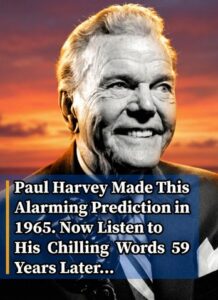
Paul Harvey’s 1965 radio commentary often referred to as “If I Were the Devil” has circulated for generations, but its renewed popularity today comes from something deeper than nostalgia. When people listen to it now, many are struck by how reflective it feels rather than dramatic. What once sounded like imaginative storytelling now feels like a thoughtful meditation on human behavior and cultural change. Harvey wasn’t predicting specific events or technologies; he was exploring timeless concerns about values, responsibility, and the quiet ways societies shift over time.
In the broadcast, Harvey used a creative perspective to illustrate how change rarely happens through sudden collapse, but through small compromises. He described a world where distractions replace reflection, where comfort becomes more desirable than character, and where personal responsibility slowly fades. At the time, this style of commentary was common in radio—provocative, symbolic, and meant to spark thought rather than agreement. Listeners in the 1960s heard it as a cautionary tale, an invitation to think critically about the direction of culture and the choices people make every day.
What makes the message resonate today is not its details, but its themes. Modern audiences hear echoes of their own concerns: families struggling to stay connected, people overwhelmed by noise and information, and communities searching for shared meaning. Harvey spoke long before digital media, yet his focus on distraction and moral drift feels relevant in an era defined by constant connectivity. This has led many listeners to reflect inward rather than outward, asking how personal habits, priorities, and daily decisions shape the world around them.
Paul Harvey often emphasized the idea that strong societies are built on self-discipline and thoughtful citizenship. His words continue to be shared not because they offer fear or blame, but because they encourage awareness. They remind listeners that cultural change begins with individual choices—how we speak to one another, what we value, and what we pass on to future generations. Voices like Harvey’s endure because they address universal questions that never fully fade. In revisiting his message today, many find not a warning of doom, but a reminder of responsibility, balance, and the enduring power of reflection in an ever-changing world.