At just five years old, Tommy Chan faced a moment no child—or parent—should ever have to endure. Diagnosed with a severe congenital heart defect, Tommy required a complex, life-saving open-heart surgery.
The procedure was known for its high risk, even in the most experienced hands. The Chen family’s lives, once filled with ordinary routines of playgrounds and bedtime stories, had shifted overnight to hospital corridors, surgical consultations, and endless waiting.
The hospital, a sprawling facility of steel and glass, hummed with the energy of activity. Nurses moved briskly through the halls, pushing carts of medical supplies.
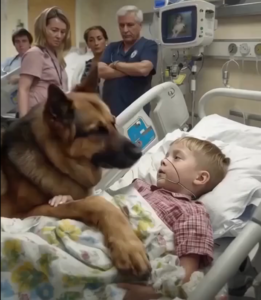
Doctors consulted quietly in clusters, their voices professional yet serious. Amid the antiseptic smells and the low, constant beeping of monitors, Tommy lay in his small hospital bed.
In his tiny hands, he clutched a well-loved stuffed animal—a soft, worn bear that had accompanied him since infancy. His eyes, wide and somber, followed every movement, trying to understand the storm of activity surrounding him.
The thought of their little boy undergoing heart surgery, with all its inherent risks, was almost unbearable. Yet in the quiet moments between doctors’ briefings and medical checks, they tried to offer Tommy reassurance, speaking in gentle tones, holding his hands, and brushing his hair back from his forehead.
Despite the presence of his parents, Tommy felt a profound absence. He turned his head slightly toward the nurse at his bedside and whispered in a trembling voice, “Can… Archie come to me?
I might never see him again.” The nurse paused, taken aback by the earnestness in his eyes. She understood immediately who Archie was: not just a pet, but a vital source of comfort for this frightened little boy.
Archie, the Loyal Companion
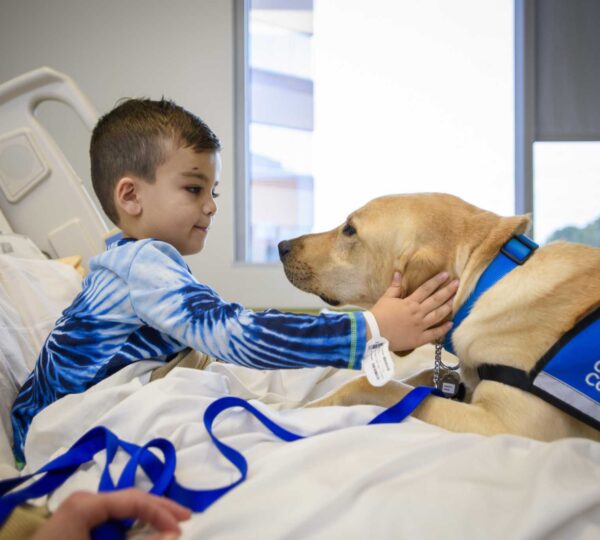
Archie, a Golden Retriever with a gentle temperament and a golden coat that gleamed in sunlight, was more than a family dog—he was Tommy’s best friend, constant companion, and protector.
From the moment Tommy was old enough to interact with him, the pair had been inseparable. Archie had accompanied Tommy to routine doctor visits, therapy sessions, and even hospital checkups.
His calm demeanor and intuitive understanding of Tommy’s moods made him uniquely suited to support the boy through stressful medical experiences.
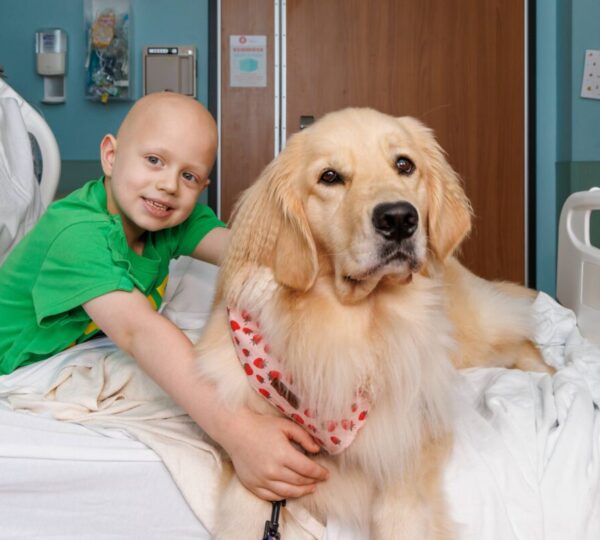
Recognizing the critical role Archie played in Tommy’s emotional wellbeing, the hospital staff made a rare exception.
Normally, dogs were not allowed in patient rooms, but the doctors, nurses, and administrators understood that this was no ordinary visit.
Archie’s presence could provide more than comfort—it could have a tangible impact on Tommy’s ability to cope with the fear and anxiety surrounding his surgery.
When Archie finally arrived, tail wagging and eyes bright, Tommy’s face lit up. He threw himself into the dog’s embrace, burying his small face into Archie’s fur.
For the first time in weeks, a genuine smile spread across his face. The bond between boy and dog was palpable, a living testament to the calming power of loyalty and love.
An Unexpected Warning
However, what happened next was both shocking and life-saving. As Dr. Hawthorne, the surgeon assigned to perform Tommy’s operation, approached the bedside to speak with the family, Archie suddenly stiffened.
His ears perked, and a low growl emanated from his chest. The staff froze, unsure how to react. Archie, typically calm and friendly, lunged slightly toward the surgeon, his growl deepening.
At first, the moment was tense. Nurses and doctors exchanged glances, unsure whether to interpret Archie’s behavior as a simple act of anxiety or a sign of something more concerning.
But it quickly became clear that Archie had detected a danger that humans had not yet noticed. A subsequent review revealed a shocking truth: Dr. Hawthorne smelled of alcohol.
Though the surgeon had passed initial screenings and appeared professional, Archie’s instincts had detected the threat immediately—a subtle odor of alcohol on the surgeon’s breath that could have compromised patient safety during the delicate procedure.
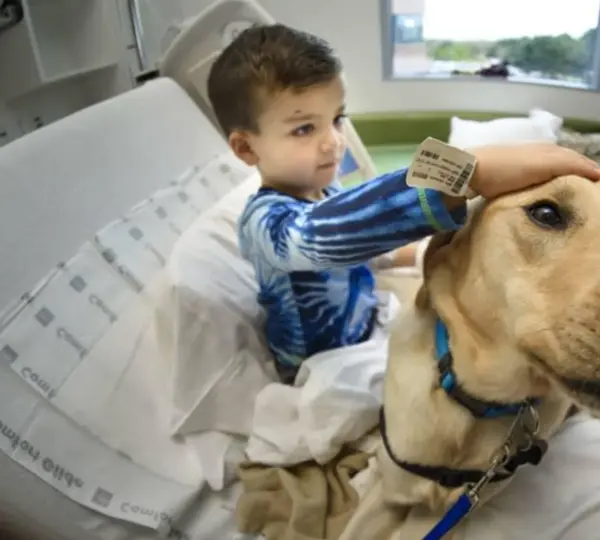
The hospital responded swiftly. Dr. Hawthorne was removed from the case, and an immediate reassessment of Tommy’s surgical plan was initiated.
A new surgeon was appointed, one with impeccable credentials and a spotless record. Though the delay was stressful for the Chen family, the hospital’s rapid response ensured that Tommy would be placed in safe hands.
When the surgery eventually took place, it was a success. The operation went smoothly, and Tommy’s tiny heart was repaired without complication.
Recovery and the Role of Emotional Support
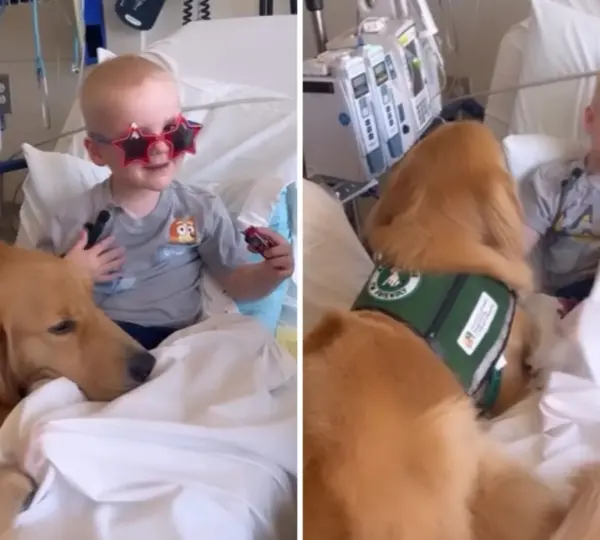
In the days following surgery, Tommy’s recovery was steady and remarkable. Nurses noted that the presence of Archie had a calming effect not only on Tommy but also on other young patients in the ward.
The dog’s gentle nature, combined with consistent human care, helped reduce anxiety, stabilize emotions, and encourage engagement with recovery activities.
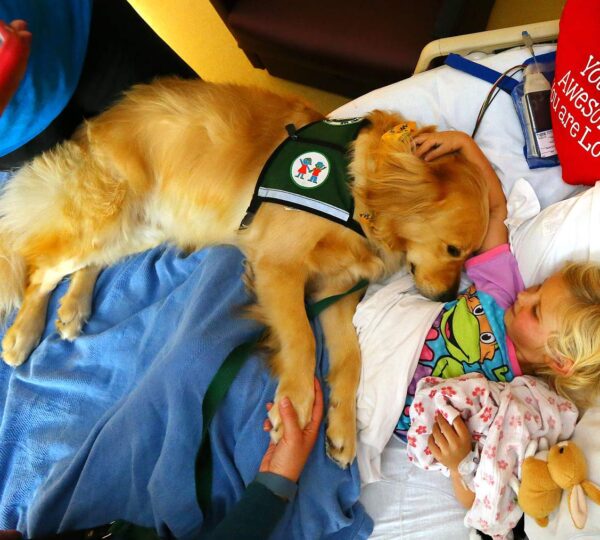
Every time Tommy reached out for Archie, the boy found comfort, reassurance, and a reminder that he was not facing his medical challenges alone.
The experience left a lasting impression on the Chen family. Inspired by Archie’s bravery and intuitive sense of danger, they established the Archie Foundation, a nonprofit organization dedicated to bringing therapy dogs into hospitals nationwide.
The foundation’s mission is to provide emotional support, companionship, and comfort to patients of all ages, helping them cope with the stress, fear, and uncertainty of medical treatments.
Each therapy dog is carefully trained to respond to patients’ needs, offering both emotional reassurance and, occasionally, life-saving intervention, as in Tommy’s case.
Impact on Hospital Policies
Tommy’s story also prompted hospitals to reexamine safety protocols. The incident highlighted the importance of monitoring staff for potential risks that might compromise patient care.
Hospitals introduced stricter procedures for evaluating medical staff, ensuring that factors such as substance use, fatigue, and compliance with professional standards are rigorously checked.
Additionally, the story reinforced the value of incorporating emotional support programs into medical care, recognizing that human intuition and the bond between patients and therapy animals can provide safeguards against both physical and psychological harm.
A Hero With Fur
Years later, Tommy Chan is a thriving young adult. He often returns to hospitals with Archie, who remains as loyal and calm as ever.
Together, they visit children facing surgery, chronic illness, or hospital stays, spreading hope, courage, and a sense of calm.
Each visit is a testament to the extraordinary power of the human-animal bond, illustrating that heroism does not always come in traditional forms.
Archie’s story reminds us that courage and vigilance can appear in many forms. While doctors, nurses, and medical teams perform life-saving work daily, sometimes a hero wears no uniform, carries no scalpel, and speaks no words.
Sometimes a hero comes with fur, a wagging tail, and an unwavering sense of loyalty. In Tommy’s life, Archie was both a source of comfort and an unexpected sentinel, protecting a small child from harm in ways that no human alone could.
Lessons Learned and Broader Implications
Tommy and Archie’s story is more than a heartwarming tale; it is a case study in the importance of emotional intelligence, vigilance, and unconventional problem-solving in healthcare. It highlights several key lessons:
Emotional Support Is Critical: Hospitals and medical facilities must recognize the psychological needs of patients, particularly children, who may experience fear and stress during complex procedures.
Therapy animals can significantly reduce anxiety, improve recovery, and enhance overall wellbeing.
Unconventional Safety Measures Matter: Archie’s instincts identified a danger that human oversight had missed.
While therapy dogs are typically valued for comfort, they can also play a role in alerting staff to potential risks, whether physical, emotional, or procedural.
Proactive Monitoring of Staff: Ensuring patient safety extends beyond technology and protocols—it includes careful oversight of medical personnel.
The hospital’s response to remove Dr. Hawthorne and replace him with a qualified surgeon underscores the importance of robust evaluation processes for staff.
The Power of Advocacy: The Chen family’s creation of the Archie Foundation demonstrates how personal experiences can inspire systemic change, extending benefits to countless others facing similar challenges.
A Lasting Legacy
Today, Archie continues to serve as both a companion and a symbol of courage, loyalty, and vigilance. Tommy’s journey, from a frightened five-year-old to a resilient young adult, is a testament to the extraordinary bond between humans and animals.
Their story has inspired medical professionals, patients, and families alike, emphasizing the value of compassion, awareness, and innovation in healthcare.
In a world often focused on technology, procedures, and medical interventions, Tommy and Archie’s story reminds us that sometimes the most critical support comes not from machines or manuals, but from those who offer unconditional love, loyalty, and an instinctive sense of protection.
Heroes do not always wear capes, carry weapons, or issue commands. Sometimes they simply sit patiently, wag their tail, and respond to the silent cries of those in need.
For Tommy Chan, that hero was Archie. And because of him, countless others have found comfort, courage, and hope in the face of their own medical challenges.