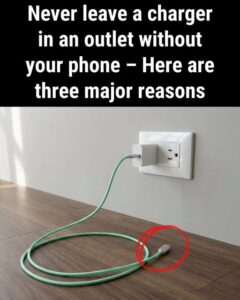
Grabbing your phone and rushing out the door feels harmless, almost automatic, but the charger left behind keeps quietly working. Even without a device attached, it continues to draw small amounts of power, warming itself just enough to matter over time. One charger seems insignificant, but across multiple outlets in a single home, those tiny drains add up, silently feeding into a much larger pattern of wasted energy we rarely stop to notice. It is not dramatic, not obvious, but it is constant.
What most people never consider is the slow wear happening behind the wall. Chargers age even when idle, internal components degrading bit by bit, especially in cheaper or knockoff adapters. Outlets can loosen, plugs can heat unevenly, and cords that look fine on the outside may already be weakening within. Most days nothing happens, which is why the habit feels safe, but the rare failures that do occur often trace back to small, ignored details like these.
Electricians see the long view, not just the normal days but the aftermath of the unusual ones. Overloaded power strips, frayed cables, and aging chargers left plugged in around the clock are common threads in preventable electrical issues. The danger is not constant fear, but quiet probability, the kind that builds slowly and only reveals itself when conditions line up just wrong. Awareness, not panic, is the lesson.
Unplugging a charger when you are done takes seconds, yet it pays you back in subtle ways. It reduces unnecessary power use, extends the life of your devices, lowers long term strain on outlets, and removes one more silent risk from your home. In a world designed to stay always on, this small habit gives you back a measure of control, reminding you that safety and savings often start with the simplest actions.