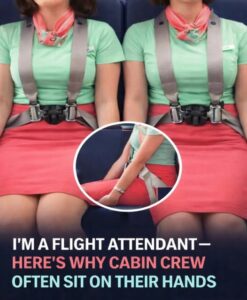
If you’ve ever glanced toward a jump seat during takeoff or landing, you may have noticed flight attendants sitting very still, backs straight, feet planted firmly on the floor, hands tucked neatly beneath their thighs. To many passengers, the posture looks unusual, even uncomfortable, and it’s easy to assume it’s just a habit picked up over time. In reality, that position is neither casual nor optional. It is a carefully taught safety technique known as the brace position, practiced during the most critical moments of a flight. Behind that quiet stillness is a mindset of readiness, discipline, and responsibility that defines the role of cabin crew far beyond serving drinks or answering call buttons.
Takeoff and landing are widely regarded as the most demanding phases of any flight. During these moments, the aircraft is changing speed and altitude rapidly, and there is less margin for error if something unexpected occurs. Because of this, flight attendants are trained to assume a posture that minimizes injury and maximizes control. Sitting upright with hands tucked under the thighs helps anchor the body, reducing the risk of arms flailing forward or striking hard surfaces in the event of sudden deceleration or impact. By locking their arms in place, attendants protect some of the most vulnerable parts of the body, ensuring they remain capable of assisting passengers immediately if an emergency unfolds.
The brace position is not only about physical protection, but also about mental focus. During takeoff and landing, flight attendants are trained to scan the cabin, listen for unusual sounds, and remain fully alert to any sign that something is wrong. Their posture helps eliminate unnecessary movement and distraction, allowing them to concentrate entirely on the environment around them. Training simulations reinforce this discipline, placing attendants in high-stress scenarios where staying calm and attentive is essential. In those moments, their role shifts from service to leadership. They are preparing to act decisively, guide passengers, and manage chaos if required, often within seconds.
It’s also important to understand that flight attendants and passengers are given different safety instructions for a reason. Passengers are typically told to lean forward and protect their heads and necks, focusing on personal safety. Flight attendants, on the other hand, remain upright so they can quickly stand, assess conditions, and assist others. This distinction reflects the unique responsibility they carry. The hands-under-thighs posture is just one small part of extensive training that includes emergency evacuations, first aid, fire response, and crisis management. So the next time you see a flight attendant sitting that way, remember it’s not a habit or a quirk. It’s a quiet signal of preparedness, a reminder that during the most vulnerable moments of flight, someone nearby is fully trained, fully focused, and ready to protect the lives entrusted to them.