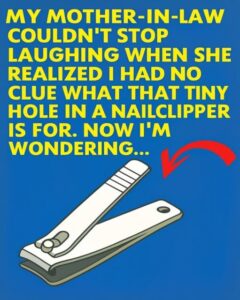
Most people use nail clippers as part of their regular grooming routine without ever stopping to consider their design. These small tools seem simple at first glance, yet they include thoughtful features that improve convenience and usability. One such detail is the tiny round hole found on one handle of many standard nail clippers. While it may appear decorative or insignificant, this small opening serves real practical purposes that make everyday grooming easier.
The most common function of the hole is to allow the nail clipper to be attached to a keychain, lanyard, or small metal ring. By threading a key ring through the opening, users can keep their clippers securely connected to their keys, bags, or bathroom hooks. This prevents the tool from being misplaced in drawers, purses, or travel kits. For people who are frequently on the move, such as travelers, gym-goers, or busy professionals, this simple attachment option ensures that a nail clipper is always available when needed.
Beyond attachment, the hole can provide additional benefits in daily use. Some people slide a fingertip through the opening to gain a steadier grip, which can be helpful when trimming nails carefully or reaching awkward angles. Others use the hole to hang clippers on bathroom organizers or wall-mounted racks, keeping grooming tools neatly stored and easy to find. In shared households, this small feature also helps distinguish personal items by allowing labels or colored rings to be added. These secondary uses highlight how a minor design element can contribute to organization and comfort.
The presence of the hole also reflects the long history of nail clipper design. Early versions of nail clippers, developed more than a century ago, often included this feature so people could carry grooming tools with them at a time when personal care kits were less common. Over the years, manufacturing methods have evolved, but the hole has remained a standard part of the design because it continues to serve useful purposes. It is a reminder that even the smallest details in everyday objects are often the result of thoughtful planning rather than chance.
In the end, the tiny hole in a nail clipper is more than just a design quirk. It adds convenience, improves portability, and contributes to better organization. This simple feature shows how practical thinking can transform an ordinary tool into something more functional, proving that good design often lies in the smallest details of everyday life.