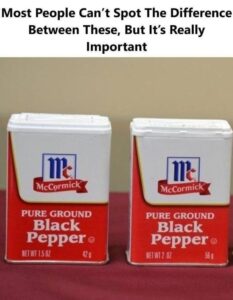
In today’s crowded marketplace, consumers are constantly asked to make fast choices with limited information. Packaging, branding, and shelf appearance often guide decisions more than careful analysis. Subtle changes in size or design can easily slip past unnoticed, even when they directly affect value. A recent legal dispute in the spice industry highlights how seemingly minor differences can have meaningful consequences for shoppers and companies alike.
The conflict centers on McCormick and Company and its smaller rival, Watkins Incorporated. McCormick reduced the amount of pepper in one of its popular containers from roughly eight ounces to closer to six, a decrease of about twenty-five percent. Despite this reduction, the container’s external dimensions stayed largely the same. Watkins argues that this creates the impression that customers are still buying the same quantity they always have.
According to Watkins, McCormick’s opaque containers prevent consumers from seeing the actual amount of pepper inside. Watkins, by contrast, sells pepper in clear containers that visibly show the contents. Although both brands now offer similar quantities, McCormick’s packaging appears larger and more substantial on store shelves. Watkins claims this visual advantage misleads consumers and violates consumer protection standards.
For shoppers, the impact is both financial and psychological. Many people equate larger packaging with better value, assuming more product is included. When the two brands are placed side by side, McCormick’s container appears to offer more, even when it does not. This illusion can quietly influence purchasing decisions and undermine informed choice.
McCormick maintains that the net weight is clearly printed on its labels and that consumers should read this information. Critics counter that companies understand how most people shop and rely on visual cues rather than fine print. This disagreement has intensified with class action lawsuits from customers who claim they were misled by the packaging change.
Beyond the courtroom, the dispute highlights the importance of trust. Brands are built on long-term relationships with consumers, and even small changes can damage credibility if customers feel deceived. The McCormick and Watkins case underscores that transparency, not just legality, is essential for maintaining consumer confidence and long-term success.