In the dense urban landscape of Chicago, a strikingly narrow structure known as the “Pie House” has redefined the possibilities of residential architecture. At first glance, the house seems almost like an optical illusion, appearing far too slender to support a functional interior. However, its existence is not a gimmick but a sophisticated response to the scarcity of city land. It serves as a visual testament to how thoughtful engineering can turn a seemingly unusable strip of earth into a dwelling that is both habitable and aesthetically compelling.
The project originated when a local architect acquired a leftover piece of property that had been dismissed by developers as a “scrap” lot. Rather than seeing the slim dimensions as a barrier to construction, the designer viewed the constraints as a catalyst for innovation. In a city where square footage often dictates property value, this project sought to prioritize spatial intelligence over sheer volume. The resulting construction proved that even the most overlooked parcels of land can contribute meaningfully to the neighborhood’s architectural fabric when approached with a clear vision.
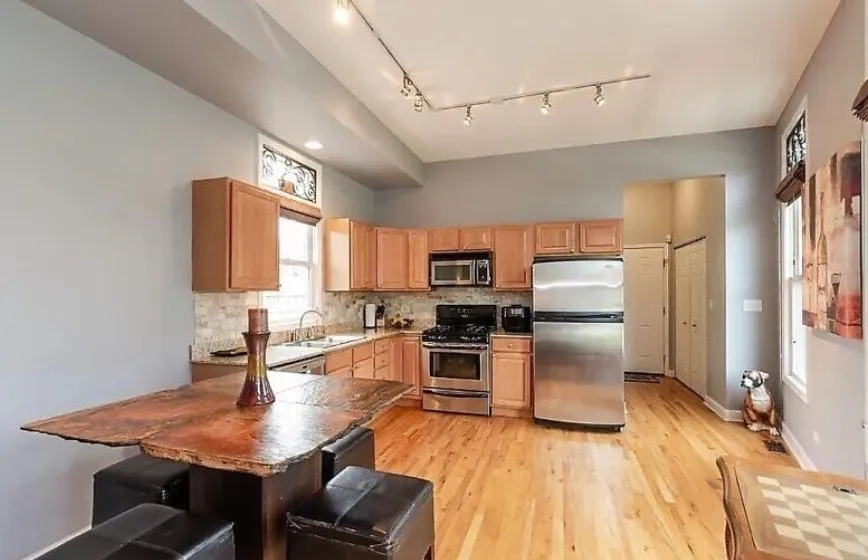
To overcome the claustrophobia often associated with small-footprint living, the house rises two stories above a uniquely shaped triangular basement. The interior relies heavily on verticality and the strategic placement of oversized windows to flood the narrow rooms with natural light, creating an illusion of expansive openness. Every square inch is utilized through custom, built-in storage solutions hidden within the walls and beneath the staircases. These design choices ensure that the home feels purposeful and airy, effectively dismantling the assumption that a narrow home must necessarily feel restrictive.
Beyond its physical dimensions, the house embodies a minimalist philosophy that values quality of life over excessive space. Warm wooden finishes and clean, modern lines create a refined atmosphere that remains cozy despite the home’s unconventional layout. It serves as an inspiring model for sustainable city living, showing that innovation often thrives most when forced to work within strict limitations. By maximizing a forgotten plot of land, this narrow house offers a fresh perspective on how intelligent design can solve the growing challenges of modern urban density.