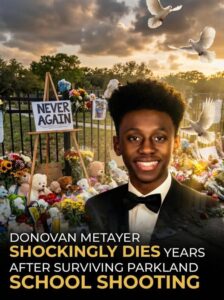
Years after the headlines faded, the quiet weight of survival remained. In December 2025, Donovan Metayer—who lived through the 2018 shooting at Marjory Stoneman Douglas High School—passed away at the age of 26. His family shared that the trauma of that day never truly left him, underscoring a truth often overlooked after mass violence: survival does not mean the end of suffering. His death has prompted renewed reflection on how deeply such events can shape lives long after the public moves on.
Loved ones remembered Donovan as thoughtful, bright, and endlessly curious, with ambitions that once pointed toward a future in technology. After graduating in 2018, however, they noticed a gradual shift as the emotional toll of the shooting began to surface. He faced serious mental health challenges that complicated education and employment, requiring ongoing care and periods of hospitalization. Even so, Donovan persisted—earning professional certifications and finding work that gave him purpose. His family emphasized how difficult it was to secure consistent, long-term support, pointing to broader gaps that many survivors encounter while trying to heal.
The event that altered his path occurred on February 14, 2018, when a mass shooting claimed 17 lives at the Parkland campus and injured many others. The attack shocked the nation and led to policy changes in Florida aimed at prevention and school safety. The shooter, Nikolas Cruz, later received a life sentence without parole. While those reforms addressed immediate risks, Donovan’s story highlights a different reality—one where the consequences unfold slowly, privately, and often without enough support.
Donovan’s passing has been compared to losses among other survivors of mass violence, reinforcing calls from families and advocates for stronger mental health access and long-term care. They stress that honoring those affected means more than remembrance; it requires sustained compassion, resources, and attention to the invisible injuries trauma leaves behind. By sharing Donovan Metayer’s journey, his family hopes to keep the conversation focused on healing—and on the responsibility to stand with survivors long after the cameras are gone.