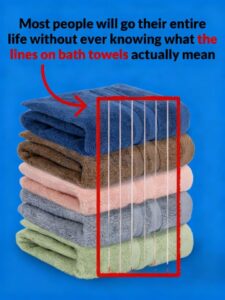
Bath towels are everyday essentials that most people use without giving much thought to how they are made. Yet behind their soft texture and familiar appearance lies careful design and craftsmanship. One of the most noticeable features on many bath towels is the presence of lines or bands woven into the fabric. While these details may look purely decorative at first, they are actually intentional elements that play an important role in how towels function and how long they last. Taking a closer look at these subtle features reveals how much thought goes into even the simplest household items.
The lines on bath towels are typically created through specific weaving techniques rather than surface decoration. These woven patterns help improve the towel’s performance in several ways. One key benefit is absorbency. By varying the weave, manufacturers increase the surface area of the fabric, allowing the towel to hold more moisture. The textured lines also promote better air circulation, which helps towels dry more efficiently between uses. In addition, the lines provide gentle texture that enhances the feel of the towel against the skin, creating a balance between softness and functionality.
Another important purpose of these lines is to support the towel’s structure. Many towels feature raised or reinforced lines that help prevent stretching, thinning, or misshaping over time. These areas act as stabilizers within the fabric, allowing the towel to withstand frequent washing and daily use without losing its form. Some lines also serve as practical guides for folding or hanging, helping towels maintain a neat appearance on racks or shelves. Over time, these structural details contribute to a towel that looks better and performs more consistently.
A common technique behind these designs is the dobby weave, which produces small, structured patterns within the towel. This method creates firm, durable sections that resist fraying and reinforce the edges of the fabric. Dobby borders, often seen at the ends of towels, are woven more tightly than the rest of the towel to prevent unraveling and to protect high-stress areas. Together, these woven elements enhance durability while adding subtle visual appeal. In the end, the lines on bath towels are a blend of form and function—proof that thoughtful design can elevate even the most ordinary items we rely on every day.