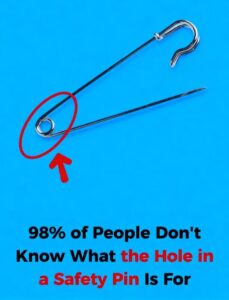
At first glance, a safety pin seems like one of the simplest tools ever made—just a bent piece of metal with a clasp. Yet hidden in plain sight is a small detail most people overlook: the tiny hole at the end of the pin. That little opening isn’t decorative, and it’s not a manufacturing accident. It exists for a practical reason rooted in traditional sewing techniques, and once you understand its purpose, you may never use a safety pin the same way again.
For generations, seamstresses and tailors relied on safety pins to do more than hold fabric together temporarily. The small hole at the end of the pin is designed to help guide elastic, ribbon, or drawstrings through fabric casings. By threading a piece of string, yarn, or thin cord through the hole, you gain far better control when pulling the pin through waistbands or sleeves. This simple trick prevents the pin from twisting sideways, slipping inside the fabric, or getting lost mid-way—problems that can quickly turn a small task into a frustrating one.
This detail reflects a broader truth about traditional sewing tools: many were designed with thoughtful, multi-purpose features that modern users often forget. Long before specialized gadgets existed, makers relied on clever design to solve everyday problems efficiently. The safety pin’s hole works hand in hand with other time-tested techniques, like reinforcing seams with backstitches or using natural wax on thread to reduce tangling. Each small improvement added up to smoother work and stronger results, especially when precision mattered.
Incorporating these classic methods into modern sewing doesn’t mean rejecting new tools—it means working smarter. Whether you’re repairing clothing, adjusting elastic, or crafting something from scratch, understanding why tools are designed the way they are can save time and effort. The tiny hole in a safety pin is a reminder that even the most ordinary objects often carry quiet ingenuity. Sometimes, the simplest tools hold the smartest solutions—you just have to know where to look.