The Sunday morning sun hung low and heavy over Oak Creek, casting long, golden shadows across the dew-soaked grass of the community park. It was the kind of morning that felt curated for families—the air smelled faintly of brewing coffee from the nearby cafe and damp earth.
I sat on a wooden bench, clutching a travel mug of hazelnut roast, watching my seven-year-old daughter, Lily, conquer the playground equipment with the ferocity of a mountaineer. She was a blur of pink leggings and blonde pigtails, her laughter ringing out like a wind chime every time she hit the bottom of the corkscrew slide.
“Watch this, Mom! I’m going backwards!” she shouted, her voice full of that specific, invincible joy that only exists before the world teaches you to be afraid.
“Be careful, Lil! Hold onto the sides,” I called back, shading my eyes.
I checked my watch. 10:15 AM. We had another thirty minutes before we needed to head home to get the pot roast started for Sunday dinner. My husband, Mark, was at home mowing the lawn. It was a perfect, boring, beautiful suburban life.
Then, the world tilted.
It didn’t happen with a bang. It happened with a silence.
Lily had just reached the bottom of the slide. Usually, she would pop up like a spring, sprinting back to the ladder for another round. But this time, she didn’t move. She sat in the woodchips at the base of the yellow plastic chute, her head bowed.
I stood up, the coffee mug warming my hands. “Lily? You okay, honey?”
She didn’t answer. Slowly, she curled her knees to her chest.
My maternal radar, that silent alarm that lives in the back of every parent’s skull, began to ping. I walked over, my pace quickening with every step. When I got close enough to see her face, I dropped my coffee. The mug shattered, splashing hot liquid over my sneakers, but I didn’t feel it.
Her face, usually flushed pink with exertion, was a terrifying shade of gray. Her lips were pressed together in a thin, white line.
“Mom,” she whispered, the sound barely carrying over the breeze. “I want to go home… I feel sick.”
I knelt in the mulch, ignoring the sharp woodchips digging into my knees. I put a hand on her forehead. It was clammy, cold sweat beading at her hairline.
“Maybe it’s because of the sweets?” I asked, my voice trembling slightly. We had stopped for a donut on the way here. A chocolate glaze. Maybe it was just too much sugar on an empty stomach.
“No…” She shook her head, and the motion seemed to make her wince. “I haven’t eaten anything… It’s really painful…”
She groaned, a guttural sound that didn’t belong in a seven-year-old’s throat, and clutched her stomach with both hands. Her knuckles were white.
I tried to keep my breathing even. Panic helps no one. “Can you show me where it hurts, baby? Point to it.”
Lily, clenching her teeth so hard I thought they might crack, moved one trembling hand and pointed to her lower right side.
The breath left my lungs. Lower right quadrant. Feverish skin. Sudden onset agony.
“Okay,” I said, scooping her up into my arms. She felt lighter than usual, fragile, like a bird with hollow bones. “We’re going to the car. Right now.”
Chapter 1: The Drive That Felt Like a Lifetime
The drive to St. Jude’s Medical Center usually took fifteen minutes. That Sunday, it felt like I was driving across the entire state.
I buckled Lily into her booster seat. She didn’t protest. She didn’t ask for her tablet. She just slumped against the window, clutching her side, little whimpers escaping her lips every time the car hit a bump.
I fumbled for my phone, punching Mark’s contact icon.
“Hey, babe, you guys done already?” Mark answered, the sound of the lawnmower fading in the background.
“Meet us at the ER,” I said, my voice tight. “It’s Lily. She’s in bad pain. Lower right side. I think it’s her appendix.”
There was a pause, then the sound of keys jingling. “I’m leaving now.”
I drove aggressively. I ran a yellow light that had definitely turned red. I cut off a sedan that honked at me, the sound distant and irrelevant. All I could hear was Lily’s breathing in the backseat—shallow, rapid, terrified.
“Mommy,” she said, her voice thin. “My tummy burns.”
“I know, baby. I know. We’re almost there. The doctors are going to fix it.”
“It burns like fire,” she whispered.
That struck me as odd. Appendicitis was usually described as a sharp pain, a cramp. But burning? Maybe that’s just how a child describes it, I reasoned. I wasn’t a doctor. I was just a terrified mother gripping the steering wheel so hard my hands hurt.
We screeched into the emergency bay. I abandoned the car in the drop-off zone, keys still in the ignition, and carried Lily through the sliding glass doors.
Chapter 2: The Triage and the Terrifying Wait
The emergency room was a chaotic ballet of misery. A man holding a bloody towel to his hand. An elderly woman coughing into a mask. A teenager looking pale and nauseous.
I bypassed the line, walking straight to the triage nurse.
“My daughter,” I said, breathless. “Seven years old. Severe abdominal pain. Lower right side. She’s cold and clammy.”
The nurse, a woman who looked like she hadn’t slept in a decade, looked at Lily’s gray face and immediately typed something into her computer.
“Code yellow, Pediatric,” she said into her headset. “Room 4.”
They rushed us back. They didn’t make us wait in the lobby. That’s how you know it’s bad—when they don’t make you fill out the paperwork first.
Mark burst into the room ten minutes later, smelling of cut grass and gasoline, his eyes wild.
“Where is she?”
“They took her for a CT scan,” I said, sitting on the edge of the empty hospital bed, twisting a tissue into a paper rope. “They put an IV in. She… Mark, she didn’t even cry when the needle went in. She just stared at the wall.”
Mark sat beside me, putting his heavy arm around my shoulders. “It’s the appendix, Sarah. It has to be. It’s a routine surgery. Kids bounce back from this in a week. My cousin had it done when he was eight.”
“She said it burned,” I murmured. “She said it felt like fire.”
We waited. The clock on the wall ticked with agonizing slowness. Every minute was a year. I replayed the morning in my head. The donut. The drive. The slide. Had she fallen? Had she hit her stomach on the railing? No, I was watching her. I was watching her the whole time.
Or was I?
Did I look at my phone? Did I close my eyes to enjoy the sun? The guilt began to creep in, cold and serpentine.
Finally, the door opened.
We both stood up instantly.
It was Dr. Aris, the lead surgeon. He was a tall man with silver hair and a face that was usually composed. But right now, he looked pale. He looked tense. He wasn’t holding a clipboard with a surgery schedule. He was holding a tablet, his knuckles white.
He looked at Mark, then at me, with a long, heavy gaze that stopped my heart.
“Ma’am… Sir…” he began, his voice low. “It’s not appendicitis.”
My chest tightened, a physical squeeze that made it hard to inhale. “Then what is it? A blockage? A rupture?”
Dr. Aris shook his head slowly. He closed the door behind him, sealing us in the small room.
“We got the toxicology screen back before the CT was even finished,” he said. “There is a toxic substance in your daughter’s system. A highly corrosive chemical agent. This didn’t come from food poisoning or an illness.”
The room seemed to spin. The white tiles of the floor blurred.
“A chemical?” I repeated, the words tasting foreign. “That’s impossible… she was only at the playground. She had a donut. She had water from her bottle.”
“Mrs. Jenkins,” the doctor said, stepping closer. “We found traces of Trichloroethylene in her stomach contents. It’s an industrial solvent. It’s used to strip paint. It burns the lining of the stomach. That’s why she said she was on fire.”
Mark grabbed the doctor’s arm. “Is she… is she going to die?”
“We are pumping her stomach now,” Dr. Aris said, his voice urgent. “We have her on dialysis to filter the blood. We caught it fast. Because you brought her in immediately, the damage is minimized. But we need to know—did she drink anything? Did she find a bottle? Did anyone approach her?”
I shook my head frantically. “No! I was watching her! She was on the slide! She didn’t have anything!”
But then, a memory flickered. A gap in the timeline.
Ten minutes before she got sick. I had bent down to tie my shoe. When I looked up, she was near the swings. She wasn’t alone. There was a man. A man in a blue windbreaker. He was sitting on the swing next to her.
I had thought nothing of it. Just a dad waiting for his own kid.
“The swings,” I whispered. “There was a man at the swings.”

Chapter 3: The Investigation Unfolds
The doctors immediately contacted the hospital administration and the police. Within minutes, two uniformed officers were in the room, taking descriptions.
“A man in a blue windbreaker,” I stammered. “Maybe forties? He had a baseball cap. I didn’t see his face clearly. I thought he was a parent.”
“Did you see him give her anything?” the officer asked, pen poised over his notebook.
“No,” I sobbed. “I looked away for a second. Just a second.”
Dr. Aris stepped back in. “We need to focus on Lily right now. But you need to send units to Oak Creek Park. Now. If there is a source of this poison there, other children are at risk.”
The police radio crackled. The officers ran out.
Mark stayed with Lily in the ICU. I sat in the waiting room with Detective Miller, a man with tired eyes and a suit that had seen better days. He had pulled the security footage from the community center adjacent to the park.
He set a laptop on the table between us.
“Mrs. Jenkins,” he said gently. “I need you to look at this. I know it’s hard. But we need to identify him.”
I forced myself to look at the grainy screen.
There was the playground. There was the slide. There was Lily, a pixelated figure in pink.
And there he was.
The man in the blue windbreaker.
He was sitting on the swing. He wasn’t waiting for a child. He was watching the playground with the stillness of a predator.
On the screen, Lily ran over to the swings. She stopped near him. He leaned forward. He held something out.
It was a bottle. A clear plastic bottle with a bright orange label. It looked like a popular brand of fruit juice.
Lily hesitated. She shook her head.
The man said something. He smiled. He gestured to the bottle, then took a pretend sip, rubbing his stomach as if it were delicious. He held it out again.
Lily, trusting and thirsty from playing, reached out. She took the bottle. She took one big swig. She handed it back.
The man took the bottle, capped it, and stood up. He patted her on the head and walked away, disappearing off the edge of the frame.
Five minutes later, Lily collapsed at the slide.
The silence in the waiting room was deafening.
“He poisoned her,” I whispered, the horror cold in my veins. “He sat there and poisoned my daughter and walked away.”
“Not just her,” Detective Miller said grimly. “Look at the timestamp. Twenty minutes earlier.”
He rewound the tape.
The man offered the bottle to a little boy in a red shirt. The boy took it. He drank.
“Oh my god,” I gasped. “Are there others?”
“We have three other children incoming,” Miller said, closing the laptop. “All with severe abdominal pain. All from Oak Creek Park.”
Chapter 4: The Shared Nightmare
The waiting room of the ICU became a holding cell for the damned.
Within an hour, three other families arrived. We knew each other by sight, by the unspoken bond of shared terror. There was the mother of the boy in the red shirt, a woman named Carla who was shaking so hard she couldn’t hold a cup of water. There was a father, still in his jogging clothes, pacing a hole in the linoleum.
We didn’t speak at first. What could we say? “My child drank poison too?”
But eventually, as the hours dragged on and the sun went down, we huddled together. We shared the scraps of information the doctors gave us.
“They said his esophagus is burned,” Carla whispered, tears streaming down her face. “They said he might need a feeding tube. He’s five years old.”
Mark sat with his head in his hands. “I should have been there,” he kept muttering. “I should have been there.”
“You were mowing the lawn, Mark,” I said, though the same guilt was eating me alive. “It’s not your fault.”
“It is,” he snapped, looking up with red-rimmed eyes. “It’s my job to protect her. And some psychopath walked right up to her while you were… what? Drinking coffee?”
The accusation hung in the air, heavy and sharp. I didn’t defend myself. I couldn’t. Because he was right. I had been drinking coffee. I had been enjoying the morning while a monster hunted my child.
This was the first crack in the foundation of our marriage. The poison hadn’t just entered Lily’s body; it had seeped into our home.
Around midnight, Dr. Aris came out to update us. He looked exhausted.
“We’ve stabilized all four children,” he said. “But the next twenty-four hours are critical. The chemical causes metabolic acidosis. It makes the blood acidic. We’re fighting to keep their pH levels neutral. If we fail, their organs will shut down.”
He looked at me. “Lily ingested the most. She’s the smallest. She’s fighting, Sarah. But she’s very sick.”
I went back into her room. The sound of the ventilator was a rhythmic hiss-click, hiss-click. Lily looked tiny in the bed, wires snaking from her chest, a tube down her throat. Her lips were swollen and cracked.
I held her hand. It felt cold.
“Don’t you dare leave me,” I whispered fiercely. “You hear me, Lily? You stay right here.”
Chapter 5: The Manhunt
While we fought for our children’s lives inside the hospital, the world outside was exploding.
The police locked down Oak Creek Park within ten minutes of the tape review. It was a crime scene. Yellow tape fluttered in the breeze against the cheerful playground equipment.
Officers rifled through every trash can in a three-mile radius.
At 2:00 PM, they found it.
Buried deep in a trash bin behind the park restrooms, wrapped in a brown paper bag. A plastic juice bottle.
The lab techs tested the residue. It was a cocktail of fruit punch and industrial paint thinner. Sweet enough to mask the chemical taste for the first swallow. Toxic enough to burn through a child’s stomach lining in an hour.
But the man was gone.
By evening, the news had broken. “Playground Poisoner,” the headlines screamed. Panic swept through the suburbs like a wildfire. Parents locked their doors. Parks emptied out. Schools sent out emergency emails canceling recess.
Detective Miller came back to the waiting room at 8:00 PM. He looked exhausted.
“We have a print,” he said. “From the bottle. He wasn’t wearing gloves when he threw it away.”
“Do you know who he is?” Mark asked, standing up, his fists clenched.
“We do,” Miller said. “His name is Arthur Vane. He worked at a chemical supply plant until he was fired last week for unstable behavior. He has a history of mental health episodes involving delusions about ‘cleansing’ the youth. He thinks he’s saving them from a corrupt world.”
“Where is he?” I asked.
“We’re tracking his phone. He turned it off an hour after the park. But we have a ping near the interstate. He’s moving south. We’ll get him.”
The next day was a blur of terror. Every time the news flashed on the waiting room TV, we all looked up, hoping to see his face in handcuffs.
Mark couldn’t sit still. “I’m going out there,” he said on Tuesday morning.
“What?” I grabbed his arm. “Mark, no. The police are handling it.”
“They haven’t found him, Sarah! He’s out there. He could be at another park. He could be…” He trailed off, his imagination supplying horrors he couldn’t voice. “I can’t just sit here and watch her breathe into a machine. I have to do something.”
He left. He drove around for hours, checking playgrounds, checking parking lots, fueled by rage and helplessness. It didn’t help. It just made him more exhausted, more distant.

Chapter 6: The Awakening
On Tuesday evening, forty-eight hours after the poisoning, Lily’s numbers improved. Her kidneys were functioning. The acid levels dropped.
Dr. Aris decided to take her off the ventilator.
I stood by the bed, holding my breath, as they pulled the tube out. Lily coughed—a wet, raspy sound that made me wince. Her eyes fluttered open.
They were unfocused at first. Then they found me.
“Mommy?” Her voice was a croak. It sounded like her throat was made of gravel.
“I’m here, baby. I’m right here.”
She tried to swallow and grimaced. Tears pooled in her eyes. “It hurts.”
“I know. Your throat is sore. But you’re safe.”
She looked around the room, confused by the machines. Then she looked at me with a clarity that broke my heart.
“The juice,” she whispered. “It was bad juice.”
“Yes, baby. It was bad juice.”
“The man said it was magic,” she said, a tear tracking down her cheek. “He said it would make me fly.”
I buried my face in the mattress so she wouldn’t see me cry. Magic. He had used magic to kill her.
Chapter 7: Justice at the Gas Station
Two hours later, Detective Miller walked into the recovery room. He had a look on his face I will never forget. It was the look of a man who had finally put down a heavy weight.
“We got him,” he said.
He had been stopped at a gas station two counties over. A clerk recognized him from the news alerts—he was buying a map and a candy bar. He looked disheveled, muttering to himself.
Police surrounded the car. They found three more bottles of “juice” in the passenger seat. He was planning to do it again.
When the officer informed me that he was in custody, my knees buckled with relief. I sank into the hospital chair, sobbing into my hands. Mark, who had just returned, slumped against the wall and slid down it, putting his head on his knees.
“He can’t hurt anyone else,” Miller said. “He’s going away for a very long time.”
Dr. Aris came in to check Lily’s vitals. He smiled when he saw the detective.
“You saved your daughter by listening to her,” the doctor said quietly to me. “Most parents would have waited. They would have thought it was a stomach bug. They would have given her Tylenol and put her to bed. If you had waited another twenty minutes… the toxins would have entered her bloodstream permanently. It could have been too late.”
I looked at Lily. She was watching Paw Patrol, sipping water from a cup with a straw. She looked so small. So fragile. And yet, she had survived a targeted attack by a madman.
That night, as the little girl slept safely in her hospital bed, the rhythmic beep of the monitor acting as a lullaby, I held her hand.
“You did the right thing, sweetheart,” I whispered. “You told me you were hurt. You saved yourself.”
Chapter 8: The Long Road Home
We brought Lily home a week later. But the ordeal wasn’t over.
The physical recovery was grueling. Lily’s esophagus was scarred. She could only eat soft foods for months—applesauce, yogurt, mashed potatoes. Swallowing was painful. Every meal was a battle against the memory of the burning.
She lost weight. She looked gaunt.
But the psychological scars were deeper.
Lily developed a terror of strangers. If we went to the grocery store and a man looked at her, she would hide behind my legs and shake. She had nightmares—dreams of burning, dreams of the man in the blue jacket standing at the foot of her bed offering her bottles of fire.
We started therapy with Dr. Ellis, a child trauma specialist.
“She has PTSD,” Dr. Ellis explained. “Her world was safe, and then it wasn’t. We have to rebuild her sense of safety brick by brick.”
The sessions were hard. Lily drew pictures of the playground, but she drew the slide covered in spikes. She drew the swings with teeth.
And our marriage was suffering. Mark was angry. He was angry at the world, at Arthur Vane, but mostly at himself. He became overprotective. He didn’t want Lily to leave the house.
“We can’t keep her in a bubble, Mark,” I argued one night in the kitchen.
“Why not?” he shouted. “The world tried to kill her, Sarah! If she stays here, she’s safe!”
“If she stays here, she’s a prisoner! And Vane wins!”
We slept in separate rooms for a month.
Chapter 9: The Trial
Six months later, the trial began.
Arthur Vane pleaded insanity. His lawyers claimed he didn’t know what he was doing, that the voices told him to liberate the children.
We had to go to court. We had to testify.
Seeing him in person was nauseating. He sat at the defense table, clean-shaven, wearing a suit that didn’t fit. He looked… ordinary. He didn’t look like a monster. He looked like an accountant.
When I took the stand, I looked him in the eye. He smiled at me. A small, vacant smile.
I told the jury about the grey face. I told them about the burning. I told them about the “magic juice.”
But the most powerful testimony didn’t come from me. It came from the video deposition of the children.
Because of their age, they didn’t have to testify in court. They were recorded in a safe room.
The jury watched Lily on the big screen. She held a stuffed bear.
“He looked nice,” video-Lily said. “He smiled like a daddy. He said the juice tasted like sunshine. But it tasted like hurting.”
The jury wept.
The verdict took two hours. Guilty on four counts of attempted murder. The insanity plea was rejected—the jury decided that hiding the bottles in the trash proved he knew what he was doing was wrong.
Arthur Vane was sentenced to four consecutive life terms without parole.
When the gavel banged, Mark reached over and took my hand. It was the first time we had touched in weeks. He squeezed it hard.
“It’s over,” he whispered.
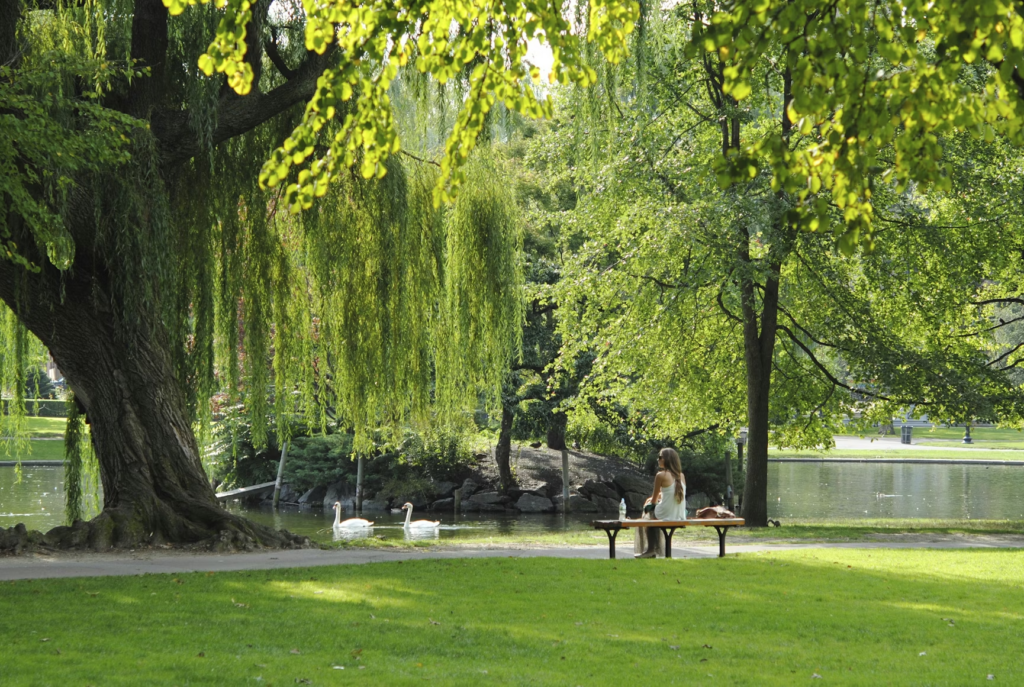
Chapter 10: The Return to the Park
But it wasn’t really over until we reclaimed the territory.
One afternoon, eight months after the poisoning, I was in the kitchen cutting apples. I cut them into tiny, paper-thin slices so Lily could swallow them.
Lily ran in, laughing, chasing the dog. She stopped. She looked at me.
“Mom?” she asked.
“Yeah, baby?”
“Can we go to the park today? The big one?”
I froze. The knife hovered over the apple. I felt the panic rise in my throat, the memory of her gray face, the burning.
But then I looked at her. She wasn’t afraid. She was a child, and she wanted to slide. She had done the work in therapy. She had drawn the monsters, and then she had drawn herself defeating them.
If I said no, if I kept her locked away, then the man in the blue windbreaker had won. He would have taken her childhood without even being there.
I put the knife down. I took a deep breath.
“Yeah,” I said, my voice steady. “Let’s go to the park.”
We drove to Oak Creek. It was a sunny day, just like that Sunday.
The community had changed, too. There were new cameras. There was a community watch group—parents in neon vests patrolling the perimeter.
But families were there. The fear had faded, replaced by the resilience of community.
Lily ran to the slide. She climbed up. She hesitated at the top.
I held my breath.
She looked down at me. I gave her a thumbs up.
She pushed off. She slid down, her laughter ringing out.
She didn’t go near the swings. Not yet. That was okay.
I sat on the bench, my eyes scanning the perimeter. I would always scan the perimeter now. I would never be the relaxed mom with the coffee again. I would always be the watchman.
But as I watched my daughter play, alive and loud and wonderful, I realized that was a fair price to pay.
I took out my phone and texted Mark.
We’re at the park. She’s flying.
He texted back a heart emoji. And then: I’m coming to meet you. I’m bringing pizza.
I put the phone away and watched. I watched every person who walked by. I watched every car.
And when Lily ran over to me, breathless and smiling, and asked for a drink of water, I handed her the bottle I had brought from home.
“Here you go,” I said.
She drank it. She smiled.
“Thanks, Mom.”
“You’re welcome, baby.”
She ran back to the slide.
I sat back on the bench. The sun was warm. The air smelled of earth. And for the first time in nearly a year, I didn’t feel like the world was tilting. I just felt like a mother, watching her child, ready to catch her if she fell.