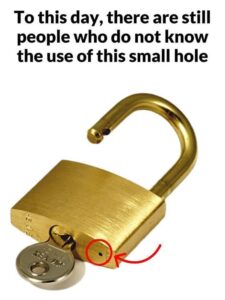
A padlock is one of those everyday objects we barely notice, quietly securing sheds, bikes, gates, and toolboxes. We twist a key, hear the click, and move on. But if you look closely at the bottom of a padlock, you’ll see a tiny hole—easy to miss, yet essential to the lock’s function.
Padlocks endure rain, heat, snow, and humidity. Because they’re made of metal, moisture that seeps inside can cause rust and corrosion, eventually jamming the internal parts. The small hole provides a drainage point, allowing trapped water to escape and preventing long-term damage.
But the hole serves another purpose. Over time, dirt, grit, or cold weather can make a lock stiff or stuck. The opening allows lubricants like graphite powder or lock oil to reach the internal tumblers. A few drops through the hole can loosen the pins and restore smooth movement—saving a lock that might otherwise be cut off.
Even modern weatherproof padlocks often keep this feature. Rubber coatings and improved seals help block moisture, but engineers still include the small hole as a pressure release point and backup drainage channel. It’s a timeless design choice that continues to prove useful.
Once you understand this hidden feature, it becomes easier to appreciate the subtle details built into other everyday items. A screwdriver, for example, may have a square or hexagonal handle base designed to fit inside a wrench, allowing extra torque for tight or awkward spaces.
Clothing also carries small, meaningful design elements. The fabric swatch attached to new garments once helped stores match patterns and colors before digital catalogs existed. Shoppers used it to test detergents or check fabric reactions without damaging the clothing.
Some features exist for hygiene. Brass doorknobs and pulls are still common because brass is naturally antimicrobial, killing bacteria on contact.
Even cars hide clever cues—like the tiny arrow on the fuel gauge that quietly tells drivers which side the gas tank is on. Small details, big impact.