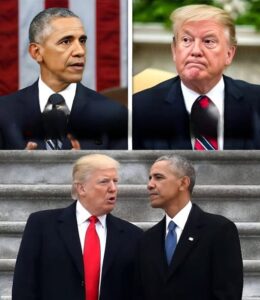
The moment Trump turned his sights on Obama, the studio went cold. Viewers watched, stunned, as a routine interview morphed into a raw, personal confrontation played out on national television. Within minutes, social media exploded, tearing the country into rival camps, each convinced they alone saw the tru…
When Donald Trump turned his attention to Barack Obama, the moment landed exactly the way modern political media moments so often do: instantly, emotionally, and in fragments. A pointed attack became a viral clip, and within minutes the reaction online split into familiar camps. Supporters praised Trump’s bluntness. Critics saw another example of provocation overpowering substance. The more the clip spread, the less the full context seemed to matter.
That is the deeper pattern worth noticing. In today’s political environment, confrontation is rarely just confrontation. It is performance, strategy, and signal all at once. Trump has long understood that a sharp attack on a figure like Obama does more than create a headline. It activates loyalists, provokes opponents, and gives social media exactly what it rewards most: conflict stripped down to its most replayable form. That dynamic has been visible repeatedly, including in the backlash earlier this year over a racist Obama-related video posted to Trump’s account and later deleted amid bipartisan criticism.
What makes moments like this powerful is not always what is said, but how quickly they are absorbed into the machinery of outrage. Live television, social media, commentary, and partisan loyalty now function as one continuous arena. Viewers are no longer just watching an interview or a political exchange. They are watching raw material being converted in real time into identity, narrative, and tribal proof. Meaning gets assigned almost immediately, long before reflection has a chance to catch up.
That is why the real story is bigger than one clash between two political giants. It is about what public discourse becomes when every confrontation is designed for clipping, sharing, and weaponizing. Policy fades. Performance rises. Substance struggles to compete with theater. And the public is left sorting through reactions that often say more about allegiance than understanding.
The warning is not simply that politics has become harsher. It is that political memory is now shaped less by full events than by viral fragments. A phrase, a glare, a ten-second exchange can come to define what millions think happened, even when the actual context is broader or more complicated. In that environment, leadership is judged not only by decisions or ideas, but by who controls the emotional frame of the moment.
That is what makes these Trump-Obama flashpoints so revealing. They are not just personal or partisan. They show how easily modern politics turns conflict into spectacle, and how quickly the public can be pulled from analysis into reaction. The clip may feel like the story. But more often, it is a symptom of the larger one.