It wasn’t a dramatic discovery.
No flashing warning signs. No sudden symptoms. Just a quiet observation—something so small most people wouldn’t think twice about it.
Fingernails.
For years, they’ve been seen as little more than a cosmetic detail. Something to trim, clean, maybe polish. But recently, more attention has been drawn to what they might quietly reveal about the body.
Not in a mysterious or exaggerated way—but in a subtle, scientific one.
It starts with a simple question:
What if your nails could tell you something about how your body is aging?
This idea gained traction partly through discussions involving researchers like David Sinclair, who has explored how biological aging works at the cellular level. While some headlines have stretched the concept too far, there is a real, grounded insight behind it.
And it has less to do with how your nails look—and more to do with how they grow.
The Small Detail Most People Overlook
Think about the last time you trimmed your nails.
Did you notice how quickly they had grown?
Probably not.
Most people don’t track it. It happens gradually, almost invisibly. But that slow, steady growth reflects something important happening beneath the surface—cell regeneration.
Your nails grow because your body is constantly producing new cells. It’s part of a larger system that keeps your skin, hair, and tissues functioning.
When that process is active and efficient, nails tend to grow a bit faster.
When it slows down, nail growth can slow too.
This shift doesn’t happen overnight. It’s gradual—often beginning around your 30s. In fact, older research observed that nail growth tends to decrease slightly each year after that point.
That doesn’t mean your nails are predicting your future.
But it does suggest they might be quietly reflecting your present.
Biological Age vs. Calendar Age
We often think of age as a number.
But scientists sometimes look at something else entirely: biological age.
This refers to how your body is functioning internally—how efficiently your cells repair themselves, how your systems respond to stress, and how well your body maintains itself over time.
Two people can be the same age on paper but very different biologically.
That’s where nail growth becomes interesting.
It’s not a precise measurement. It’s not something doctors use to calculate lifespan. But it can act as a small piece of a much bigger puzzle—one that reflects how active your body’s renewal processes are.
In other words, your nails aren’t a crystal ball.
They’re more like a quiet signal.
When Appearance Tells a Bigger Story
While growth rate is subtle, visible changes in your nails can sometimes be more noticeable—and occasionally more meaningful.
Doctors have long used nail appearance as one of many clues when evaluating overall health. Certain patterns, especially when persistent, may point to underlying conditions.
For example:
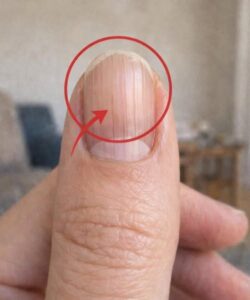
- Dark vertical streaks may need evaluation to rule out more serious concerns.
- Small dents or pits in the nails can sometimes be associated with skin conditions.
- Yellowing is often linked to fungal infections, though in rare cases it may connect to broader health issues.
- Clubbing, where fingertips appear rounded or enlarged, can be linked to long-term heart or lung conditions.
- Very pale nails may suggest low red blood cell levels.
- Bluish tones can indicate reduced oxygen circulation.
These signs don’t automatically mean something serious is happening.
But they can be worth paying attention to—especially if they appear suddenly or don’t go away.
The Everyday Factors That Matter More Than You Think
Before jumping to conclusions, it’s important to remember something simple:
Most nail changes are harmless.
In fact, many of them are caused by everyday habits and environmental factors.
Frequent handwashing, for example, can dry out nails and make them brittle. Exposure to cleaning products or chemicals can affect their color and texture. Even small injuries—like bumping your finger or catching your nail—can temporarily change how it looks.
Diet also plays a role. Nutritional gaps, especially over time, can affect nail strength and growth.
Stress, too, can have subtle physical effects, including on your nails.
So while it’s useful to stay aware, it’s just as important not to overinterpret every small change.
What Actually Matters: Patterns Over Time
If there’s one practical takeaway, it’s this:
Look for patterns—not one-time changes.
A single unusual mark or temporary shift in color often isn’t meaningful on its own. But if something persists, worsens, or appears alongside other symptoms, it becomes more relevant.
Pay attention to questions like:
- Has this change been there for weeks or months?
- Is it getting more noticeable over time?
- Did anything in my routine change recently?
These kinds of observations are far more useful than reacting to a single moment.
When to Take a Closer Look
Most of the time, no action is needed.
But there are situations where it makes sense to get a professional opinion—especially if you notice:
- Ongoing discoloration that doesn’t fade
- Changes in nail shape or thickness
- Persistent brittleness or splitting
- Unusual marks that continue to grow or spread
A healthcare professional can evaluate these signs in context, helping determine whether they’re minor or worth further attention.
A Simple but Powerful Reminder
It’s easy to ignore small details—especially ones that don’t seem urgent.
But your body communicates in subtle ways all the time.
Your nails are just one example.
They don’t predict your lifespan. They don’t offer definitive answers. But they can reflect how your body is functioning in the present moment.
And sometimes, noticing small things early can make a meaningful difference later.
The Bottom Line
The idea that fingernails can reveal deeper health insights isn’t entirely new—but it’s often misunderstood.
They’re not a shortcut to predicting the future.
They’re a quiet reflection of what’s happening now.
Pay attention, but stay grounded.
Because in most cases, the story your nails are telling isn’t dramatic.
It’s simply part of the bigger picture of how your body works—day by day, cell by cell.