Home
News
The boy from a smog-drenched city who sang through addiction and into our hearts
With the roar of global tours and a voice that sounded like it had been carved out of gravel and soul, Joe Cocker became one of the most unmistakable figures in rock history. But long before the stages, the fame, and the legacy, he was just a boy trying to find a way out of a city that rarely offered easy beginnings.
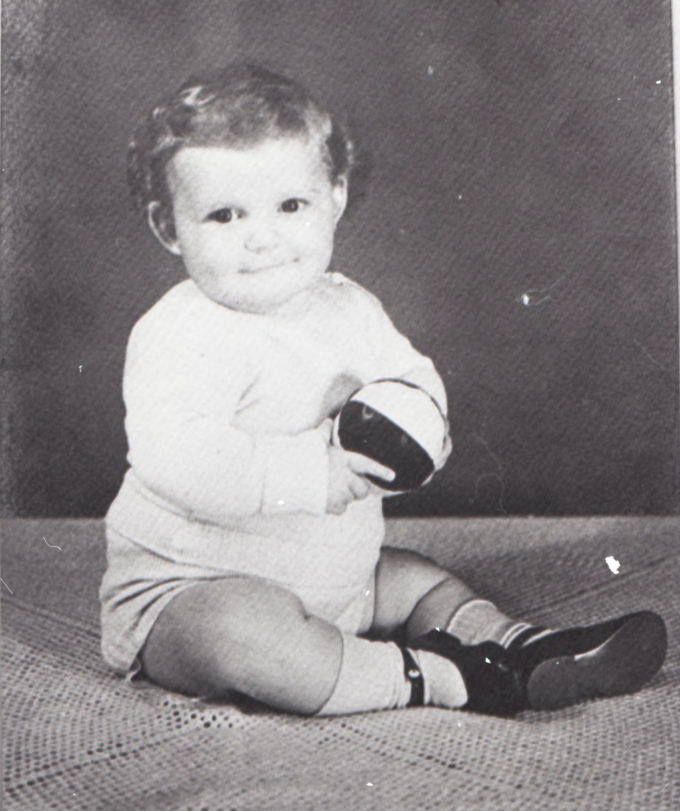
He was born John Robert Cocker in Sheffield during the final years of World War II, a place defined by steel, smoke, and relentless industry. Growing up in the 1950s meant living under skies darkened by soot, where factory chimneys shaped the horizon and hardship felt ordinary. His father served in the Royal Air Force, his mother kept the home steady, and life moved forward without luxury—but also without illusion.
Music wasn’t a grand ambition at first. It was an escape.
He left school at sixteen with little encouragement and stepped into the practical world as an apprentice gas fitter. Days were spent working; nights were spent chasing something uncertain in dimly lit pubs where audiences barely listened. His early performances didn’t hint at greatness—his voice hadn’t even fully settled—but the drive was already there. Persistent. Quiet. Unshakable.
For years, nothing came of it.
He scraped together money for demo tapes that went nowhere, borrowed equipment, and played for crowds more interested in their drinks than the stage. Even when Decca Records gave him a chance in 1964 to record a Beatles cover, the result faded without impact. Most would have stopped there. He didn’t.
Instead, he kept going—working, performing, waiting.
 100vw, 1080px” data-lazy-src=”http://new24.info/wp-content/uploads/2026/04/hos.jpg” /></p>
<div class=)
Then, in 1968, everything shifted.
His version of “With a Little Help from My Friends,” originally by The Beatles, wasn’t just a cover—it was a transformation. Raw, emotional, and deeply human, it climbed the charts and gave him the recognition he had chased for years. A telegram reportedly arrived from John Lennon and Paul McCartney, a small but symbolic acknowledgment that he had finally been heard.
But it was at Woodstock in 1969 that he truly became unforgettable.
 100vw, 864px” data-lazy-src=”http://new24.info/wp-content/uploads/2026/04/cocke132.jpg” /></p>
<p data-start=) Dressed simply, moving unpredictably, voice cracking with intensity, he delivered a performance that felt less like entertainment and more like something breaking open in real time. It wasn’t polished. It wasn’t controlled. It was honest—and it resonated in a way few performances ever do.
Dressed simply, moving unpredictably, voice cracking with intensity, he delivered a performance that felt less like entertainment and more like something breaking open in real time. It wasn’t polished. It wasn’t controlled. It was honest—and it resonated in a way few performances ever do.
That moment defined him.
Yet success came with its own cost.
 100vw, 1671px” data-lazy-src=”http://new24.info/wp-content/uploads/2026/04/GettyImages-3232250-scaled-1.jpg” /></p>
<p data-start=) Touring relentlessly, he pushed himself to exhaustion. The chaos of the road blurred into nights fueled by alcohol, heroin, and cocaine. What began as celebration turned into dependency. Performances became inconsistent, health declined, and there were moments when it seemed his career might collapse under the weight of it all.
Touring relentlessly, he pushed himself to exhaustion. The chaos of the road blurred into nights fueled by alcohol, heroin, and cocaine. What began as celebration turned into dependency. Performances became inconsistent, health declined, and there were moments when it seemed his career might collapse under the weight of it all.
Arrests, public incidents, and personal struggles followed. At times, he was barely holding on.
And yet—he endured.
 100vw, 1024px” data-lazy-src=”http://new24.info/wp-content/uploads/2026/04/GettyImages-73990655.jpg” /></p>
<p data-start=) Even in the midst of instability, he managed to create moments of brilliance. Songs like “You Are So Beautiful” and later “Up Where We Belong,” his duet with Jennifer Warnes, brought him renewed success. The latter would become a defining hit, earning a Grammy and reaching the top of the charts.
Even in the midst of instability, he managed to create moments of brilliance. Songs like “You Are So Beautiful” and later “Up Where We Belong,” his duet with Jennifer Warnes, brought him renewed success. The latter would become a defining hit, earning a Grammy and reaching the top of the charts.
Still, the turning point in his life didn’t come from music.
It came from stability.
When he met Pam Baker in the late 1970s, something shifted. Their relationship, later formalized in marriage in 1987, brought structure and grounding to a life that had long lacked both. With her support, he began to step away from the chaos that had nearly consumed him.
Over the following decades, he continued recording and touring, never chasing trends, never reinventing himself for attention. Instead, he remained consistent—true to the voice and emotion that had defined him from the start.
Even in later years, albums like Unchain My Heart and Have a Little Faith showed that his artistry hadn’t faded. He remained a performer shaped not by perfection, but by feeling.
Joe Cocker passed away on December 22, 2014, in Crawford, Colorado, at the age of 70, after battling lung cancer. His years of heavy smoking had taken their toll, though he had quit decades earlier.
In 2025, he was posthumously inducted into the Rock and Roll Hall of Fame—an honor many believed had been long overdue.

What remains isn’t just a catalog of songs, but something harder to define.
A voice that carried struggle without hiding it.
A career that refused to follow a straight line.
A life that proved talent alone isn’t what sustains you—it’s persistence, survival, and, sometimes, the right person arriving at the right time.
Every time his music plays, it doesn’t just sound like a performance.
It sounds like someone who lived every note.