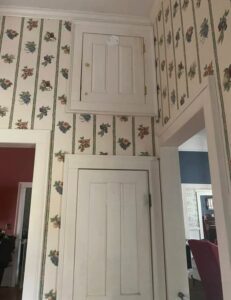
If you’ve ever wandered through an older home or toured a historic building, you might have encountered a strange, little-known feature: a small, built-in cabinet located high above a doorframe, tucked into a wall, or suspended just out of reach. These cabinets often had one or two shelves, and curiously, many didn’t have doors. At first glance, they might seem impractical or just another odd design feature. But the forgotten function of high cabinets was far more practical—and surprisingly ingenious—than we might think. Once considered a staple in older homes, these elevated storage spaces had a range of purposes, many of which were designed to maximize the space available, save on taxes, and add extra functionality to a home.
In a world filled with oversized closets, expansive attics, and sprawling basements, high cabinets might seem like a quaint relic of the past. However, these little-known features are more than just a curiosity. They reveal how homes in the past were designed with careful consideration and a sense of resourcefulness that made every inch count. Let’s explore the forgotten function of high cabinets, how they were used, and why this once-popular design trick still holds value today.
Vintage Storage Hacks: Maximizing Every Inch of the Home
Long before the advent of walk-in closets, massive basements, and extra storage rooms, homeowners had to be creative with every available space in their homes. In a time when square footage was often limited and people needed to make the most of their living areas, every nook and cranny had a purpose. One of the cleverest design tricks involved using high cabinets, often located above doorways or in unused wall spaces, to store items that weren’t needed on a regular basis.
Storage for Seasonal Items
One of the primary uses of these high cabinets was to store seasonal items—things that were only needed for a specific time of year but took up precious space in the home. For instance, luggage, extra winter blankets, holiday decorations, or heavy quilts were all items that could be tucked away in these high cabinets. Since they were rarely used, storing them in an elevated position kept them out of the way while still providing easy access when needed.
For example, imagine the colder months when a family needed extra blankets and quilts but didn’t want to keep them out and cluttering up the living areas. Storing them in high cabinets meant that when the chilly season rolled around, they would be accessible but not taking up valuable closet or drawer space. By placing these rarely used items overhead, homeowners ensured that their daily essentials, such as everyday clothing or kitchenware, remained easily accessible.
This design maximized every inch of the home and reflected a practical approach to organizing space. These high cabinets were ideal for storing things that were infrequently used but still necessary, like holiday decorations or off-season clothing.
Efficient Use of Vertical Space
Today, we often take for granted the availability of storage spaces like closets, garages, and storage rooms. But in older homes, vertical space was just as important, if not more so, than horizontal storage. High cabinets made use of often-unused areas above doors or in odd nooks, allowing people to store items that might otherwise have cluttered their homes. These cabinets filled awkward spaces that might not have been functional for anything else, turning them into efficient, purposeful storage areas.
It was a practice of utilizing every available inch—something modern homeowners may forget about in the age of oversized closets and storage solutions. By using every possible corner of the house—often hidden in plain sight—these high cabinets added functionality without taking up precious floor space.
The Forgotten Cabinet Trick That Saved on Taxes
Now, you might be thinking, “That’s all well and good, but what’s the real value of these cabinets?” Well, here’s where it gets even more fascinating. These high cabinets weren’t just about maximizing space—they also served as a clever means of avoiding taxes. Yes, you read that right.
At certain points in history, particularly during the Victorian and Edwardian eras, homeowners were subject to taxation based on the number of closets or rooms in their homes. A larger closet—seen as a luxury item—could result in a higher tax rate. At a time when taxes were a significant part of household expenses, this was a matter of real financial importance.
Avoiding the Closet Tax
The tax system in some areas during this time was based on the total square footage of a home, including the number of closets. Larger homes with spacious closets were taxed more heavily, while smaller homes or those with less storage space paid lower taxes.
For homeowners who wanted the benefits of extra storage but didn’t want to be penalized with a closet tax, the solution was simple: build high cabinets. Since these high cabinets were not considered “official” closets—they were often open, without doors—they didn’t fall under the purview of the taxman. By placing these small, elevated cabinets above doorframes, homeowners could enjoy the storage space without incurring additional tax costs. This was a perfect example of how people used smart design to circumvent bureaucratic systems, creating functional storage solutions that were both cost-effective and efficient.
In addition to avoiding the closet tax, the high cabinets also added another layer of storage flexibility. They provided out-of-sight storage for items that didn’t need to be accessed every day. This made it easier for families to keep their homes tidy and organized, even as their living spaces expanded.
Smart Space Design: Why the Forgotten Function of High Cabinets Still Matters
While high cabinets may seem outdated by modern standards, the principles behind their design are still highly relevant today. In the current age of maximizing storage in small homes and apartments, the forgotten function of high cabinets is seeing a resurgence in modern design. In fact, they’ve become part of a larger movement towards utilitarian design—using every possible inch of space to its fullest potential.
Utilizing Unused Spaces
In many homes, certain spaces above doors, above kitchen counters, or in otherwise unused nooks and crannies go entirely unutilized. By repurposing these spaces for storage or decorative features, homeowners can maximize the functionality of their homes. High cabinets are a smart way to store items that don’t need to be accessed frequently, such as:
-
Seasonal clothing (e.g., winter coats or summer dresses)
-
Holiday decorations
-
Extra kitchen gadgets or serving ware
-
Books or collectibles
These cabinets make good use of the vertical space that might otherwise remain wasted. And while modern homes often come with larger closets and storage rooms, smaller or more compact homes can benefit greatly from such vertical storage solutions.
Modern-Day Appreciation of High Cabinets
Today’s homeowners are rediscovering the appeal of high cabinets as part of a minimalist or smart-space design philosophy. By incorporating high storage cabinets into modern home layouts, people can store items out of sight without cluttering up their homes with bulky furniture. These cabinets fit perfectly in small apartments, studio spaces, or tiny homes where every inch counts.
While high cabinets might seem like a dated feature, their design is still appreciated for its cleverness and functionality. The convenience of hidden storage, especially in homes with limited space, makes these cabinets a beloved relic of an earlier time. And, importantly, they’re now viewed with nostalgia—as a symbol of clever, resourceful design.
Why High Cabinets Still Matter: A Testament to Resourcefulness
As we look back at the forgotten function of high cabinets, it becomes clear that these seemingly small features tell a bigger story about human ingenuity. They were never just about aesthetics or maximizing space—they were about making the most out of the home, whether for tax purposes, seasonal storage, or simply to avoid clutter. And today, these cabinets remain symbols of resourcefulness and good design.
These hidden cabinets, often out of sight, are part of the fabric of our shared history. They serve as silent reminders of how people adapted to the challenges of their time. By rediscovering the forgotten function of high cabinets, we gain a new appreciation for the clever design tricks that helped homeowners navigate the constraints of the past.
The Charm of a Forgotten Feature
Modern homeowners might dismiss high cabinets as relics of the past, but they are, in fact, charming antiques—practical yet appealing remnants of a time when smart storage and efficient use of space were paramount. As homes continue to evolve, these cabinets still serve as a reminder that the best solutions are often the simplest ones. In a world filled with complex technologies and ever-growing storage needs, there’s something refreshing about a design feature that blends practicality with historical charm.
Whether tucked away in the corner of a kitchen, hidden above a doorframe, or built into a wall, high cabinets remind us that every square inch of a home has potential. And just like the homes of yesteryear, modern design can benefit from embracing these hidden storage solutions. The forgotten function of high cabinets—though once dismissed as unnecessary—remains a testament to human creativity, practicality, and the timeless quest for organization.