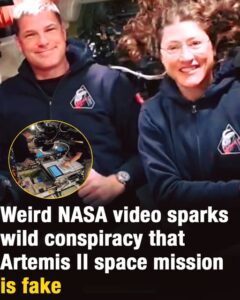
In today’s digital environment, it is increasingly common to encounter a wide range of opinions, interpretations, and theories online, especially surrounding major scientific and governmental achievements.
These discussions often spread quickly across social media platforms. Conspiracy theories, in particular, have become more visible in the age of global connectivity.
While they are not new, the internet has significantly increased their reach and speed of distribution across different audiences worldwide.
Historically, skepticism toward major events has existed in many forms. However, modern communication tools have made it easier for individuals to share alternative interpretations of well-documented events, regardless of their accuracy.
Experts in media studies often point out that the internet allows both verified information and unverified claims to circulate side by side. This creates an environment where misunderstandings can spread rapidly if not carefully addressed.
Recently, renewed attention has been given to NASA’s Artemis program, particularly the Artemis II mission. This mission has been widely discussed due to its role in advancing human space exploration beyond Earth’s orbit.
Artemis II represents an important step in NASA’s long-term plan to return humans to deep space. It is designed as a crewed test mission that builds on earlier uncrewed flights within the Artemis program.
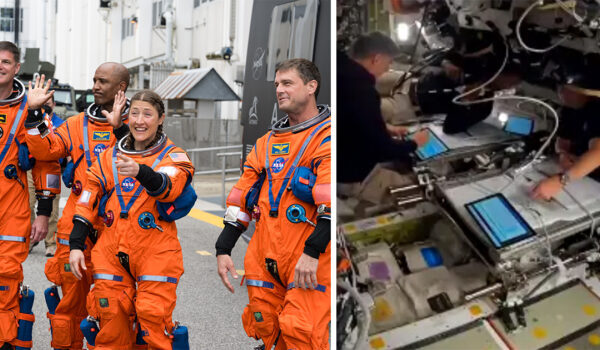
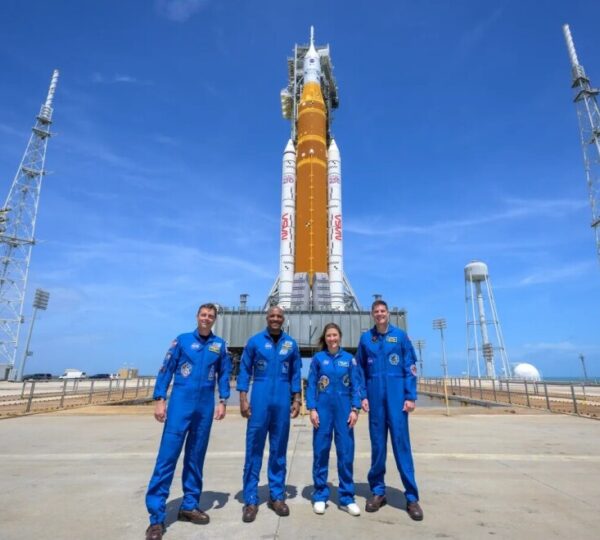
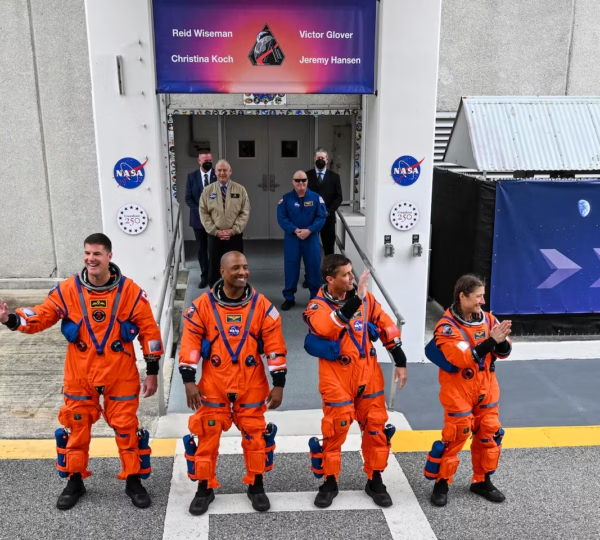
The mission involves NASA astronauts Christina Koch, Reid Wiseman, Victor Glover, and Canadian Space Agency astronaut Jeremy Hansen. Together, they form an international crew participating in this historic spaceflight.
The launch took place aboard NASA’s Space Launch System (SLS), a powerful rocket approximately 322 feet tall. This system is designed to carry astronauts farther into space than previous generation spacecraft.
After launch, the crew began their journey by orbiting Earth for approximately 25 hours. During this phase, they conducted system checks and reported their initial experiences to mission control.
According to NASA communications, the astronauts described their early views of Earth as highly impressive. These observations are common among astronauts experiencing spaceflight for the first time.
Following the Earth-orbit phase, the spacecraft continued its trajectory toward the Moon. The mission’s objective is not a lunar landing, but rather a controlled flyby beyond the Moon’s orbit.
This flyby is intended to test spacecraft systems under deep space conditions. It is considered a critical step before future missions that aim to land astronauts on the lunar surface again.
During the mission coverage, NASA also participated in live media interviews with major news organizations, including CNN. These broadcasts aimed to provide the public with real-time insight into the mission.
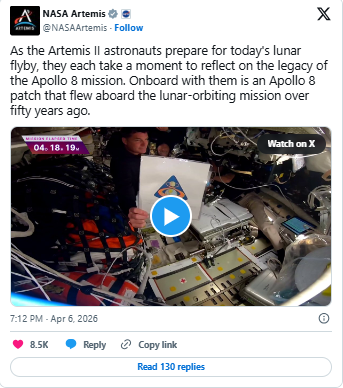
During one of these interviews, a small plush toy was shown floating inside the spacecraft. The toy, used in space missions for educational and morale purposes, demonstrated microgravity conditions.
The floating object attracted attention online because viewers noticed visual anomalies in the broadcast. Some social media users questioned whether the visuals were altered or digitally processed.
In particular, some viewers claimed that partial letters appearing behind the floating object seemed unusual. These interpretations led to online discussions and speculation about the broadcast setup.
It is important to note that live space interviews often use video overlays, captions, and real-time broadcast graphics. These elements are standard in modern televised communication.
Technical experts explain that such broadcasts commonly use chroma key technology or digital overlays. This method allows production teams to combine live footage with informational graphics.
Chroma key systems are widely used in television production to insert backgrounds, text, or visual effects behind live or recorded subjects. This helps provide viewers with clearer context during broadcasts.
In live environments, slight timing delays between video feeds and overlay graphics can occasionally occur. These delays may create temporary visual inconsistencies on screen.
Such inconsistencies are generally considered technical artifacts rather than evidence of manipulation. They can happen due to synchronization differences in live broadcasting systems.
NASA’s Artemis coverage has been produced in collaboration with multiple media partners, ensuring global accessibility. These broadcasts are designed to be both informative and visually engaging for the public.
Public reactions to space missions often vary widely, especially on social media platforms. Some viewers focus on scientific achievement, while others analyze visual details more critically.
In many cases, viral discussions online are influenced by misunderstanding of broadcasting technology. Without technical context, normal production effects may be interpreted in different ways.
Space agencies like NASA regularly emphasize transparency in mission data and communication. Their goal is to provide accurate scientific information while engaging the public in space exploration.
The Artemis program itself is part of a broader initiative to return humans to the Moon and eventually prepare for missions to Mars. Each phase builds upon previous technological milestones.
As with many high-profile scientific missions, public attention is accompanied by widespread commentary online. This includes both accurate reporting and speculative interpretations of visuals and events.
Understanding how modern broadcasts are produced helps clarify many of the questions raised by viewers. It highlights the complexity of delivering live content from space environments.
Overall, the Artemis II mission continues to be viewed as a major milestone in space exploration. Its focus remains on testing systems, advancing knowledge, and preparing for future deep space missions.