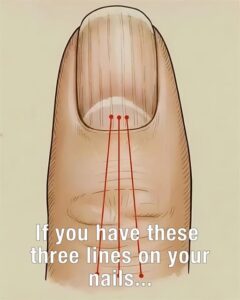
Not everyone pays close attention to them — but the truth is, your nails and any changes in their color, shape, or texture can reveal a lot about your overall health.
Healthy nails are usually smooth, shiny, and even, without ridges or pits.
But what should you do if they don’t look like that? Let’s take a closer look.
A lot about our overall health can actually be read from the appearance of our nails—a fact that’s been recognized for centuries. Traditional Chinese medicine has long used nail observation as a window into the body’s well-being.
In some Muslim countries, where male doctors were historically limited in examining women, practitioners developed this practice further, since nails were one of the few areas they could safely observe.
Even today, many acupuncturists use nail analysis as a tool to evaluate a patient’s general health.
What those ridges on your nails might be telling you
Ever notice lines running from the base of your nail to the tip? That’s called longitudinal ridging, or onychorrhexis in medical terms. These vertical ridges can be subtle or very pronounced, sometimes covering just a small patch of your nail—or in severe cases, up to 70% of the nail surface.
Those little ridges might seem harmless — but sometimes, they’re sending a message about your health. It could hint at an underlying issue, or even a past injury.
Many people notice vertical ridges as they age, and in most cases, they’re completely harmless. The main reason vertical or longitudinal nail ridges appear —when there’s no underlying disease — is usually dryness and poor nutrition. As nails get older, they become less efficient at absorbing nutrients, which can slow growth and make ridges more noticeable.
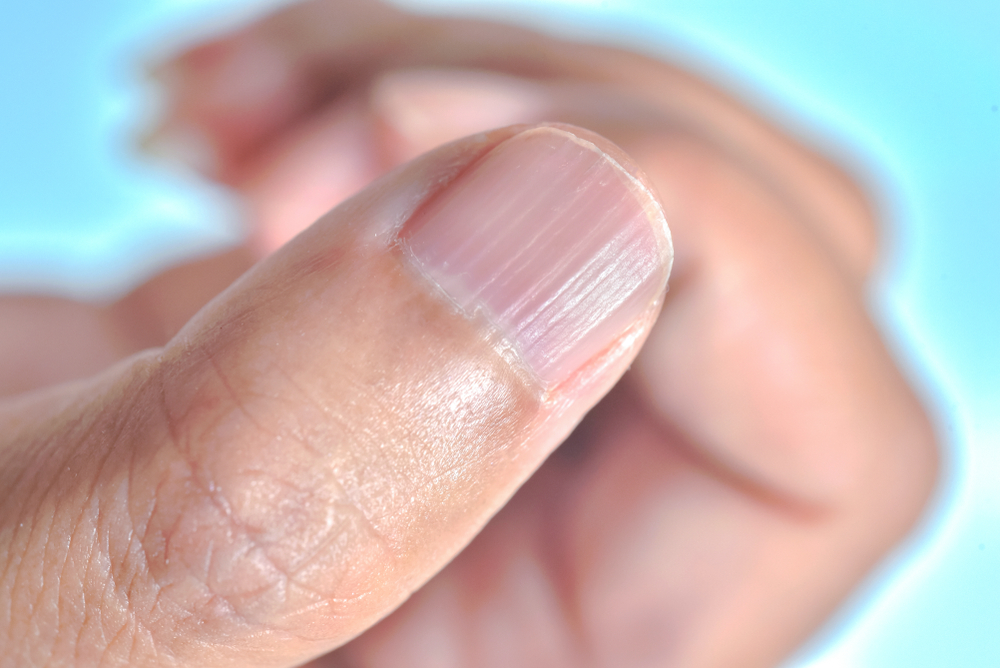
But these lines can also show up if you have certain skin conditions, like eczema or extremely dry skin. According to News Medical, vertical lines on your nails can also be caused by various medical conditions including systemic amyloidosis, nail-patella syndrome, collagen vascular diseases, graft versus host disease, and rheumatoid arthritis.
If your nails feel brittle, break easily, or look unusually thick, it could also point to thyroid problems, like hypothyroidism. Some people even notice their fingertips getting a little puffy, or nails becoming more rounded.
Horizontal ridges: Bigger red flag
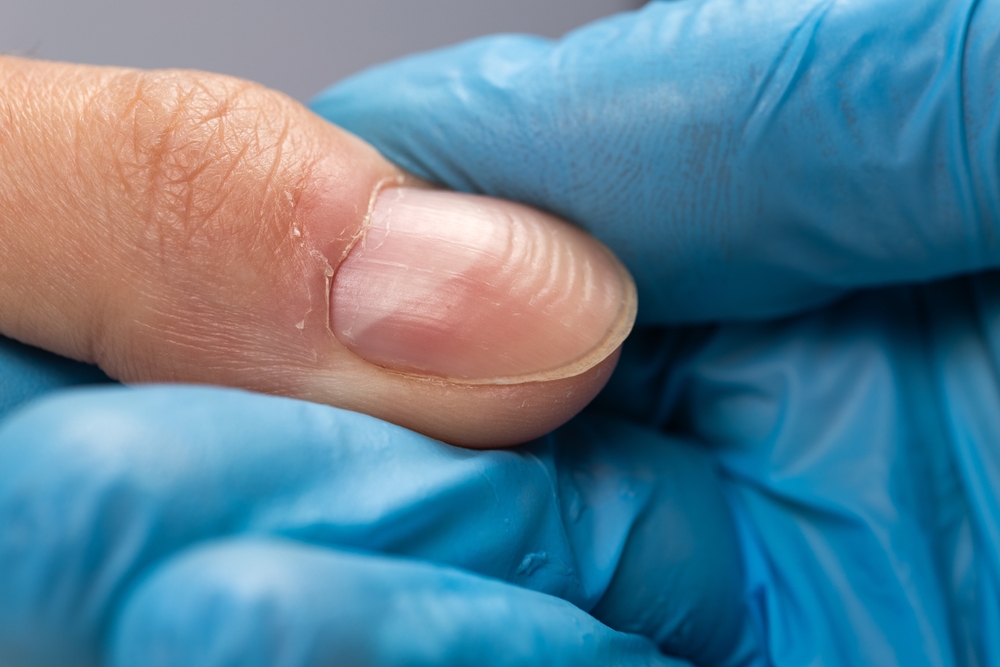
Horizontal ridges — or dents across your nails — are called Beau’s lines, and they usually mean your nail growth was interrupted. Causes can range from something temporary to more serious:
- Chemotherapy
- Long-term use of gel or acrylic nails
- Injury to the nail (think slammed fingers or dropped objects)
- Severe illness with high fever, including COVID-19, pneumonia, or measles
- Peripheral vascular disease
Could your diet be to blame?
Yes! Your nails can actually reflect nutrient deficiencies.
Zinc deficiency can show up as Beau’s lines or white spots on your nails.
Iron deficiency can cause vertical ridges — or even spoon nails (where the center of your nail scoops out like a tiny bowl). Fun fact: you could actually hold a drop of water in that tiny scoop!
And while we’re on the topic of nail health, it’s worth checking out a few common nail color changes you should keep an eye on.
- Yellow nails: Could signal liver or gallbladder issues, fungal infections, vitamin E deficiency, chronic bronchitis, asthma, or medication side effects. Staining from nail polish or smoking is also common.
- Pale nails: Might suggest anemia or vitamin B12 deficiency.
- Blue nails: Can indicate oxygen deficiency, poor circulation, or heart and lung issues.
- Colorless nails: Often a sign of low red blood cell count.
Your nails might just be giving you a peek into your overall health — so next time you notice a ridge, it might be worth taking a closer look. If you notice ridges, lines, or dents, don’t just brush them off. Check in with your doctor to figure out what’s going on and how to fix it.
With the right care, new, smoother nails can grow in over time. And if your ridges aren’t linked to a health issue, simple at-home nail care can make a big difference. Keep them healthy, and they’ll keep telling your body’s story.