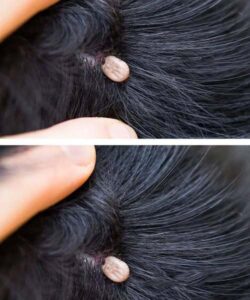
For many parents, running fingers through a child’s hair is a simple, almost meditative act. It is a moment of quiet connection, a gesture filled with love and comfort. In that small ritual, there is a rhythm: untangling knots, finding stray crumbs, occasionally discovering a tiny toy fragment wedged between strands. These little surprises are normal—minor irritations easily smoothed over with patience and care. They are part of the subtle, everyday joys and challenges of raising a child.
Yet, one ordinary afternoon, this familiar routine became an unexpected source of alarm. What I first thought was a minor tangle quickly revealed itself as something unusual, something immobile, a tiny lump on my daughter’s scalp that did not belong there. My heart skipped a beat. Instantly, a flood of fear, confusion, and urgency took over. In a single moment, the ordinary became extraordinary, and I was faced with questions every parent dreads: What is it? Is my child in danger? How do I handle this?
Recognizing the Unfamiliar: Identifying a Tick
The lump was unlike anything I had seen before. Its small, firm presence on my child’s scalp immediately signaled that this was not a harmless hair knot or a speck of dirt. Its color—a pale grayish-brown—stood out against her skin, and its immovability was disconcerting.
Ticks, I learned, are arachnids, distant relatives of spiders and mites. They are parasitic creatures, relying on the blood of mammals, birds, and sometimes reptiles to survive. In their early stages, nymphs can be almost imperceptibly small, only 1–2 millimeters in length. Yet their attachment is deliberate and precise, anchored with specialized mouthparts that secure them firmly to a host’s skin.
Children’s scalps are particularly vulnerable to tick attachment. Hair offers warmth, shelter, and camouflage, making it an ideal hiding place. Young children often spend hours outdoors—running through grassy fields, wooded areas, and playgrounds—where ticks thrive. And since children may not notice or communicate minor irritation on the scalp, ticks can remain undisturbed, feeding undetected for days.

The Tick’s Feeding Process and Physical Transformation
One of the most startling aspects of ticks is how their appearance changes as they feed. At first, the tick may seem nearly invisible, a tiny, innocuous bump. But as it consumes blood, it swells, transforming into a rounded, pebble-like shape that looks distinctly different from its initial form.
This engorgement can make identification challenging, even for observant parents. A tick that has been feeding for several days may be mistaken for a wart, a scab, or some benign skin growth. Its lack of movement only heightens the unease, making the discovery feel even more alarming.
Ticks secrete saliva containing anticoagulants and adhesives. This allows them to feed continuously without causing immediate pain or irritation—a survival strategy that ensures their prolonged, undetected presence. For parents discovering a tick for the first time, the realization of how long it may have been attached can provoke fear and panic.
Emotional Impact on Parents
Finding a tick on a child triggers a complex emotional response. The first instinct is often fear—fear for the child’s immediate health, fear of potential diseases such as Lyme disease or Rocky Mountain spotted fever, and anxiety over how long the tick has been feeding.
Self-blame is also common. I found myself replaying the day’s activities, wondering if I had been negligent in supervising outdoor play or in checking my child’s hair after returning from the park. Even when a tick has not transmitted a disease, the uncertainty alone creates emotional strain.
The visceral reaction is difficult to describe. Knowing that a parasitic creature has been feeding unnoticed on a child evokes a primal discomfort. It challenges assumptions about safety, cleanliness, and attentiveness. Suddenly, familiar environments—the backyard, playground, or neighborhood park—feel fraught with hidden risks.
Proper Identification and Response
Once a tick is identified, careful, informed action is critical. Improper removal can increase the risk of infection, leaving mouthparts embedded in the skin or facilitating the transfer of pathogens.
The recommended approach is precise: use fine-tipped tweezers to grasp the tick as close to the skin as possible, then pull upward steadily and gently. Avoid twisting or jerking motions, as these can cause parts of the tick to remain in the skin. After removal, the area should be cleaned thoroughly with soap and water or an antiseptic solution.
Parents are advised to monitor the site for signs of infection—redness, swelling, rash—and consult a healthcare provider if symptoms develop. In regions with prevalent tick-borne diseases, it may also be prudent to preserve the tick for identification. Healthcare professionals can analyze it, assessing potential disease risk and guiding any necessary medical follow-up.

Preventing Future Tick Encounters
While proper removal is crucial, prevention is equally important. Parents can adopt several strategies to minimize the likelihood of tick attachment:
- Protective Clothing: Long sleeves, long pants, and closed shoes reduce exposed skin. Light-colored clothing makes ticks easier to spot.
- Repellents: EPA-approved repellents containing DEET or picaridin can deter ticks from attaching to skin and clothing.
- Scalp Awareness: Regularly checking hair, especially after outdoor play, helps detect ticks early.
- Environmental Management: Keeping lawns trimmed, clearing brush, and creating barriers between play areas and tick habitats reduce exposure risk.
These preventative measures not only protect children physically but also ease the emotional toll associated with unexpected encounters. Knowing that a proactive approach is in place can transform anxiety into confidence.
The Emotional Journey: From Shock to Preparedness
The discovery of a tick is rarely just a physical challenge—it is a profoundly emotional experience. Parents navigate fear, guilt, and uncertainty, learning to balance vigilance with everyday life. Over time, these experiences can foster resilience and confidence.
Many parents report that following such incidents, they establish structured routines for checking hair, skin, and clothing. They educate their children about ticks, teaching them to recognize the signs and understand the importance of early detection. Playgrounds and backyard spaces are approached with heightened awareness, without discouraging outdoor activity.
This process reflects a broader psychological adaptation. Initial panic evolves into informed caution, and fear gradually gives way to empowerment. Parents gain the knowledge to protect their children while still allowing freedom and exploration—a delicate balance of safety and growth.
Nature’s Quiet Intrusions
Ticks serve as a stark reminder of humanity’s coexistence with the natural world. Despite modern life shielding many from direct contact with parasites, outdoor play, pets, and natural environments provide opportunities for interaction with wildlife.
Encountering a tick is a lesson in humility and awareness. It illustrates how nature quietly intersects with daily life, often unnoticed until it becomes impossible to ignore. Such experiences encourage respect for the environment while emphasizing the importance of vigilance, precaution, and proactive care.
Parents learn to navigate these interactions thoughtfully, teaching children to engage with nature responsibly. This balance fosters environmental literacy, resilience, and an understanding of biological risks—valuable skills for life beyond the immediate scare.
Emotional Processing and Support Systems
The lingering impact of discovering a tick can be significant. Parents may experience ongoing anxiety, heightened alertness, or guilt over perceived lapses in supervision. Processing these emotions is vital.
Support networks—partners, family members, or healthcare providers—play a critical role. Open discussion, education about ticks and disease prevention, and practical guidance transform fear into understanding. Community support, whether in-person or online, also provides reassurance. Knowing that other families have faced similar challenges reduces isolation and encourages the exchange of tips for prevention and safety.
Lessons Learned and Long-Term Preparedness
Finding a tick teaches several critical lessons:
- Vigilance Matters: Regular checks of hair, clothing, and skin are essential for early detection.
- Knowledge Reduces Fear: Understanding tick biology, feeding patterns, and removal methods empowers parents.
- Prevention Is Proactive: Protective clothing, repellents, and environmental management minimize risk.
- Emotional Resilience Is Key: Processing fear, guilt, and anxiety helps maintain calm and confidence in future situations.
The initial shock of discovering a tick is intense, but the experience ultimately reinforces the importance of preparedness, education, and measured responses.
Conclusion: Turning Fear into Empowerment
The moment a parent discovers a tick on a child’s scalp is simultaneously unsettling, confusing, and educational. The physical presence of the parasite is compounded by emotional responses—fear, guilt, and urgency—that highlight the vulnerability of both children and caregivers.
Through careful identification, proper removal, and preventive strategies, parents regain a sense of control. They also learn how to transform initial panic into practical awareness, teaching children and families how to coexist safely with nature’s quiet intrusions.
The experience of finding a tick offers lessons that extend beyond immediate safety: it cultivates vigilance, environmental literacy, and emotional resilience. Parents emerge better prepared, more knowledgeable, and confident in their ability to manage future challenges.
Ultimately, this seemingly minor encounter underscores a powerful truth: everyday parenting is as much about awareness and preparation as it is about love and connection. What begins as a frightening discovery becomes an instructive experience, guiding families toward safer, more informed, and emotionally balanced lives.