Have you ever finished chopping garlic, onions, or fish, washed your hands multiple times—and still couldn’t get rid of that stubborn smell?
You scrub. You rinse. You repeat.
And somehow… the odor sticks around like it has no intention of leaving.
If that sounds familiar, you’re definitely not alone. Strong kitchen smells—especially from foods like garlic, onions, and seafood—can cling to your skin long after you’re done cooking. And no matter how good your regular soap is, sometimes it just doesn’t do the job.
Now here’s where things get interesting.
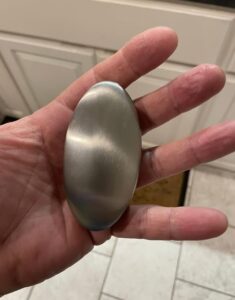
You might have seen a strange, smooth, metallic object sitting near someone’s sink. It looks like a bar of soap—but clearly isn’t. No bubbles, no scent, no foam. Just a solid piece of stainless steel.
At first glance, it might seem pointless.
But that little object actually has a very specific purpose—and once you understand it, you might want one in your own kitchen.
What Is That Metal “Soap” by the Sink?
That unusual object is called a stainless steel soap bar.
Despite its simple appearance, it’s designed to solve a very specific and frustrating problem: removing strong odors from your hands.
Unlike traditional soap, it doesn’t:
- Lather
- Dissolve
- Leave behind fragrance
It’s literally just a shaped piece of stainless steel.
And yet—it works surprisingly well.
Many people who try it for the first time are skeptical. After all, how can rubbing metal on your hands possibly remove smells?
But once they use it, they often wonder why they didn’t discover it sooner.
Why Do Food Smells Stick to Your Hands?
To understand why stainless steel works, it helps to know why certain smells are so persistent in the first place.
Foods like garlic, onions, and fish contain sulfur compounds. These compounds are responsible for their strong aromas—and unfortunately, they bind tightly to your skin.
That’s why:
- Washing with soap doesn’t always remove the smell
- The odor can linger for hours
- Sometimes the smell even returns after your hands dry
Traditional soaps mainly remove dirt and oils, but sulfur compounds can be stubborn and require a different kind of solution.
How Does Stainless Steel Remove Odors?
Here’s where the science comes in.
When you rub your hands on stainless steel under running water, a chemical reaction occurs between the steel and the sulfur compounds on your skin.
This interaction helps neutralize the odor molecules, rather than just masking them.
So instead of covering up the smell with fragrance, the stainless steel actually helps eliminate it at the source.
The result?
- Reduced or completely removed odor
- No added scent
- No harsh scrubbing required
It’s simple, effective, and surprisingly satisfying.
How to Use a Stainless Steel Soap Bar
One of the best things about this kitchen gadget is how easy it is to use.
There’s no special technique or preparation needed.
Just follow these steps:
- Rinse your hands with water
- Hold the stainless steel bar
- Rub it between your hands like regular soap
- Focus on areas where the smell is strongest
- Rinse again
That’s it.
It takes about 20–30 seconds, and you’re done.
Why So Many People Love It
This simple tool has gained popularity for a reason. Here’s why people keep one near their sink:
1. It Never Runs Out
Unlike regular soap, it doesn’t dissolve or shrink over time. One bar can last for years.
2. No Artificial Fragrances
If you don’t like strong or artificial scents, this is a huge advantage. It removes odors instead of masking them.
3. Low Maintenance
No refills. No mess. No special storage required.
4. Eco-Friendly Option
Since it doesn’t get used up, it reduces waste compared to traditional soaps.
5. Works Fast
You don’t need to scrub aggressively—just a quick rub under water does the job.
Don’t Have One? Try These Natural Alternatives
If you don’t have a stainless steel soap bar, there are still a few effective ways to remove stubborn smells from your hands.
Lemon Juice
Lemon is a classic solution.
- Rub fresh lemon juice onto your hands
- Rinse thoroughly
The acidity helps break down odor-causing compounds while leaving a fresh scent behind.
Milk (Yes, Really)
It might sound unusual, but it works.
- Soak your hands in a bowl of milk for a minute or two
- Rinse afterward
The fats in milk can help neutralize strong smells.
Baking Soda Paste
Another popular household remedy.
- Mix baking soda with a little water
- Scrub your hands gently
- Rinse clean
It acts as a mild abrasive and odor neutralizer.
Coffee Grounds
Used coffee grounds can do double duty.
- Rub them between your hands
- Rinse well
They help absorb odors and leave a subtle coffee scent behind.
Is a Stainless Steel Soap Bar Worth It?
If you cook often—especially with ingredients like garlic, onions, or fish—this small tool can make a big difference.
It’s one of those items you don’t think you need… until you try it.
Then suddenly:
- No more lingering food smells
- No more over-washing your hands
- No more layering scented soaps just to feel clean
It’s simple, practical, and surprisingly effective.
A Small Kitchen Tool That Makes a Big Difference
Sometimes, the most useful kitchen tools aren’t the most complicated ones.
They’re the ones that quietly solve everyday problems.
A stainless steel soap bar may not look impressive at first glance. But once you understand what it does—and experience the results—it becomes one of those things you reach for without thinking.
So next time you’re at someone’s house and notice that odd little metal “soap” by the sink…
You’ll know exactly what it’s for.
And you might just want one of your own.
Why Every Kitchen Could Use One
Think about it—how often do you cook with strong-smelling ingredients? Garlic, onions, leeks, shallots, fish, and even certain spices can leave odors behind that cling to your skin long after you’ve washed your hands. For many home cooks, this leads to excessive scrubbing, strong-scented soaps, or even lingering smells on your keyboard, phone, or furniture when you touch them.
A stainless steel soap bar solves this in a surprisingly simple way. You don’t need fancy ingredients, expensive cleansers, or chemical-laden products. Just a quick rub under running water, and the odors disappear almost like magic. It’s subtle, effective, and doesn’t leave your hands feeling stripped or dry, which is another win over traditional soap.
Tips for Using Stainless Steel Soap Effectively
To get the best results, there are a few small tips that can make the process even more efficient:
- Use it with warm water: Warm water helps open the pores of your skin slightly and improves the interaction between the stainless steel and the odor-causing molecules.
- Focus on fingertips and nails: That’s where strong odors often cling the most. Rub the tips and underneath your nails thoroughly.
- Rinse and repeat if necessary: Usually one pass is enough, but for very pungent foods like raw garlic or anchovies, a second quick rub works wonders.
- Keep it close to your sink: Mount it on a holder or keep it in a small dish by the sink. It’s handy, looks sleek, and reminds you to use it after cooking.
The Unexpected Benefits
Besides removing odors, many users report a few other perks:
- Less waste: Because it never runs out, you don’t need to buy liquid or bar soap as often.
- Gentle on hands: No more over-scrubbing, which can dry or irritate the skin.
- Kid-friendly: Kids can use it safely, especially helpful after helping chop onions or garlic.
- Conversation starter: It’s a little kitchen gadget that always sparks curiosity—guests often ask, “What is that?” and you get to share a neat tip that’s both practical and fun.
Small Investment, Big Payoff
While it may look like a quirky or unnecessary gadget at first, a stainless steel soap bar is one of those kitchen tools that quickly proves its worth. It’s durable, effective, and surprisingly satisfying to use. Once you experience how it completely removes stubborn food odors, you’ll wonder how you ever lived without it.
So the next time your hands smell like last night’s garlic bread or fish dinner, reach for the little metal bar. It’s science, simplicity, and practicality all rolled into one small, smooth object. And honestly, your fingers (and everyone else who shakes your hand afterward) will thank you.