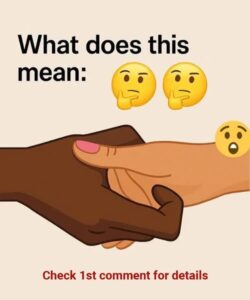
Body language has always been a powerful form of communication. Long before words are spoken, our gestures, posture, and subtle movements often reveal thoughts, emotions, and intentions that might otherwise remain unexpressed. A lingering glance, a slight lean forward, or even a pause in conversation can carry meaning far beyond what is said out loud.
Among these quiet signals, there is one small gesture that often goes unnoticed—but can feel surprisingly meaningful when it happens: a person lightly scratching or brushing the palm of your hand.
At first, it may seem insignificant. Easy to overlook. Something that could be dismissed as accidental or habitual. But depending on the context, the relationship, and the energy of the moment, this simple touch can carry a deeper message.
Understanding what this gesture might mean—and more importantly, knowing how to respond in a way that feels right to you—can help you stay grounded, confident, and fully in control of your personal boundaries.
The Power of Body Language in Everyday Interactions
Human connection isn’t built on words alone. In fact, much of our communication happens nonverbally. From the way someone stands to how they move their hands, subtle cues constantly shape how we interpret social situations.
Touch, in particular, plays a unique role. It can signal warmth, reassurance, interest, or even discomfort—depending entirely on how it’s used.
Because of this, even the smallest form of contact can feel meaningful.
A touch on the arm might feel friendly. A hand on the shoulder might feel supportive. But contact with the palm? That tends to feel more personal.
Why the Palm Is Such a Sensitive Area
The palm of your hand is one of the most sensitive parts of your body. It contains a high concentration of nerve endings, making it especially responsive to touch.
That sensitivity isn’t just physical—it’s emotional as well.
Palm contact is often associated with:
- Trust
- Closeness
- Vulnerability
- Connection
This is why gestures involving the palm—like holding hands or prolonged hand contact—can feel more intimate than other forms of touch.
Unlike a quick, casual interaction, touching the palm tends to stand out. It’s rarely something people do without some level of awareness, even if subtle.
When a Palm Gesture May Carry Meaning
In certain social and cultural settings, a light scratch or gentle rub of the palm during a handshake or while holding hands has been interpreted as a quiet signal of interest.
It’s often described as:
- Subtle
- Easy to overlook
- Open to interpretation
Because it isn’t obvious, it allows the person making the gesture to communicate something without being direct. That ambiguity can make the moment feel intriguing—or confusing.
However, it’s important to remember that not every instance of this gesture is intentional or meaningful. Sometimes, people move their hands unconsciously or out of habit.
That’s why context matters.
The Importance of Context
Before assigning meaning to any gesture, it helps to consider the bigger picture:
- What is your relationship with this person?
- What was happening right before the gesture?
- Was there eye contact or a change in tone?
- Did the moment feel natural or unexpected?
A gesture that feels warm and welcome in one situation might feel uncomfortable in another.
Rather than trying to decode someone else’s intention with certainty, the most valuable question to ask is simple:
How did it make you feel?
Your reaction matters more than any assumed meaning behind the action.
When the Gesture Feels Positive
Sometimes, the moment feels natural.
You might notice:
- A sense of warmth
- A feeling of curiosity
- A subtle spark of connection
If you already feel comfortable around the person, the gesture may seem like a natural extension of that connection rather than something unexpected.
In these situations, confidence is key.
You don’t need to overanalyze or react dramatically. Often, a calm presence speaks louder than words.
Simple responses can include:
- Maintaining eye contact
- Offering a relaxed smile
- Allowing the moment to pass naturally
If you feel comfortable, you might respond in a similarly subtle way—such as briefly maintaining contact or mirroring the gesture in a light, natural manner.
This doesn’t mean giving up control of the situation. It simply means acknowledging the moment while staying within your comfort zone.
Using Light Humor to Navigate the Moment
If you’d prefer to address the gesture without making things awkward, humor can be a helpful tool.
A gentle, playful comment like:
- “Was that intentional?”
- “That felt a little unexpected.”
…can open the door for clarity while keeping the tone relaxed.
How the other person responds can tell you a lot.
A respectful, honest reaction may indicate genuine interest or awareness. On the other hand, dismissiveness or discomfort might signal something worth paying attention to.
When the Gesture Feels Uncomfortable
Not every interaction feels right—and that’s important to recognize.
If the touch feels:
- Unexpected
- Intrusive
- Unwelcome
…your response doesn’t need to be complicated.
Your comfort is the priority.
You can:
- Gently pull your hand away
- Shift your position
- Create space without explanation
These actions alone communicate a clear boundary.
If you feel the need to use words, keeping things simple is often most effective:
- “I’m not comfortable with that.”
- “Please don’t do that again.”
Clear communication isn’t rude—it’s respectful, both to yourself and to the other person.
Trusting Your Instincts
One of the most valuable tools you have in any social situation is your intuition.
Your instincts are shaped by your experiences, awareness, and understanding of your own boundaries.
If something feels off—even if you can’t immediately explain why—that feeling matters.
You don’t need proof or confirmation to honor your own comfort.
When You’re Unsure What It Meant
Sometimes, a gesture doesn’t feel clearly positive or negative.
It simply leaves you wondering.
In those moments, curiosity can be more helpful than overthinking.
You might choose to ask a straightforward question, such as:
- “What did you mean by that?”
- “Was that intentional?”
This approach keeps the tone neutral while inviting clarity.
The response you receive can reveal more than the gesture itself.
Pay attention to whether the person:
- Responds respectfully
- Acknowledges your question
- Provides a clear and honest answer
These cues help you better understand their character and intentions.
The Role of Personal Boundaries
Every interaction you have is shaped by your boundaries.
Boundaries aren’t barriers—they’re guidelines that define what feels comfortable and respectful to you.
They help you:
- Protect your sense of self
- Navigate social situations with confidence
- Build healthier connections
You have the right to decide:
- Who touches you
- How they touch you
- When that contact is appropriate
No one else gets to define those limits.
Confidence in Your Responses
Responding confidently doesn’t mean being confrontational.
It means being clear, calm, and self-assured.
Whether you choose to:
- Engage
- Redirect
- Step away
…your response is valid.
Confidence comes from knowing that your comfort matters—and acting accordingly.
Recognizing Respect in Others
A key part of any healthy interaction is how the other person responds to your cues.
Respect shows up in:
- Listening without defensiveness
- Adjusting behavior when needed
- Acknowledging boundaries without pressure
If someone respects your response—whether positive or negative—it’s a strong sign of emotional awareness.
If they don’t, that’s valuable information too.
Choosing What Feels Right for You
There is no single “correct” way to interpret or respond to subtle gestures.
What matters is what feels right for you in that moment.
You are allowed to:
- Enjoy light, respectful interaction
- Ask questions when something is unclear
- Step away from situations that feel uncomfortable
Every choice you make is an expression of your personal boundaries.
Building Meaningful Connections
True connection—whether casual or deeper—is built on mutual respect.
It’s not about guessing signals or playing games.
It’s about:
- Clear communication
- Shared comfort
- Genuine understanding
When both people feel safe and respected, interactions become more natural and meaningful.
A Final Thought
Small gestures can carry meaning, but they don’t define the entire interaction.
What truly matters is how you feel—and how you choose to respond.
By staying aware, trusting your instincts, and honoring your boundaries, you create space for interactions that feel comfortable, respectful, and genuine.
And when you move through the world with that kind of confidence, you don’t need to second-guess subtle signals—because your presence already speaks clearly for you.