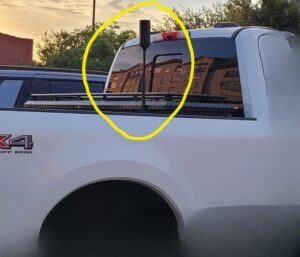
If you’ve ever driven past a pickup truck, especially one heading out into remote or off-road areas, you may have noticed a strange pole-like structure sticking up behind the cab. It might seem like just another odd modification, or perhaps you assumed it was some sort of quirky design feature. But what if I told you that these poles are actually a critical piece of technology that’s becoming more and more common—especially among truck owners who work in rural areas or spend a lot of time off the beaten path?
That rod you see is part of a mobile cell phone signal booster system—a device that has become a game-changer for anyone who relies on a mobile phone for work, navigation, or emergency communication in remote areas.
What Is That Rod on the Back of the Truck?
That strange rod is not a decoration or some random antenna; it’s the external antenna for a cell phone signal booster. These boosters are designed specifically for vehicles—especially trucks and SUVs—to help amplify and improve cellular connectivity when you’re far away from the nearest cell tower.
A signal booster works by capturing weak cellular signals from the outside environment, typically through an antenna mounted on the truck’s exterior (behind the cab), and then sending that weak signal through an amplifier. The amplifier strengthens the signal and then sends it to an internal antenna inside the cab of the vehicle. This rebroadcasted signal allows better reception, faster data speeds, and clearer calls.
So if you’re wondering why your truck is sporting one of these antennas, it’s because you’re likely looking at the future of staying connected while on the road, whether you’re out on a job site, embarking on an off-road adventure, or just commuting through rural stretches where connectivity often disappears.
Why Are They So Popular Now?
The need for these boosters is more significant today than ever before. We’ve all experienced the frustration of driving through areas where the phone signal seems to disappear. No bars. No connection. Just an empty void. For anyone who spends time driving in remote regions—truckers, contractors, ranchers, or outdoor enthusiasts—staying connected is no longer just a luxury; it’s a necessity.
Whether you’re hauling equipment across the country, working on a farm, or navigating a mountain range during a camping trip, having a reliable signal can be crucial. Truckers, for example, depend on their phones not just for casual communication, but for GPS navigation, safety protocols, and emergency contact. Imagine being stranded in the middle of nowhere with a breakdown and no way to call for help.
That’s why these signal boosters have become increasingly popular. They’re not just for convenience—they can quite literally be a lifeline, offering better signal reliability, so you’re always ready to make a call, check a map, or stay connected to your work.
How Do These Boosters Work?
At their core, these cell phone signal boosters consist of three main components:
-
External Antenna: This antenna is mounted on the outside of the truck, usually located behind the cab. Its primary function is to capture weak cellular signals from nearby cell towers, no matter how far away they might be.
-
Signal Amplifier: Inside the vehicle, the amplifier boosts the strength of the weak signal that the external antenna picked up. This amplification is critical, especially in rural or off-the-grid areas, where the signal strength is often too weak for normal communication.
-
Internal Antenna: Once the signal has been amplified, this antenna rebroadcasts it inside the truck’s cabin. It helps provide stronger reception for your mobile phone, ensuring clearer calls and faster data speeds, even in the middle of nowhere.
Some of the popular models for these types of setups include products like the HiBoost Travel 3.0 and WeBoost Drive Reach, which work across all major U.S. carriers and can support multiple devices at once. This is incredibly useful when you’re driving with a work crew, family, or friends who all rely on their phones for communication and data.
These signal boosters have become especially important for those who drive into areas with dead zones—places where the signal is just too weak for standard cell phone use. For instance, if you’re working on an oil rig or traveling through a desert, having a signal booster could mean the difference between emergency preparedness and complete isolation.
A Nod to the Good Old Days of CB Radios
It’s interesting to note that these modern-day signal boosters actually have a historical predecessor: the CB (Citizens Band) radio. Back in the day, truckers used CB radios to communicate over long distances while they were out on the road. It was the primary method of communication before cell phones became widespread, and it played a vital role in coordinating routes, sharing traffic information, or even just chatting with other drivers for company.
While CB radios are still in use today, their popularity has waned with the rise of smartphones. Nowadays, most long-haul truckers and other drivers use smartphones for both work and entertainment, and that means they need better mobile connectivity. These signal boosters are, in a way, the modern-day version of those trusty CB radios—just with a much more reliable and convenient technological upgrade. No more static-filled channels or bulky radio equipment, just a sleek, effective way to stay connected.
Are They Worth the Investment?
Given how much time some people spend in rural areas or remote regions, a cell phone signal booster can be a worthy investment—and for more reasons than just convenience. For truckers, contractors, ranchers, or anyone who works outdoors, having reliable connectivity is vital. Not only does it allow you to make calls and send messages, but it also helps with GPS navigation and weather updates, which can be crucial in certain jobs.
For example, let’s say you’re hauling equipment to a job site in the middle of a forest, and you encounter a breakdown. With a signal booster, you can call for roadside assistance even if you’re miles away from the nearest town or cell tower. In these scenarios, a signal booster becomes invaluable.
Prices for these boosters typically range from $300 to $500, depending on the model and the features it offers. It’s a small price to pay for peace of mind—especially in areas where emergency help can be hard to come by.
While the initial investment might seem high, it could pay off in improved productivity, reduced stress, and most importantly, safety. After all, it’s better to have a signal you can rely on than to be left stranded without the means to reach help.
Beyond the Boosters: The Modernization of the Pickup Truck
These mobile signal boosters are just one example of how the pickup truck has evolved from a simple workhorse to a high-tech machine. Today’s trucks are packed with technology, from advanced navigation systems to integrated safety features. Signal boosters are just another tool in the arsenal to help truck owners stay connected, especially when traveling through remote areas.
Additionally, many newer trucks come with built-in antennas for mobile reception, but for drivers who regularly venture into areas with weak signals, an external booster remains the most effective solution for reliable connectivity.
Other Uses for Signal Boosters
Though we’ve focused on the benefits for truckers and rural workers, signal boosters can be useful in other scenarios as well. For example:
-
Camping: If you’re camping in a remote location, you can use a mobile signal booster to get better reception for your phone, which can be useful for navigation or emergency communication.
-
Road Trips: If you’re traveling cross-country, especially through areas with limited cell coverage, a signal booster can ensure that you have reliable access to maps, music, and communication.
-
Construction Sites: Construction workers often operate in areas that don’t have solid cell service. A booster helps them stay connected to their teams and clients, no matter where the job is located.
Final Thoughts
The strange rod that you see sticking up from the back of a pickup truck isn’t just for show—it’s a piece of modern technology designed to amplify signal strength in areas where cell service is unreliable. For those who spend time in rural or off-road areas, these boosters are crucial for ensuring reliable communication, navigation, and safety.
From the days of CB radios to the rise of mobile phones, trucks have always played a role in keeping us connected. The addition of signal boosters only enhances this legacy, making sure that even when you’re miles from civilization, you can still reach out and stay connected to the world.
If you find yourself traveling frequently through areas with weak or no signal, it might be time to consider investing in one of these boosters. They could make all the difference when you need it most.