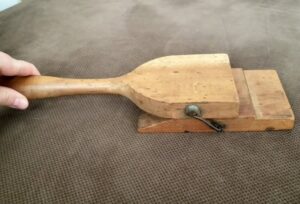
Throughout American history, countless inventions have appeared, served their purpose, and then quietly faded into obscurity. Some were groundbreaking innovations that shaped entire industries, while others solved very specific problems of their time. Occasionally, a forgotten device resurfaces—perhaps discovered in an antique shop, an online forum, or tucked away in an old toolbox—and sparks curiosity among historians, collectors, and everyday observers alike.
One such mysterious object from the 19th century is known as Parker’s Foundation Fastener, a small but clever tool connected to the history of beekeeping. At first glance, many people mistake it for a vintage kitchen utensil, a woodworking clamp, or even an early mechanical clip. Its unusual shape and simple construction make it difficult to identify without context. Yet this seemingly strange tool played an important role in improving honey production during a period when beekeeping was evolving into a more organized agricultural practice.
In the United States, honey has long been valued not only as a natural sweetener but also as a household staple with culinary, medicinal, and economic importance. Before the widespread availability of refined sugar, honey served as one of the most reliable sources of sweetness in American kitchens. As demand grew during the 1800s, beekeepers searched for better tools to manage hives, increase efficiency, and protect fragile honeycomb structures.
Parker’s Foundation Fastener emerged during this era of experimentation and agricultural innovation. While the device may appear odd to modern eyes, it represents a fascinating example of how simple mechanical tools helped transform traditional beekeeping into a more productive and sustainable practice.
Understanding how this tool worked—and why it mattered—offers a window into the ingenuity of early beekeepers and the agricultural heritage that continues to influence modern food systems.
The Hidden Meaning / Significance
At first glance, Parker’s Foundation Fastener may appear to be nothing more than a small metal clip or clamp. However, its design reflects a deeper story about the challenges faced by beekeepers in the 19th century and the solutions they developed to support growing colonies of honeybees.
A Simple Tool Solving a Complex Problem
One of the central challenges of early beekeeping involved managing honeycomb structure inside wooden hive frames. Bees naturally build comb in irregular patterns when left entirely on their own. While this works well in wild hives, it can make honey harvesting difficult for human caretakers.
During the 1800s, the development of movable-frame hives revolutionized beekeeping. These hives allowed beekeepers to remove individual frames containing honeycomb without destroying the colony. However, the innovation introduced a new challenge: how to keep sheets of wax foundation properly secured within the frames.
Wax foundation sheets are thin layers of beeswax embossed with hexagonal patterns. These patterns guide bees to build honeycomb in orderly rows. But because the sheets are delicate, they needed to be carefully attached to the frame to prevent them from slipping or warping.
Parker’s Foundation Fastener addressed this exact problem. The device acted as a small mechanical clamp that held the wax sheet firmly in place until the bees began constructing comb on top of it.
Without tools like this, beekeepers often struggled with:
-
foundation sheets sliding out of place
-
uneven honeycomb construction
-
fragile comb breaking during harvesting
-
wasted wax resources
In this sense, the fastener represented a small but meaningful technological advancement.
Supporting Organized Honey Production
You might not realize it, but the structure of honeycomb inside a hive significantly affects productivity. When comb is built in orderly patterns, it allows bees to store nectar more efficiently and helps beekeepers harvest honey without damaging the colony.
Tools such as Parker’s fastener helped create:
-
straighter comb structures
-
stronger wax foundations
-
easier frame removal
-
improved hive management
These improvements translated directly into higher honey yields and healthier bee colonies.
In the agricultural economy of the 1800s, such gains were extremely valuable.
A Glimpse Into Agricultural Innovation
The 19th century was a time of rapid agricultural experimentation in the United States. Farmers and craftsmen constantly designed new tools to improve efficiency in everything from crop harvesting to livestock care.
Beekeeping was no exception. The development of specialized equipment—including smokers, hive tools, extractors, and foundation fasteners—helped transform beekeeping from a largely informal practice into a structured agricultural profession.
While Parker’s Foundation Fastener may not be widely known today, it represents the spirit of practical innovation that defined American agriculture during this period.
Practical Implications for People / Consumers / Businesses
Although Parker’s Foundation Fastener may seem like a small historical curiosity, its invention reflects broader lessons about agriculture, food production, and innovation that remain relevant today.
How Better Tools Improved Honey Production
Beekeeping efficiency directly affects honey supply. When early beekeepers adopted tools that stabilized wax foundation sheets, they experienced several benefits:
-
increased honey yield per hive
-
reduced damage to comb structures
-
less wasted beeswax
-
easier hive inspection and maintenance
These improvements allowed beekeepers to scale operations more effectively.
By the late 19th century, commercial beekeeping began expanding across the United States, particularly in agricultural regions where crops depended heavily on pollination.
The Economic Importance of Honey
Before modern sugar refining became widespread, honey served as one of the most important sweeteners available in American households.
Families used honey for:
-
baking and cooking
-
preserving fruit
-
medicinal remedies
-
candle making through beeswax
Even today, honey remains a valuable agricultural product. According to the United States Department of Agriculture (USDA), American beekeepers produce hundreds of millions of pounds of honey annually.
Beyond honey itself, bees provide an even more critical service: pollination.
Pollination and Modern Agriculture
You might not realize that honeybees contribute billions of dollars in agricultural value each year. Crops such as almonds, blueberries, apples, and pumpkins rely heavily on pollination from managed bee colonies.
The USDA Agricultural Research Service estimates that pollinators support more than $15 billion in crop production annually in the United States.
Tools that improved hive management—even simple ones like foundation fasteners—helped support the long-term development of modern pollination systems.
Lessons for Modern Innovation
One of the most interesting aspects of historical tools like Parker’s fastener is how they illustrate the importance of small innovations.
Not every invention needs to be complex or revolutionary. Sometimes, the most effective solutions involve:
-
simple mechanical improvements
-
affordable materials
-
easy adoption by workers
This principle continues to guide innovation in industries ranging from agriculture to technology.
Many modern agricultural tools follow the same philosophy: solve a specific problem efficiently.
Historical / Cultural Context
To fully appreciate Parker’s Foundation Fastener, it helps to understand the broader history of beekeeping in the United States and how the practice evolved during the 19th century.
Early American Beekeeping
Honeybees were introduced to North America by European settlers in the 1600s. Indigenous ecosystems did not originally contain the European honeybee species now common in U.S. agriculture.
Colonists quickly realized the value of bees for both honey production and crop pollination.
Early hives were typically made from hollow logs or woven straw structures known as skeps. While these traditional hives allowed bees to thrive, they made honey harvesting extremely difficult.
In many cases, harvesting honey required destroying the entire hive—a practice that limited sustainable beekeeping.
The Movable Frame Revolution
A major breakthrough came in 1851 when American beekeeper Lorenzo Langstroth developed the movable-frame hive.
This design used removable wooden frames that allowed beekeepers to inspect colonies without destroying the hive.
The Langstroth hive quickly became the foundation of modern beekeeping and remains widely used today.
However, the system also created new challenges:
-
frames needed stable comb structures
-
wax foundation had to remain fixed in place
-
delicate sheets could easily warp or detach
Inventors began designing tools to solve these problems, including foundation fasteners.
The Rise of Beekeeping Equipment
By the late 1800s, the beekeeping industry had expanded significantly. Specialized equipment manufacturers began producing tools designed specifically for hive management.
These tools included:
-
honey extractors
-
smokers for calming bees
-
protective clothing
-
frame supports and clips
Parker’s Foundation Fastener was part of this wave of innovation.
Although it may appear simple, the device reflected a growing understanding of bee behavior and hive management techniques.
The Cultural Importance of Honey
Honey has held cultural significance for thousands of years, and this tradition continued in American society.
During the 1800s, honey served multiple purposes:
-
a natural sweetener before refined sugar became common
-
a preservative for fruits and herbal remedies
-
a key ingredient in baked goods
-
a base for mead and other fermented beverages
Beekeeping also became a symbol of self-sufficiency among rural families.
Many small farms maintained a few hives to supply honey, wax, and pollination benefits for crops.
Tips, Insights, or Takeaways
Although Parker’s Foundation Fastener belongs to a different era, its story offers several interesting insights about innovation, agriculture, and everyday problem-solving.
1. Small Inventions Can Have Big Impacts
Many historical inventions were not dramatic or complex. Instead, they solved very specific challenges faced by workers in daily life.
By stabilizing wax foundation sheets, Parker’s tool helped improve honey production and hive organization.
This illustrates how even small mechanical improvements can make meaningful differences in productivity.
2. Beekeeping Has Always Required Creativity
Managing bee colonies requires careful observation and practical solutions. Beekeepers must balance the needs of the colony with the goals of honey production and hive maintenance.
Over the centuries, beekeepers have invented countless tools to simplify this work.
Modern examples include:
-
automated hive monitoring systems
-
temperature sensors
-
advanced honey extractors
Yet many of these innovations build upon the same principles used by 19th-century tools.
3. Understanding Agricultural History Matters
Agricultural technologies shape the food systems we rely on today.
When we look at historical tools like Parker’s fastener, we gain insight into how farmers and craftsmen gradually improved productivity over time.
This process helped build the agricultural infrastructure that supports modern food production.
4. Bees Remain Essential to Food Security
While the fastener itself may be a historical curiosity, the importance of bees remains extremely relevant.
Pollinators play a critical role in maintaining healthy ecosystems and supporting food production.
Experts from the USDA and the Food and Agriculture Organization (FAO) emphasize the importance of protecting pollinator populations through sustainable farming practices.
5. Curiosity Keeps History Alive
One reason strange tools like Parker’s fastener attract attention today is because people enjoy solving historical puzzles.
When mysterious objects resurface—whether in antique markets, family attics, or online forums—they encourage curiosity about the past.
Each rediscovered tool tells a story about how earlier generations worked, solved problems, and adapted to the challenges of their time.
Authoritative References
For readers interested in learning more about beekeeping history and agricultural innovation, the following organizations provide reliable information:
-
United States Department of Agriculture (USDA)
-
USDA Agricultural Research Service Pollinator Health Program
-
Smithsonian National Museum of American History agricultural collections
-
Food and Agriculture Organization (FAO) pollinator research
These sources offer detailed insights into the history of beekeeping, pollinator science, and agricultural technology.
High-Value Keyword Suggestions
For search optimization and advertiser relevance, the following keywords may perform well:
-
history of beekeeping
-
honey production in the United States
-
sustainable agriculture practices
-
pollinator importance in farming
-
natural honey health benefits
-
small farm income ideas
-
organic honey farming
-
agricultural innovation history
-
backyard beekeeping guide
-
eco-friendly farming solutions
These topics attract advertisers in industries such as organic food products, sustainable agriculture technology, home gardening equipment, and health and wellness markets.
Conclusion
At first glance, Parker’s Foundation Fastener may look like a strange and mysterious relic from the past. Its simple metal design can easily be mistaken for a kitchen gadget or woodworking tool.
Yet behind this unusual device lies a fascinating story about agricultural innovation and the evolution of beekeeping.
During the 19th century, beekeepers faced constant challenges as they worked to improve honey production and maintain healthy colonies. Tools like Parker’s fastener helped secure delicate wax foundations inside hive frames, enabling bees to build stronger, more organized honeycomb structures.
Although small in size, the invention reflects the ingenuity of early agricultural pioneers who sought practical solutions to everyday problems.
Today, as interest in sustainable farming and pollinator protection continues to grow, the legacy of these early innovations remains more relevant than ever.
Sometimes the strangest objects from the past reveal the most meaningful stories—reminding us that even the simplest tools can help shape the future of food production and agriculture.