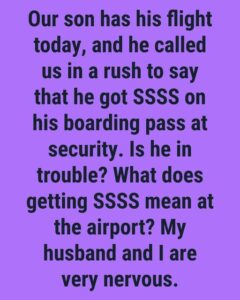
Traveling by air can be a stressful experience. Between packing, navigating crowded airports, and making sure you get to your gate on time, it’s easy to feel overwhelmed. And if you’re already dealing with the chaos of air travel, the last thing you want to see on your boarding pass is an unfamiliar code: SSSS. If you’ve ever noticed these four letters printed on your boarding pass, you may have wondered what it means — and more importantly, what it means for your airport experience.
In this article, we’ll break down the meaning of SSSS, explain how it works, and offer a few tips on how to handle the extra security steps.
The Hidden Meaning of ‘SSSS’
If you’ve spotted SSSS on your boarding pass, you’re likely about to experience additional screening at the airport. Don’t be alarmed — while this may sound concerning, it’s simply part of a larger, risk-based security program designed to enhance airport safety.
What is ‘SSSS’?
SSSS stands for Secondary Security Screening Selection, and it indicates that you’ve been randomly selected for extra screening before boarding your flight. This security measure is part of the TSA’s Secure Flight program, which aims to identify high-risk passengers before they even arrive at the airport.
The Secure Flight program works by matching passenger names against government watchlists and trusted traveler databases to assess whether they pose any potential security risks. If your name is flagged for any reason — whether due to a match with a watchlist or other factors — SSSS will appear on your boarding pass, signaling that you will undergo additional security checks.
How Does It Work?
Once you arrive at the airport and check in for your flight, the TSA will identify that you’ve been selected for further screening based on the SSSS code. This process may involve a more thorough inspection of your belongings, additional questioning, or even a pat-down.
According to the TSA, the Secure Flight program uses basic personal information (such as your name and date of birth) to pre-screen passengers. The goal is to identify individuals who are on government watchlists, such as the No Fly List, or individuals flagged by the Centers for Disease Control’s Do Not Board List. If you’ve been selected for secondary screening, it doesn’t necessarily mean you’ve done anything wrong — it simply means that extra precautions are being taken for safety reasons.
Practical Implications of SSSS
Being flagged for additional screening can add some extra time to your airport routine. Understanding the practical implications of SSSS can help you prepare for the process and avoid any unnecessary stress when you get to security.
What to Expect at the Airport
If you see SSSS on your boarding pass, you’ll likely be directed to a separate security line for further screening. While this may seem like an inconvenience, it’s important to remember that the TSA is simply following procedures designed to keep everyone safe. Here’s what to expect:
-
More Thorough Inspection of Your Bag: Security will likely search your carry-on bag and personal items more thoroughly than usual. They may check electronics, clothing, or any items that seem out of the ordinary.
-
Additional Questions: Be prepared to answer questions about your travel plans, identity, and any suspicious items in your bag.
-
Pat-Down: If the screening process raises any concerns, you may be asked to undergo a pat-down.
While this extra security can be time-consuming, the good news is that SSSS is typically only triggered on a small percentage of flights, and for most travelers, the screening process doesn’t last long.
How to Minimize the Chances of Being Flagged
While SSSS is largely out of your control, there are a few things you can do to minimize your chances of being selected for secondary screening:
-
Join Trusted Traveler Programs: Programs like TSA PreCheck and Global Entry provide expedited screening for low-risk passengers, reducing the likelihood that you’ll be flagged for extra security.
-
Correct Your Name and Travel Information: Ensure that your name and other travel details match exactly with the information in government databases. Small discrepancies can sometimes trigger secondary screening.
-
Check Your Travel History: If you’ve recently traveled to a country or region flagged for higher security concerns, there’s a chance you could be selected for extra screening. However, this is part of the government’s efforts to ensure safe air travel and doesn’t necessarily reflect negatively on you as a traveler.
The History and Purpose of SSSS
To understand why the TSA uses SSSS and the Secure Flight program, it helps to look at the broader context of air travel security.
Origins of the Secure Flight Program
The Secure Flight program was created in the wake of the September 11, 2001 terrorist attacks as part of a larger effort to improve passenger screening and aviation security. One of the key goals of the program is to identify potential threats before they board a plane by screening travelers against government watchlists.
Over time, the TSA developed an advanced risk-based system that uses data from travel records to assess security threats. The implementation of SSSS as a secondary screening indicator helps ensure that passengers are thoroughly vetted before boarding, especially those who may be considered higher risk.
Risk-Based Screening
Unlike previous one-size-fits-all security measures, Secure Flight aims to use intelligence to focus resources on those who may pose a threat while allowing low-risk passengers to proceed with minimal disruption. By pre-screening passengers and identifying those who need closer scrutiny, the TSA hopes to keep air travel as safe and efficient as possible.
This process aligns with broader security trends worldwide, where intelligence-based security checks are increasingly used to enhance safety without causing undue delays or inconvenience for most travelers.
Tips and Takeaways for Dealing with SSSS
Being selected for secondary screening can be frustrating, but there are steps you can take to make the process smoother and minimize the impact on your travel plans.
1. Arrive Early
If you see SSSS on your boarding pass, it’s a good idea to arrive at the airport earlier than usual. The extra screening can take some time, so allowing yourself a little more flexibility can help reduce stress. Aim to get to the airport at least 2-3 hours before your flight to account for the additional security process.
2. Be Patient and Cooperative
While additional screening can feel invasive, it’s important to remain calm and cooperative with TSA officers. They are simply doing their jobs to ensure the safety of all passengers. Following instructions and being patient will help the process go smoothly.
3. Stay Organized
Since your belongings will likely be inspected more thoroughly, make sure your carry-on bag is organized and easily accessible. This can help speed up the process and minimize any unnecessary delays.
4. Consider TSA PreCheck
If you fly frequently and want to avoid extra screening, consider enrolling in TSA PreCheck. This program allows low-risk travelers to bypass some of the standard security checks, such as removing shoes and belts or undergoing full-body scans. While it doesn’t guarantee you’ll never be flagged for secondary screening, it significantly reduces the chances.
Why Does SSSS Appear on Some Boarding Passes and Not Others?
The inclusion of SSSS on some boarding passes and not others often leads travelers to wonder about the criteria used for selection. While many passengers are never flagged for additional screening, some find that they seem to be “randomly” chosen time and again. Understanding how and why SSSS appears can shed light on the process, though it may still seem somewhat mysterious at times.
Risk-Based Screening and Randomization
The SSSS designation is part of a broader risk-based screening system. While it’s tempting to assume that being flagged means you’ve done something wrong, the truth is that the TSA uses algorithms to identify high-risk passengers, and those flagged for secondary screening could have been selected for a variety of reasons. For instance, passengers who have traveled to regions with higher levels of political instability or security concerns may trigger further checks.
Additionally, part of the Secure Flight system involves random selection. This randomness helps ensure that all passengers are thoroughly vetted, even if they don’t seem to pose a specific risk. Therefore, some passengers are chosen for secondary screening purely based on chance, though others may be flagged due to factors like their travel history or inconsistencies in their travel documents.
Government Watchlists and Watchlist Matching
One of the key components of the Secure Flight program is matching passenger data with government watchlists, which include the No Fly List and the Selectee List. If a passenger’s name matches one on these lists, SSSS will appear on their boarding pass as a signal to TSA agents that further screening is necessary.
However, not every appearance of SSSS means a person is on a watchlist. There are numerous reasons why a person’s name might trigger a match with a list, such as having a similar name to someone on the No Fly List or traveling from or to high-risk regions. The program is designed to flag individuals who might warrant additional attention, but this doesn’t necessarily mean they are on a watchlist themselves.
Addressing Common Myths About SSSS
There are several myths and misconceptions surrounding the SSSS label, and clearing up these misunderstandings can help travelers better prepare for the security process.
Myth 1: SSSS Means You’re on the No Fly List
One common myth is that seeing SSSS means you’re on the No Fly List or that you are flagged for being a security threat. In reality, being selected for secondary screening does not imply that you’re on any government list, much less the No Fly List. As mentioned earlier, the designation can result from various factors, including random selection and name matching with low-risk flagged individuals.
Myth 2: SSSS Means You’ve Been Profiling or Investigated
Another myth is that being flagged for SSSS means you’ve been investigated by authorities or are under suspicion. While the Secure Flight program does collect some personal information to help evaluate security risks, it does not mean that you are under investigation by law enforcement. The program is designed to assess passengers based on travel data and not personal criminal history or involvement with law enforcement. Being selected for additional screening is not a reflection of your past behavior.
Myth 3: You Can’t Avoid SSSS Once It Appears
It’s understandable if you feel that once SSSS appears on your boarding pass, it will appear on every subsequent trip. However, that’s not necessarily the case. While some travelers may be selected for additional screening frequently, SSSS is not guaranteed to appear every time you travel. The Secure Flight program uses multiple factors and updates regularly, so being flagged for secondary screening is often a random event.
For those concerned about frequent flagging, enrolling in TSA PreCheck or Global Entry can help. While these programs don’t prevent you from being selected for additional screening entirely, they reduce the chances of it happening. PreCheck members, in particular, tend to experience smoother airport experiences with less disruption to their routines.
When Should You Be Concerned?
While the SSSS label on your boarding pass is certainly an inconvenience, it is generally not something to be overly concerned about. TSA’s additional screening measures are designed to protect everyone on the flight and at the airport. However, there are rare cases where passengers might feel that they are being unfairly targeted or that the process is too invasive.
If you find that you’re consistently flagged for additional screening and feel that your experience goes beyond what is typical or reasonable, there are steps you can take:
-
Reach Out to the TSA: If you believe there is an issue with your travel information or the way you are being flagged, you can contact the TSA directly. They offer several ways for passengers to inquire about their status or request a review of their information.
-
Consider a Redress Number: The DHS TRIP (Traveler Redress Inquiry Program) offers a mechanism for individuals who experience frequent travel disruptions due to mistaken identity or watchlist issues. By applying for a redress number, passengers can streamline their future travel experiences and clarify any issues related to screening.
-
Stay Calm and Cooperative: Even if you feel frustrated by the screening process, it’s important to remain calm and cooperative with TSA staff. Disruptive behavior or arguing with security officers could only make the situation worse.
Final Thoughts: Patience is Key
In the grand scheme of air travel, a few extra minutes at security due to SSSS is a minor inconvenience. While it may feel intrusive, it’s important to remember that this screening is a necessary part of maintaining security in an increasingly complex and sometimes uncertain world. The TSA’s goal is to make air travel as safe as possible for all passengers, and the SSSS label is simply part of that process.
By understanding how the system works, what to expect, and how to prepare for potential additional screening, you can help minimize any stress associated with the process. And remember — while it may feel like a hassle at the time, the added security is ultimately about keeping everyone safe on the flight, including you. Safe travels!