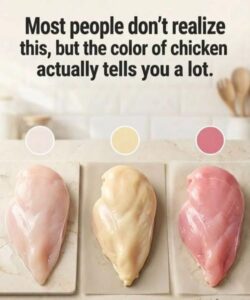
In the meat aisle, chicken can look like two different stories sitting side by side. One pack appears pale and almost pink, while another has a deeper yellow tone, even when the cut and price look nearly identical. It’s natural to pause and wonder if one is more nutritious, more natural, or somehow safer, because color is the first thing the eye trusts. But with chicken, appearance often shapes expectations faster than facts, and the shade you see usually explains far less about quality than most shoppers assume.
Paler chicken is most commonly associated with large scale commercial production, where birds are bred for fast growth and raised for efficiency. Their feed is carefully controlled to maximize weight gain, and they typically live indoors with limited space to move, which helps keep costs low and supply steady. That lighter color doesn’t automatically mean the meat is unsafe or unhealthy, but it can reflect a system designed around speed and volume rather than natural behaviors. In other words, the color can hint at the production model, even if it cannot grade the meat on its own.
Yellow chicken often points to a different set of influences, especially feed that contains natural pigments such as corn or other carotenoid rich plants. Birds that spend more time outdoors, moving around and pecking at grass and insects, can also develop a more golden tone, and slower growth with more activity is often linked to firmer texture and fuller flavor. Still, color is not a guarantee, because producers can deepen the shade through feed choices simply because shoppers associate yellow with higher quality. That means a golden look can sometimes be marketing rather than proof of a better life for the bird.
What matters most isn’t the color in the tray but the information and signals that sit beyond it. Labels like organic, pasture raised, free range, or certified humane can offer more useful clues about diet, medication use, and living conditions than appearance ever will, and those factors often shape flavor and nutrition more directly. Freshness checks also matter: chicken should smell clean and feel firm, and any sour or sulfur like odor is a warning sign regardless of color. In the end there is no single correct shade to buy, only the choice that fits your budget, values, and taste, because the real story is written in how the chicken was raised and handled, not in how yellow or pale it looks.