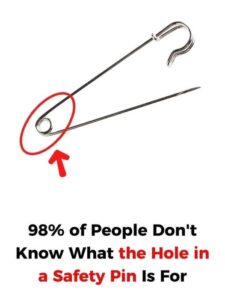
Modern sewing is often dominated by complex gadgets and digital tools, yet some of the most effective techniques remain rooted in old-school craftsmanship. Among these is the overlooked utility of the safety pin, specifically the small hole located at the coiled, spring end of the pin. While many assume this opening is merely a byproduct of the manufacturing process or part of its mechanical tension, veteran seamstresses have long used it as a “secret weapon” for managing unruly materials. This tiny feature is a prime example of how traditional design often hides a layer of quiet, practical functionality that modern users are only just beginning to rediscover.
The primary purpose of the tiny hole in a safety pin’s coil is to act as a guiding eyelet when threading elastic, ribbon, or drawstring through a fabric casing. By threading a piece of string through the hole and knotting it, a sewer can create a more secure and maneuverable anchor than simply pinning the material directly. This prevents the safety pin from accidentally popping open or losing the elastic mid-way through a hem—a common frustration in garment repair. This simple trick provides much-needed leverage and precision, turning a basic household fastener into a specialized tool for navigating tight fabric tunnels.
Beyond the safety pin, the resurgence of vintage sewing hacks like using beeswax and dry soap highlights a return to organic, cost-effective methods. Running thread through beeswax is a time-tested way to prevent tangles and strengthen seams, ensuring that the stitching remains smooth and durable over time. Similarly, marking fabric with dry soap provides a washable, non-staining alternative to expensive tailor’s chalk. These methods, alongside techniques like diagonal pinning and needle-wrap knotting, focus on the physics of the materials, proving that high-quality results are often achieved through tactile mastery rather than technological investment.
+1
Ultimately, these forgotten tricks demonstrate that the best solutions are often the simplest ones that have stood the test of time. Incorporating vintage habits like backstitching to secure seams or using a safety pin as a threading guide makes the sewing process faster, cleaner, and significantly more efficient. By paying attention to these small, deliberate details, a hobbyist can transform a potentially frustrating chore into a rewarding, professional-grade craft. These enduring techniques serve as a bridge between generations of makers, proving that even in a high-tech world, there is immense value in the humble, hand-taught wisdom of the past.