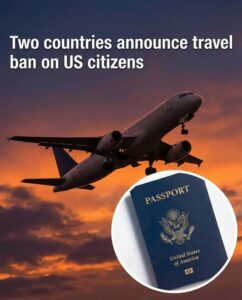
International travel rules can change quietly—but sometimes they send a much louder message. Recent decisions by two West African nations have put U.S. passport holders on notice, drawing attention not just to new entry requirements, but to the growing role diplomacy plays in who can cross borders and how easily. What may look like a simple visa adjustment is, in fact, part of a wider conversation about fairness, reciprocity, and how countries respond when political relationships become strained.
In Niger, officials announced the suspension of visa issuance for American citizens, framing the move as a reciprocal response to restrictions the United States placed on Nigerien officials following recent political developments. Government representatives emphasized that the decision was not meant as retaliation, but as an assertion of equal treatment between nations. By highlighting reciprocity, Niger signaled its position that travel policies should reflect balanced diplomatic relations rather than one-sided limitations.
Elsewhere in the Sahel region, the situation is more nuanced. Mali and Burkina Faso have not formally barred U.S. citizens, but travelers have reported longer processing times, additional documentation requirements, and heightened scrutiny at entry points. These measures are largely tied to ongoing security concerns and evolving relationships with Western governments. Rather than blanket bans, entry decisions are often handled individually, making travel planning more complex and less predictable for Americans heading to the region.
From the U.S. perspective, visa and entry restrictions are typically described as administrative actions connected to security standards and governance considerations, not as measures aimed at ordinary citizens. Leaders in West Africa, however, have voiced concerns that such policies disproportionately affect their populations and reinforce long-standing imbalances in global travel access. The impact reaches beyond diplomacy, affecting families, aid workers, researchers, and students navigating sudden rule changes. Past examples, such as Chad’s temporary visa adjustments that were later revised, suggest these measures may evolve again. For now, the developments point to a period of reassessment—one where future access will likely depend on continued dialogue, transparency, and efforts to rebuild trust on both sides.