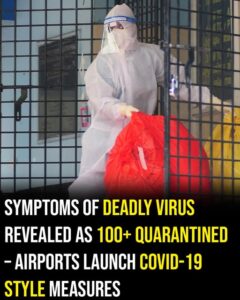
While the world is still reckoning with what it went through during the COVID-19 pandemic, it seems that a new virus might be rearing its head.
Keep reading to know more.
Health officials are officially on high alert around the world due to a virus which is spreading and has a significant fatality rate, and currently has no available treatment for it.
Alarm was raised earlier this month when five people in India’s West Bengal had contracted the illness. Narayan Swaroop Nigam, the principal secretary of the Health and Family Welfare Department, said while speaking to the media, “Two nurses at a private hospital are infected with Nipah virus, and one of them is in critical condition.”
The two nurses who are said to have been infected were working together at the hospital between December 28 and 30. Soon after, they fell sick and were admitted to intensive care earlier this month.
According to reports, there are currently 100 people being quarantined on suspicion of having contracted the virus.
As these cases are confirmed, Thailand, Nepal, and Taiwan have increased their precautionary measures at airports. Protocols that were present during the COVID-19 pandemic have been put in place again.
This includes checking temperatures, wearing masks, and maintaining distances between people to limit the spread of disease.
Symptoms
The US Centers for Disease Control and Prevention (CDC) has highlighted the symptoms of the Nipah virus. They include developing sudden flu-like illness alongwith fever, headache, muscle pain, and fatigue.
In some cases, symptoms include coughing, shortness of breath, and even pneumonia.
The most dangerous complication that can arise as a result of the Nipah virus is encephalitis, which is a swelling of the brain. This can further trigger various serious neurological conditions, including confusion, altered consciousness, seizures, or, in certain cases, even a coma.
The incubation period before someone infected starts to show symptoms can vary from four to 21 days. However, neurological symptoms from the virus can appear days to weeks after the initial onset.
About the Nipah virus
The Nipah virus is categorized as a zoonotic virus which means it jumps from animals to humans. Animals specifically that it exists in are fruit bats and pigs.
It can also spread through interaction with contaminated food or contact with an infected person.
Unlike coronaviruses, which were said to have a global mortality rate of about 3.4%, the World Health Organization estimated that the Nipah virus can have a fatality rate of about 40% to 75%. This makes this virus and its spread a supremely dangerous event.
Currently, there are no vaccines or drugs that can help treat the infection in either humans or animals.